
If you’ve ever helped lift a new brand off the ground and generate a large amount of organic visibility, you know that doing so is no easy feat.
You need to build authority, create resourceful content, and instill SEO best practices.
All of this takes time. Usually a lot of time.
On the other side of this spectrum are large brands. Those sites with so much brand equity that some may question whether SEO is even really a need.
But we can put this question to rest when we consider all that SEO encompasses.
SEO isn’t simply about attracting new visitors who know little about your brand. A lot of what SEO is composed of is the “maintenance” of your organic online presence and the experience that you provide to your site users.
Let’s think for a moment about one of the biggest brands in the world, Coca-Cola.
According to Forbes, Coca-Cola invested $3.9 billion in advertising and marketing in 2015. It’s amazing to think that this ad and marketing spend totals 6 percent of the entire forecasted SEO expenditure of the world’s companies for 2016.
They definitely don’t need to concentrate on SEO, right?
Wrong!
Brand Advantage
While SEO nerds such as myself could sit around for hours debating this topic, I hope you can see my point here.
Using our aforementioned example, one might say that SEO doesn’t matter for big brands because big brands have coveted amounts of domain authority. Heck, Coca-Cola could curse Google CEO Sundar Pichai on their homepage and not see any organic visibility loss.
(Friendly reminder from your friends at SEJ: slandering Google definitely isn’t a recommended SEO best practice!)
Others might claim that Google’s Vince update in 2009 was a huge advantage for big brands.
Finally, the rest of the naysayers in the specific example brands above might say, who searches for soda?
Well, yes, these sites by way of brand strength have many links and citations across the web. Yes, previous updates to favor sites with massive amounts of “trust” win at the end of the day. And, yes, people drink soda, they don’t search for it.
Why SEO is important for even the biggest brands is because, in many cases, SEO best practices are standard website best practices.
Advertising’s Anchor
So, much for big brands, as we have seen in the example above, is devoted to advertising.
But what do we want the advertised person to do?
We want them to buy our products!
Granted, a TV spot is intended to keep the brand in front of their eyes and build brick-and-mortar engagement, but there are many online ads and links spread across the web. These direct the user to these brand’s site pages.
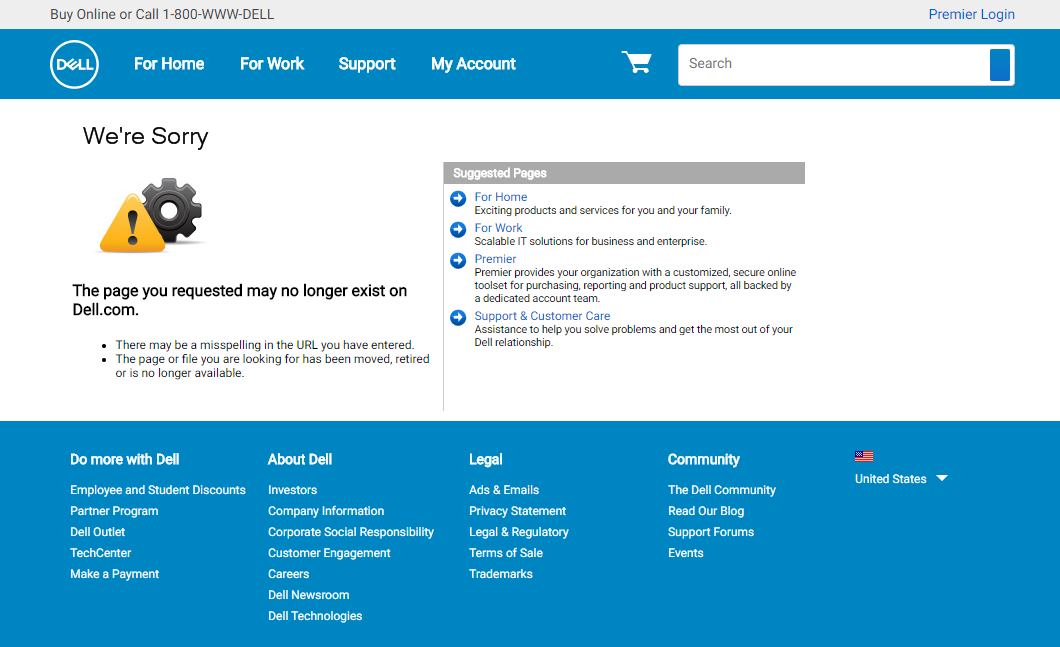
Do we want users landing on 404 error pages? Of course not.
A dedication to SEO means making sure that people don’t land on 404 error pages due to URL structure changes without redirects or redirect chains including broken page paths.
UX Assistance
Let’s also consider how brands engage with digital consumers.
Whether web users are arriving and traversing the site to register in a sweepstakes, explore career opportunities, or visit from a link found on another site, a slow loading site is a quick way to lose out on a great experience.
Page load time has become the obsession of the SEO industry. It is a big consideration of the emerging mobile shift in web user behavior as well as Google’s mobile-first initiative.
Having an in-house SEO team or dedicated agency partner, fast page load times are a continual effort in search of perfection.
Additionally, think about the efficiency of a site user’s visit journey. From landing page to exit page, a great digital experience helps user easily navigate a site and find exactly what they’re looking for.
Again, SEO ensures that main and supporting navigation feature proper anchor text and is architected in a manner to guide the user down a path that leads to conversion.
The same applies to internal links in body copy. These should be anchored appropriately to improve SEO efforts, but also follow usability best practices.
SERP Brand Management
Let’s a take a moment to think about a brand’s presence in search engines. Most SEOs are focused on non-branded keyword term enhancement. But big brands are likely going to have a lot of branded searches.
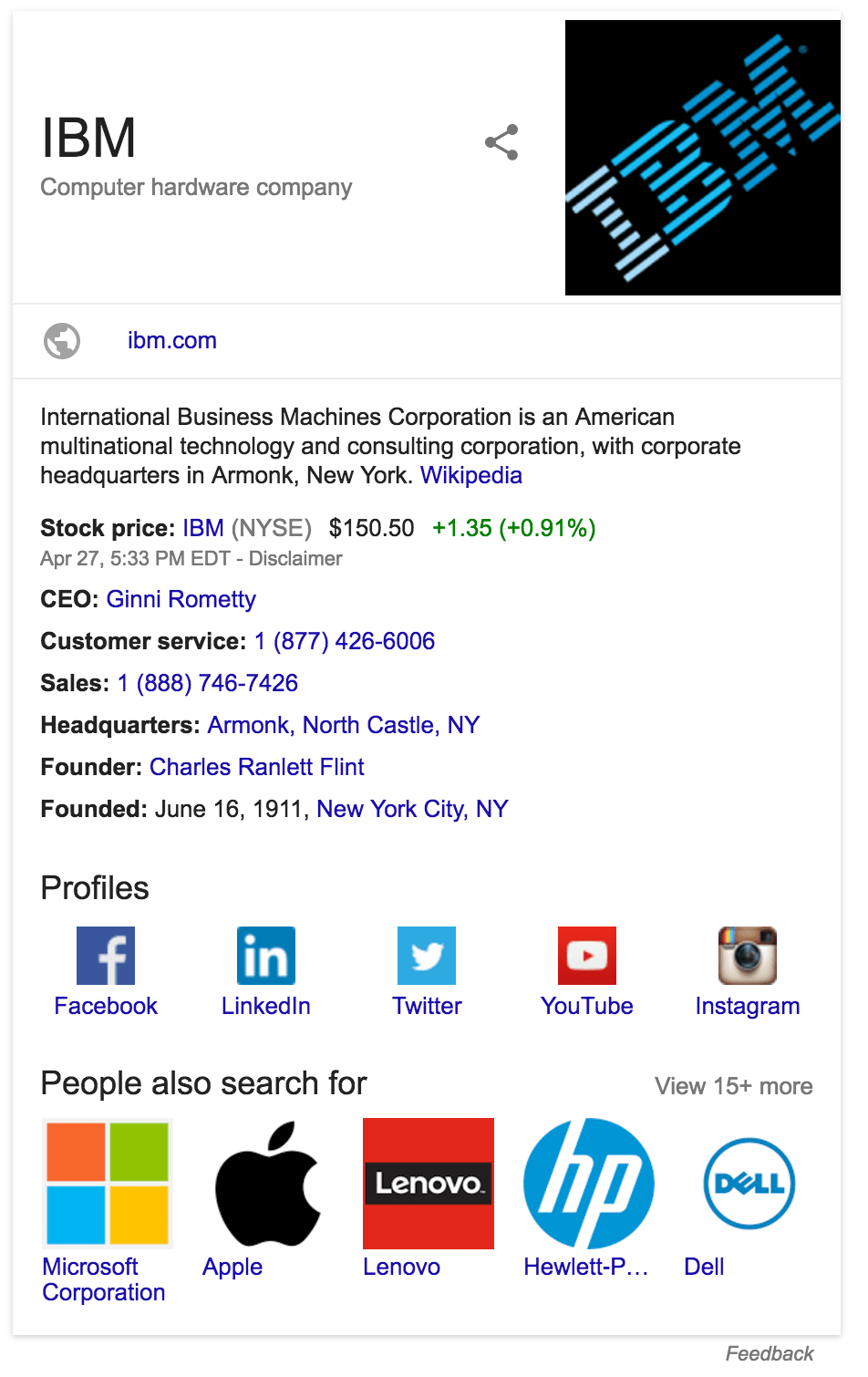
What shows up for a big brand name keyword search? Often, a Knowledge Panel, sitelinks for the brand’s internal pages, and other owned domain properties.
A dedicated SEO focus will improve these items.
For example, schema usage can provide a lot of enhancements to a brand Knowledge Panel. From stock prices and customer service contact information to social profile links and company history, SEO best practices can provide a lot of brand education and facilitation in search results.
Outside of the Knowledge Panel, consider the brand organic listing if sitelinks are present and you don’t employ meta descriptions. The brand listing will have un-enticing text to hopefully drive click-throughs.
The same applies to title elements. In most cases, a brand search is going to deliver the brand site ranking in first with Google adjusting the title element to be more representative of the brand. However, other owned rankings below this may not have adjusted title elements and should have title elements constructed which would entice the click.
Conclusion
SEO isn’t simply about driving new visits and building a brand.
In many ways, SEO is about maintaining a brand and ensuring a great experience. This is essential to both emerging companies and big brands.
You don’t have to call some of the needed site exercises “SEO.” But what is needed in managing a brand’s online presence is akin to the focus of your everyday SEO.
Image Credits
Featured image courtesy of Shutterstock and edited in Canva, July 2017.
In-post Photo: Google
Screenshots taken by Josh McCoy, July 2017
