

In the modern-day landscape of saturated online content, it’s no longer enough to just build your site and wait for people to visit it.
You must be proactive at promoting your site and your brand online.
Admittedly, this is much easier said than done, especially because not everyone has the financial capability to throw into paid ad campaigns and corporate sponsorships.
The good news?
There are several things you can do to promote and drive traffic to your website, all without having to spend hundreds of dollars.
To help you do just that, here’s a list of 101 tactics you can try, grouped by strategy.
Search Engine Optimization (SEO) & Link Building
1. Find the core keywords that match your website’s goals, your industry, and offering.
2. Optimize your website and all of your on-page content for search engines.
3. Focus on Google, but add peripheral search engines like Bing, Yahoo, and DuckDuckGo, to your list.
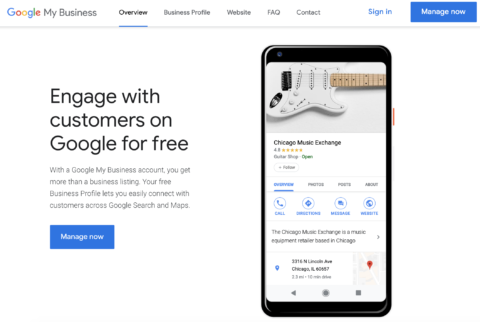
4. Claim your Google My Business listing.
5. Submit your site to online directories like Yelp, Annie’s List, and TripAdvisor, among others
6. Scour Q&A sites like Quora and look for relevant questions you can create content about.
7. Optimize content with relevant keywords, particularly long-tail keywords signaling intent
8. Get news websites to cover your business and link to your site.
9. Invest time in blogger outreach to see which influencers and industry thought leaders you can reach out and link to your site.
10. Join relevant online discussions on sites like Quora and Reddit.
11. Monitor Google Trends for keyword ideas and trending topics you can write about.
12. Write killer headlines that grab people’s attention and encourage them to click on your article links.
13. Link internally so other pages in your site get attention and a bump in traffic.
14. Make sure your website is optimized for mobile to increase your mobile search rankings.
15. Optimize your site for local search, that means including your city or state in your target keywords.
16. Consider using remarketing on Google Ads for brief periods to drive traffic and sales on your site.
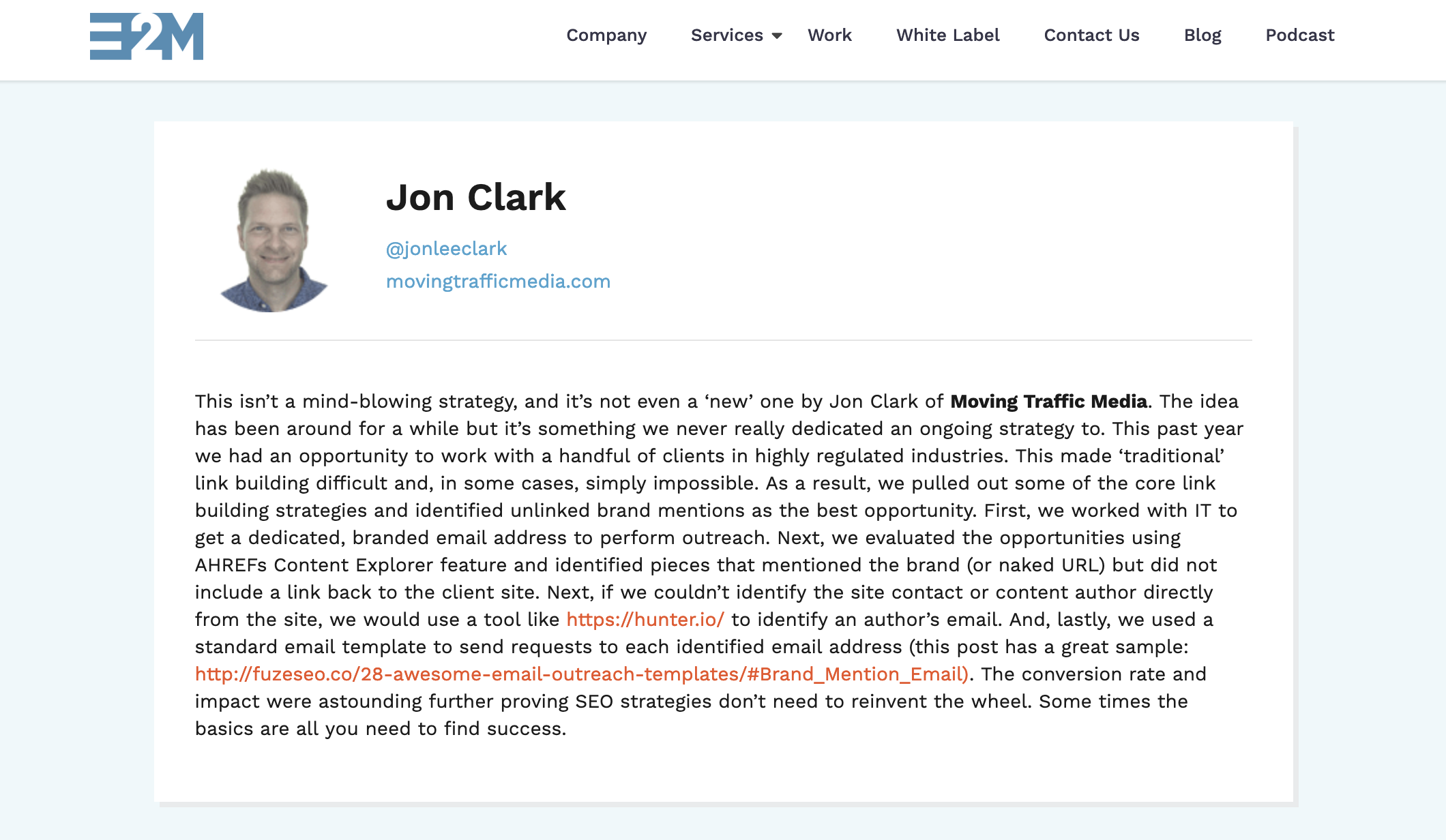
17. Use HARO to look for opportunities to appear on roundups, similar to the one below.
18. Optimize images on your website with alt tags to improve their discoverability on Google Images.
19. Optimize your meta descriptions and title tags so they’re easy to read and aren’t truncated in the search engine results pages.
20. Add your local address to the footer of every page on your site to make sure local searchers find you.
21. Improve your website’s page speeds by following Google’s guidelines and recommendations.
22. Use rich snippets to make your entry on the search engine results pages more clickable.
Content Marketing
23. Start a blog if you haven’t already.
24. Create content that’s useful, valuable, and shareable.
25. Create free and paid resources such as case studies, reports, survey findings, etc.
26. Look for guest posting opportunities to get high-authority blogs to link to your site.
27. Create infographics that feature a roundup of industry statistics to increase their likelihood of going viral.
28. Start a regular content series, such as “Did You Know?” or a “Tip of the Day” that your audience can look forward to.
29. Update your blog regularly to get a boost in rankings and traffic.
30. Interview industry leaders and feature the conversation on your blog or YouTube channel.
31. Host a webinar or podcast about topics you’re passionate about and align with your business.
32. Create e-brochures that your audience can share, with links to your site and blog.
33. Invest in video content and upload your videos to YouTube.
![The State of Video Marketing in 2019 [New Data]](https://cdn.searchenginejournal.com/wp-content/uploads/2019/08/the-state-of-video-marketing-in-2019-new-data-480x290.png)
34. Write an online/offline column for your local paper, magazine, or community website.
35. Create a press kit you can share with influencers, bloggers, and even other businesses.
36. Comment on other blogs relevant to your industry.
37. Launch a free ebook to generate interest in your brand. Offer it as a free download for users who sign up for your newsletter.
38. Start a blog on Tumblr. This is a great content platform, especially if you have a young audience.
39. Have a healthy mix of evergreen content and trending content to increase your website’s discoverability, particularly on search engines.
Social Media
40. Promote your content on social media channels.
41. Obviously, you want to go big on Facebook. Create a page there if you haven’t already.
42. Join discussions on Facebook Groups to generate visibility.
43. Leverage social media contests on Facebook, Twitter, and Instagram to drive traffic to your website.
44. If it’s relevant to your audience, create an online presence on Snapchat and Pinterest.
45. Use Pinterest to upload high-quality images of your products.
46. Use relevant trending hashtags on Twitter to drive users to your site.
47. Try promoted tweets to fast-track traffic to your site.
48. Start an Instagram account and make sure your bio is filled features your website URL.
49. Use Facebook and Instagram Stories to engage your audience and raise brand awareness.
50. Let your employees control your Stories for a day. This will encourage them to share your social media account (and website) with their personal network.
51. Start an official YouTube channel. Use it to share videos of your brand, your products, and services.
52. Use Facebook, Twitter, and Instagram ads at short bursts to boost traffic to your site.
53. Leave comments on other social media pages.
54. Link your official social media channels with one another. Make sure all pages/profiles have a URL to your website.
55. Take advantage of Facebook and Instagram’s live streaming platforms. This will give you a chance to show your brand’s personality and encourage website visits.
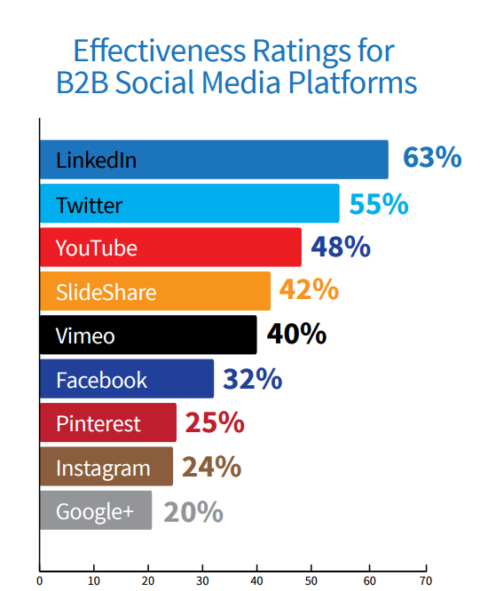
56. If you serve a B2B market, double down on LinkedIn. According to a report, 63% of marketers rated LinkedIn as the most effective B2B social media platform.
57. Use SlideShare to create your own high-quality slideshows. Optimize your slideshow for keywords and add your website URL to the final or beginning slide.
Offline Marketing
58. Participate in events and talk about the event experience in your blog.
59. Collaborate with local academic institutions to get your brand’s name out in the world of academia.
60. Look for public speaking engagements in your industry.
61. Add QR codes to your print collateral (e.g., posters, post cards, flyers) to drive people to your site.
62. Design beautiful business cards and add a QR code directing people to your site, lead form, or social platforms.
63. Support local organizations to ensure your community knows your brand and site.
64. Place stickers and/or decals on your personal or company cars to promote your website.
65. If you have the budget, pay for local ad placements in your newspaper, benches, sporting events.
66. Organize events such as concerts, poetry nights, garage sales, flea markets, and workshops.
67. Make sure your website URL is visible on company merchandise.
68. Send direct mail and place your URL on letters.
69. Include your website URL on company uniforms
70. Look for free press release opportunities on magazines and newspapers
71. Add your website URL to office signs.
72. Join networking events in your city or out of state.
73. Take advantage of classified ads in your local paper.
74. Support a local charity by sponsoring a fun run or donating part of your proceeds to a cause.
75. Contact your local news station to submit yourself as an expert in your field or industry resource.
76. Join your local Chamber of Commerce or other business groups.
77. Appear on a local radio program as a resource guest, which will let you promote your site as well.
Sales Promotions
78. Entice customers with an exclusive deal that can be redeemed on your store. According to one study, 57% of shoppers are motivated by coupons to make first-time purchases.
79. Offer free gifts to in-store customers and add material to promote your site.
80. Start a loyalty program requiring users to fill out a form on your website.
81. Offer freebies that can be redeemed on your site after shoppers make in-store purchases.
82. Start a referral network and encourage users to refer your website to their friends in exchange for discounts/deals.
83. Send thank you cards or emails to your in-store customers, placing a URL to your site.
84. Take advantage of seasonal offers (e.g., Christmas, Thanksgiving, Halloween) to increase your likelihood of being found during these occasions.
General Marketing
85. Remember to market your website across all online channels you own — social media, newsletter, blog.
86. Create an official email signature with your website in it (and most recent blog post if applicable).
87. Don’t neglect email marketing. Start a newsletter and incentivize signups with offers and discounts.
88. Encourage customers to leave reviews on your social media pages and website.
89. Take advantage of user-generated content through contests or competitions. Have users submit entries to your website.
90. If your website has been around for a while, consider a redesign to drum up interest when relaunching it.
91. Add social buttons to your blog content and landing pages to make sharing easy.
92. When looking for influencers, look for those who are relevant to your brand and have an engaged audience. The number of followers isn’t a reliable metric for an influencer’s influence.
93. Educate your audience instead of selling to them.
94. Talk and listen to your customers about what they want from your brand. Use this information to improve products and/or create content.
95. Sell yourself and your site wherever you go. You are your greatest ambassador.
96. Use strong calls-to-action in your social media posts and blog content to drive audiences to your website.
97. Look for opportunities to appear on other people’s podcasts or webinars.
98. Make sure your website looks great on all devices to maximize its discoverability.
99. Make sure your internal stakeholders are encouraged to spread the word about your brand and website.
100. Pay attention to what your competitors are doing on their website and do something they aren’t so you stand out.
101. Want visits? Ask for them online and offline from the people you meet every day.
Over to You
This list of tactics only scratches the surface of what you can do to promote your website.
Nevertheless, these tricks should get you off to a good start.
More Resources:
- Get More Traffic Now: 5 Secrets of the Most Popular Blogs
- How to 3x Your Blog Traffic with Technical SEO
- 101 Tips & Tricks That Will Boost Your Conversion Rates
Image Credits
Screenshots taken by author, August 2019
In-post Image #1: HubSpot
In-post Image #2: Content Marketing Institute

