
Google Search is constantly evolving to serve more useful results to searchers.
One of the more recent figures we have states that Google conducted 4,887 launches, 17,523 live traffic experiments, 383,605 search quality tests, and 62,937 side-by-side experiments to improve the results search engine users received in a single year.
The results of rigorous testing allow Google to determine the best search features to deliver search results in a format that is most useful to your query.
This leads to changes in the way that search results are delivered.
In this article, you’ll learn what a SERP is and the various search features that could affect the way your business appears to your target audience.
What Is A SERP?
SERP stands for search engine results page. This is the page that gives search engine users the best results for their queries.
Search engine results pages can vary from one search engine user to another based on a variety of factors including whether you are logged into your Google account, your location settings, your language preferences, and your search history.
The following is the SERP for SEO.
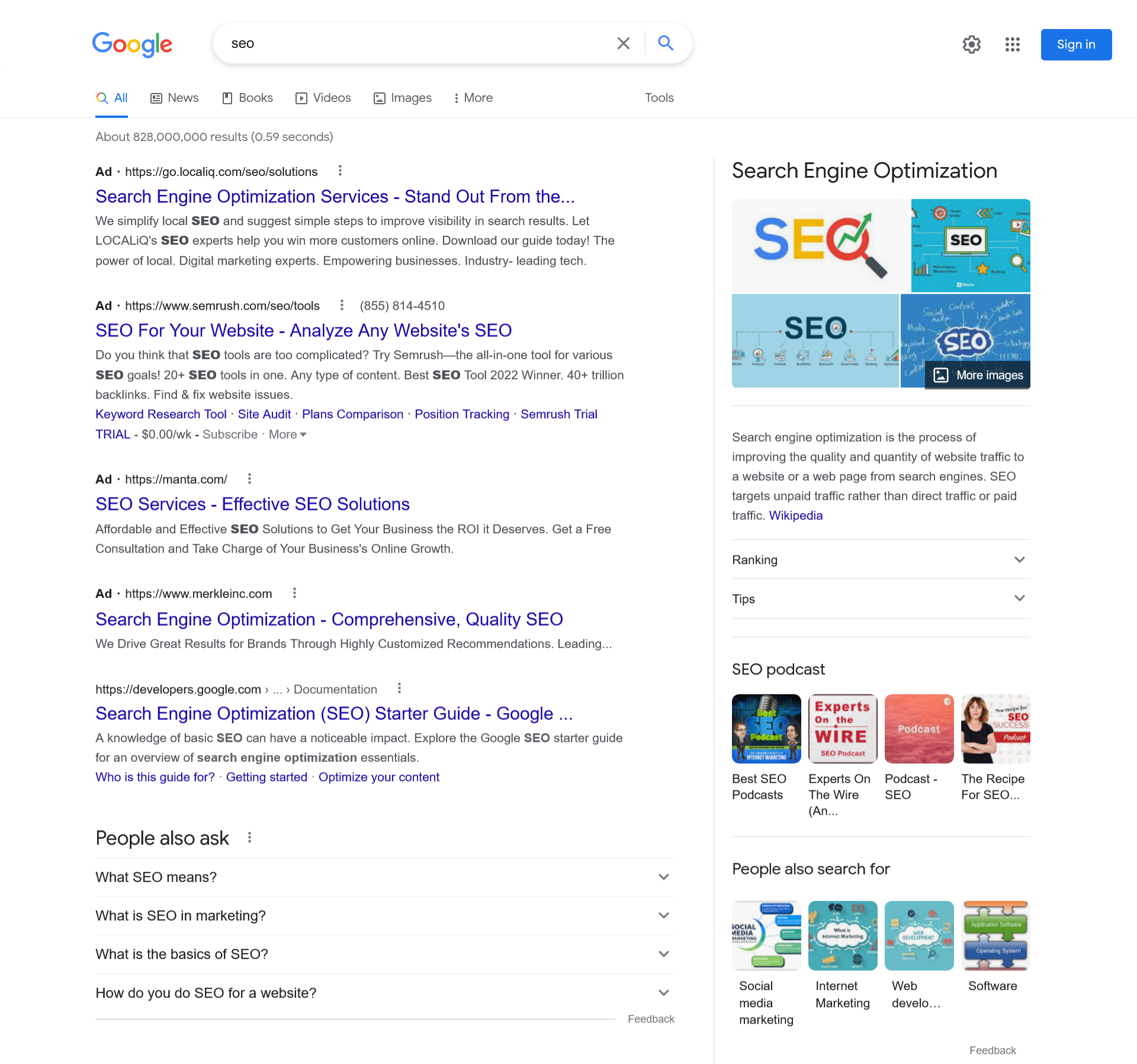
At the start of the search results, Google displays the approximate number of search results for the query and the time it takes to deliver the SERP.
In this case, there are approximately 828,000,000 webpages indexed for the keyword SEO, and results were delivered in 0.59 seconds.
The first four results starting with an Ad label are pay-per-click Google Ads that target the keyword SEO.
Following the four Google Ads, you see the first organic listing that appears in this SERP for Google’s Search Engine Optimization Starter Guide.
After this organic listing, Google includes a People Also Ask section.
When search users click on a question, additional related questions appear. The answers typically link to a webpage for further information.
To the right of the Google Ads, organic listing, and People Also Ask section is Google’s knowledge panel for search engine optimization. Knowledge panels can vary based on the entity they describe.
In this case, the knowledge panel pulls the definition for SEO from Wikipedia, followed by related terms, SEO podcasts, and related terms people also search for.
The next portion of the SERP for SEO contains two more organic listings, followed by the local pack featuring SEO companies.
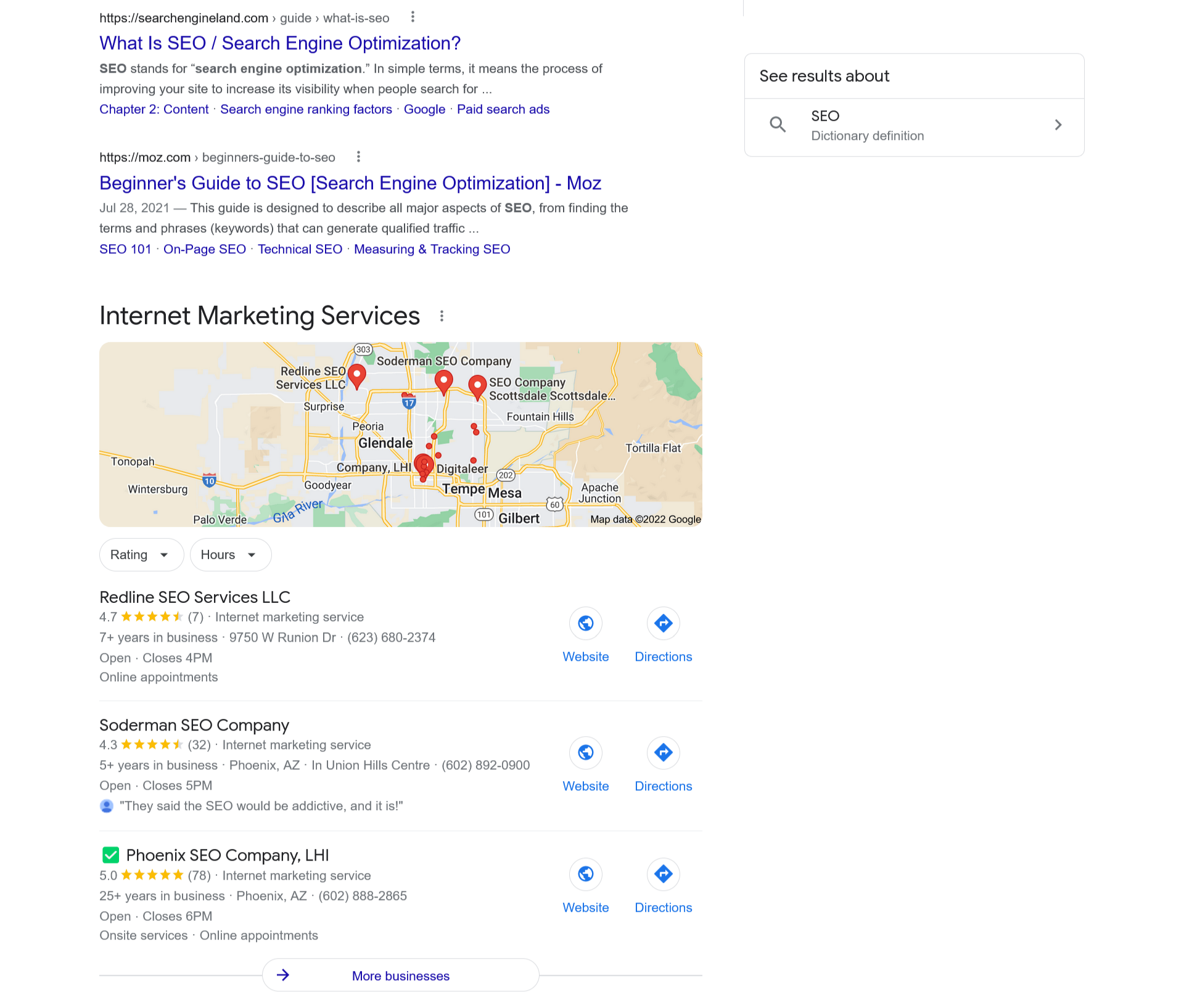
To the right, you can also see a continuation of the knowledge panel, which searches for the dictionary definition of SEO.
Following the local pack, Google displays the top news stories about SEO from the past 24 hours.
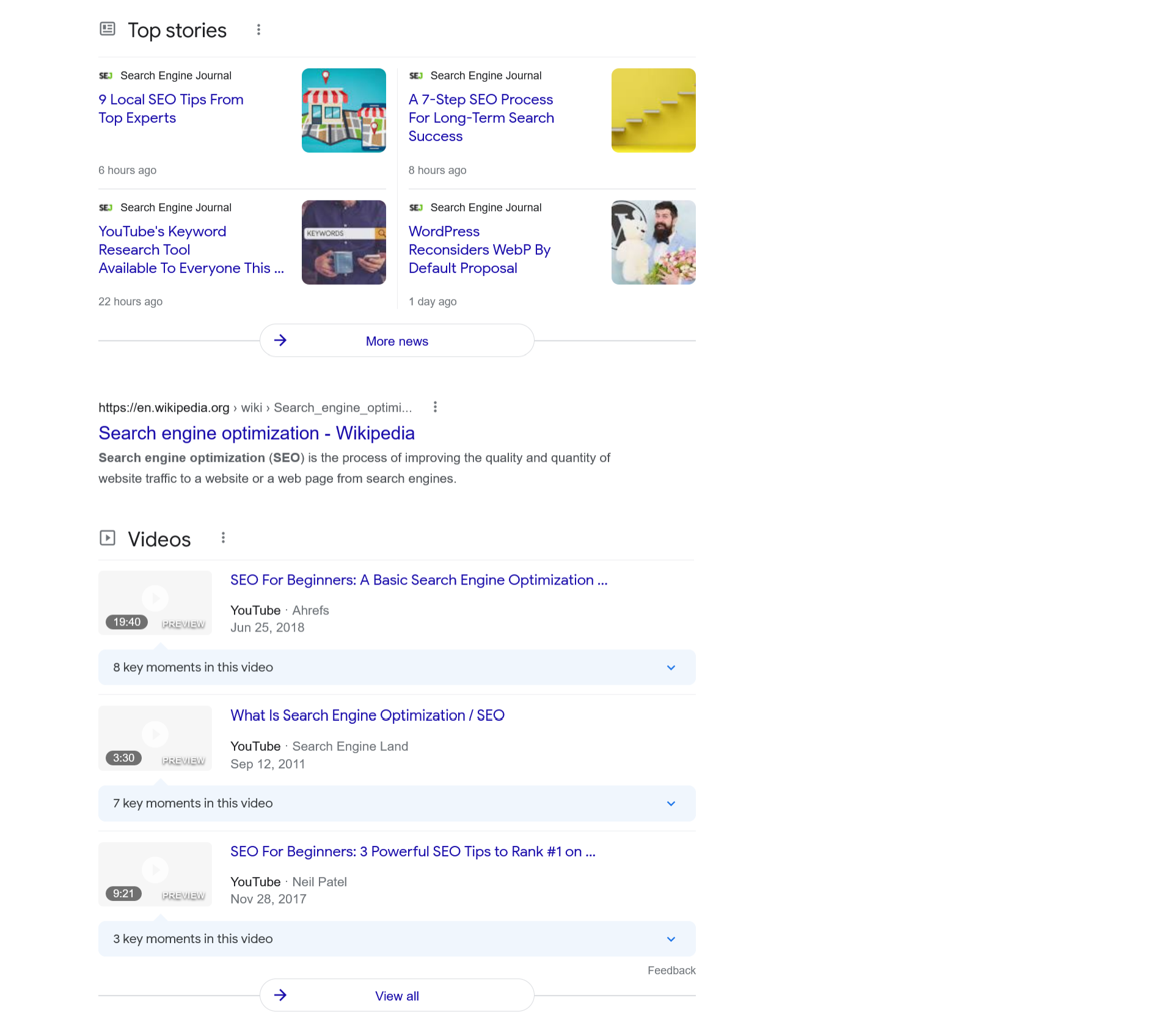
After another organic listing, Google places three videos from YouTube about SEO into the SERP, followed by another four organic listings.
Finally, Google has more organic results and related searches.
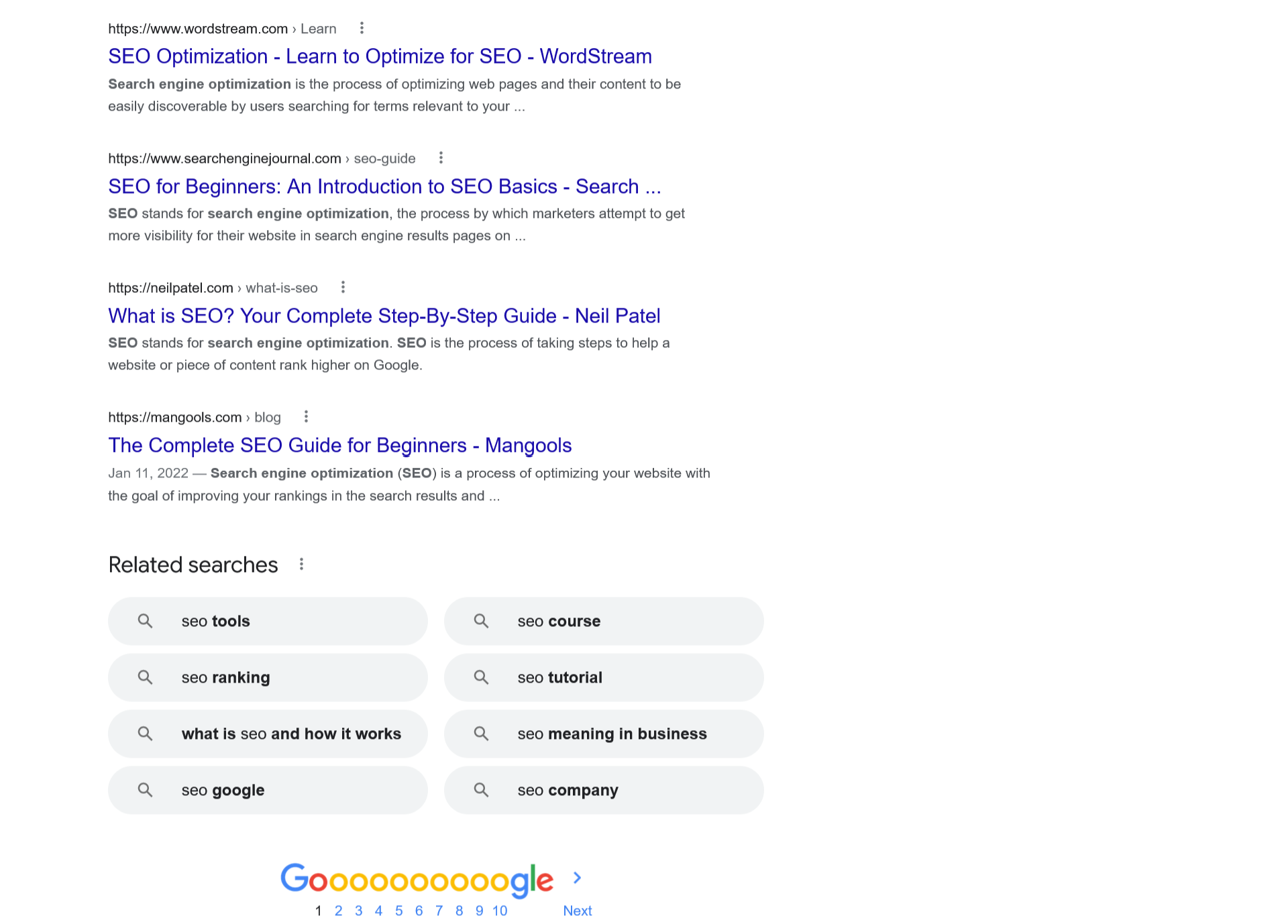
If you are on a mobile device, Google doesn’t make you click through to the second page of results.
Instead, after a listing of related searches, the next page of search results will automatically appear as you scroll down.
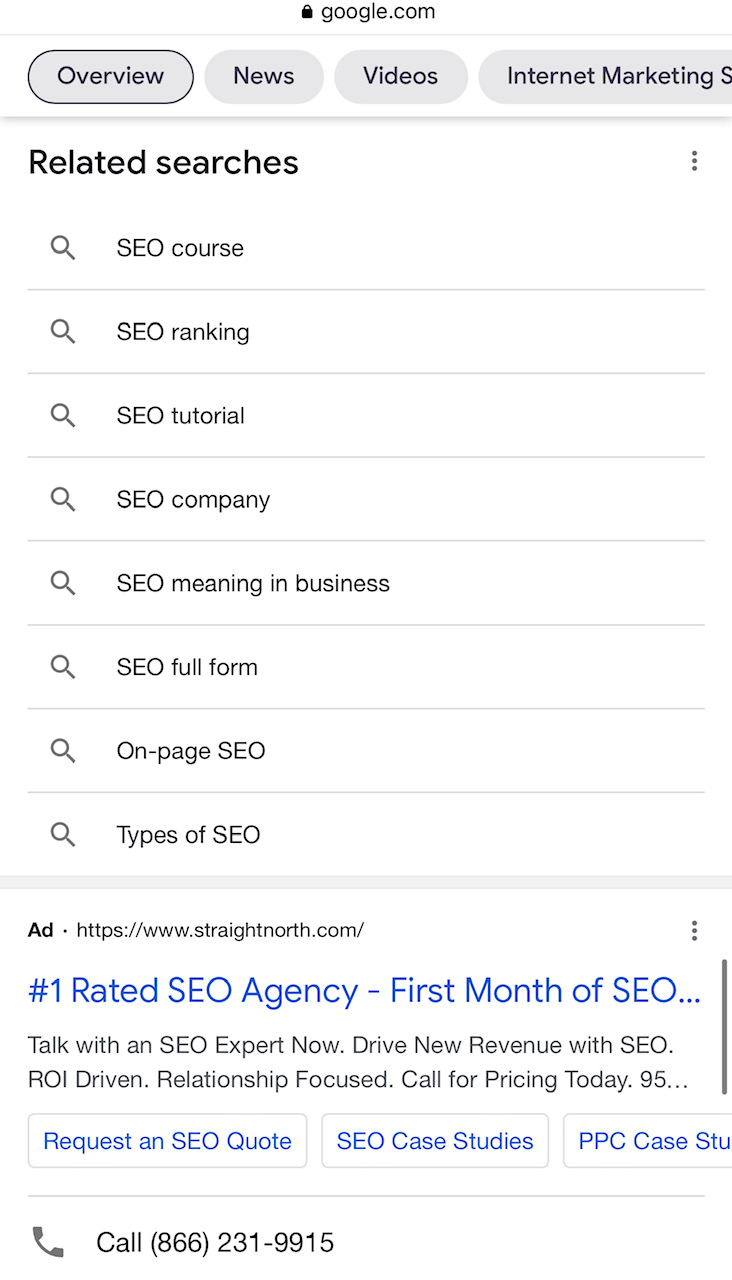
In this case, the second SERP begins with a Google Ad.
SERP Features
In the first example of a SERP from Google.com for SEO, there are multiple search features beyond organic search results including Google Ads, People Also Ask, knowledge panels, top stories, and videos.
According to Semrush Sensor, most SERPs have at least one feature.
In the U.S., only 2.34% of desktop SERPs do not have a feature. In other words, 2.34% of SERPs only list the top 10 organic search results on the page without ads, knowledge panels, local packs, etc.
Let’s take a look at the SERP features most often seen on Google.
Sitelinks
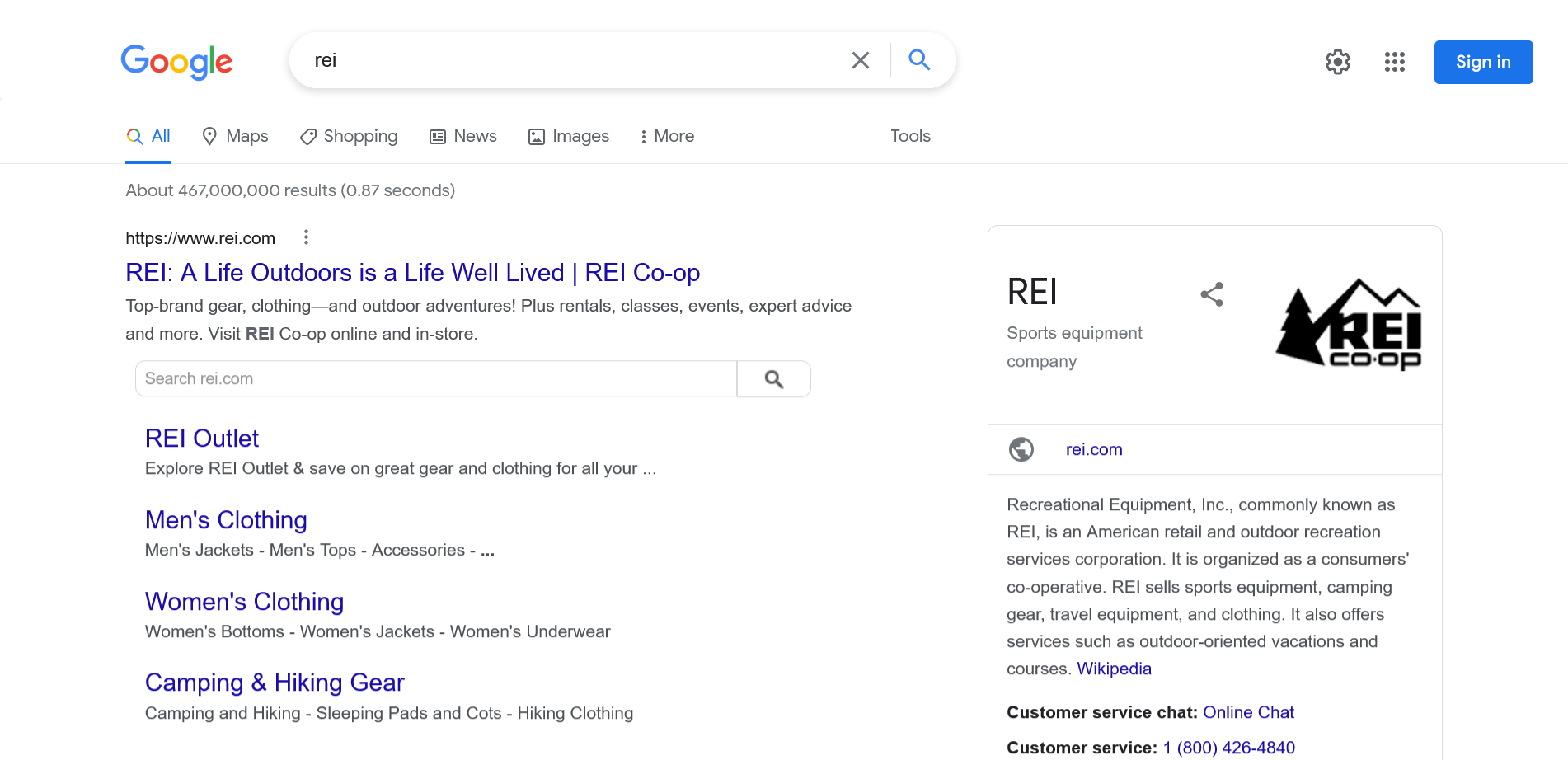
One of the top search features – found in over 66% of SERPs in the U.S. – is sitelinks.
Sitelinks are simply links that will allow search users to find specific content beyond the homepage.
In the following SERP for REI, you can see that REI has the first position in organic search.
Beneath their listing, Google displays a sitelink search box followed by four sitelinks to popular pages on their website.
Learn more about how to optimize your website for sitelinks.
People Also Ask
Another top search feature is the People Also Ask section. This feature can appear anywhere on a SERP.
It typically begins by displaying five of the top questions asked about a search query.
In the following SERP for [search engine], Google adds a People Also Ask section after the first organic search result.
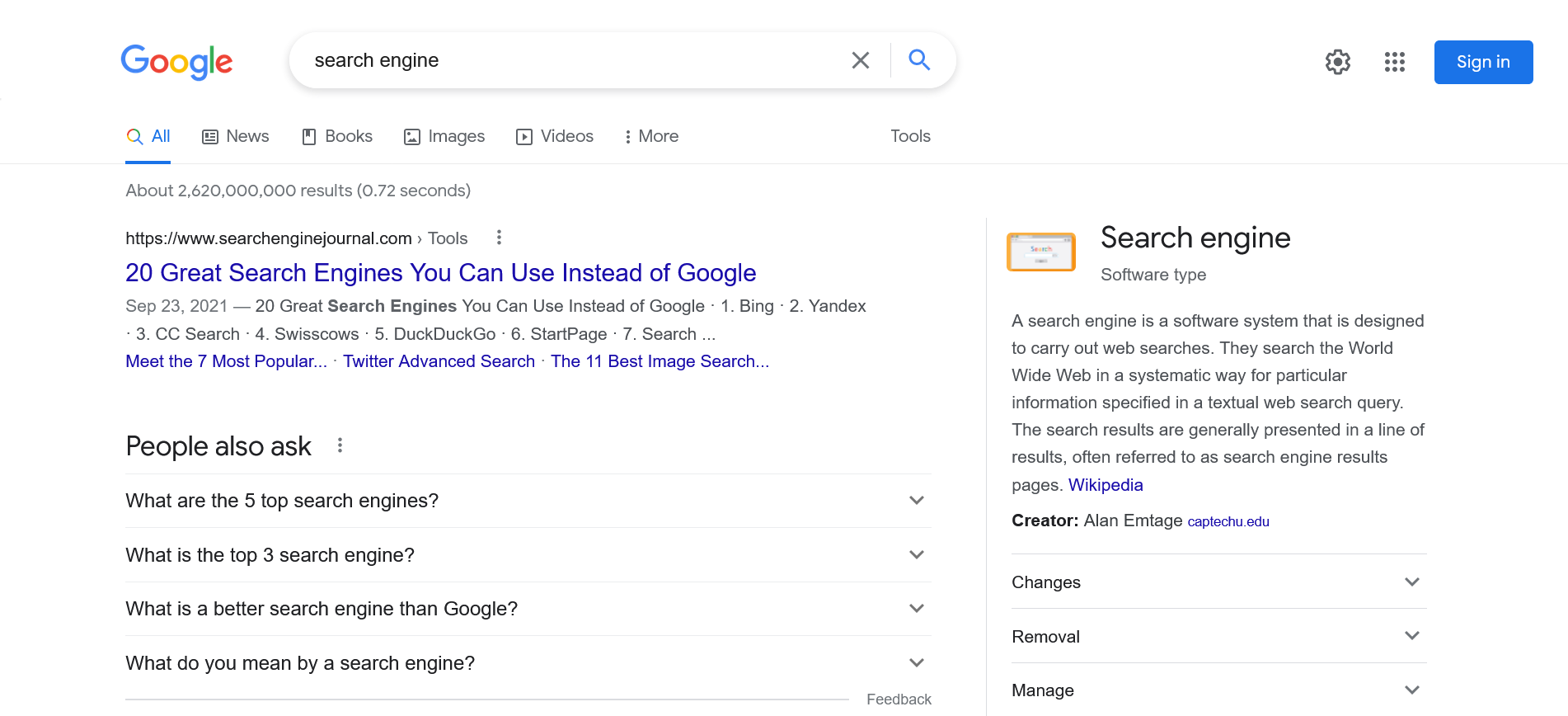
When someone clicks on a question under the people also ask section, it will display the answer to the question, along with a link to the source for the answer. It will also automatically generate additional questions related to the one the user just clicked.
Reviews
In addition to the stars you see in the local pack for local business reviews and the stars you see in shopping ads, Google may also display star ratings and review counts within organic search results.
In the following SERP for a current bestselling book, you can see the reviews feature in action on two of the top three organic listings.
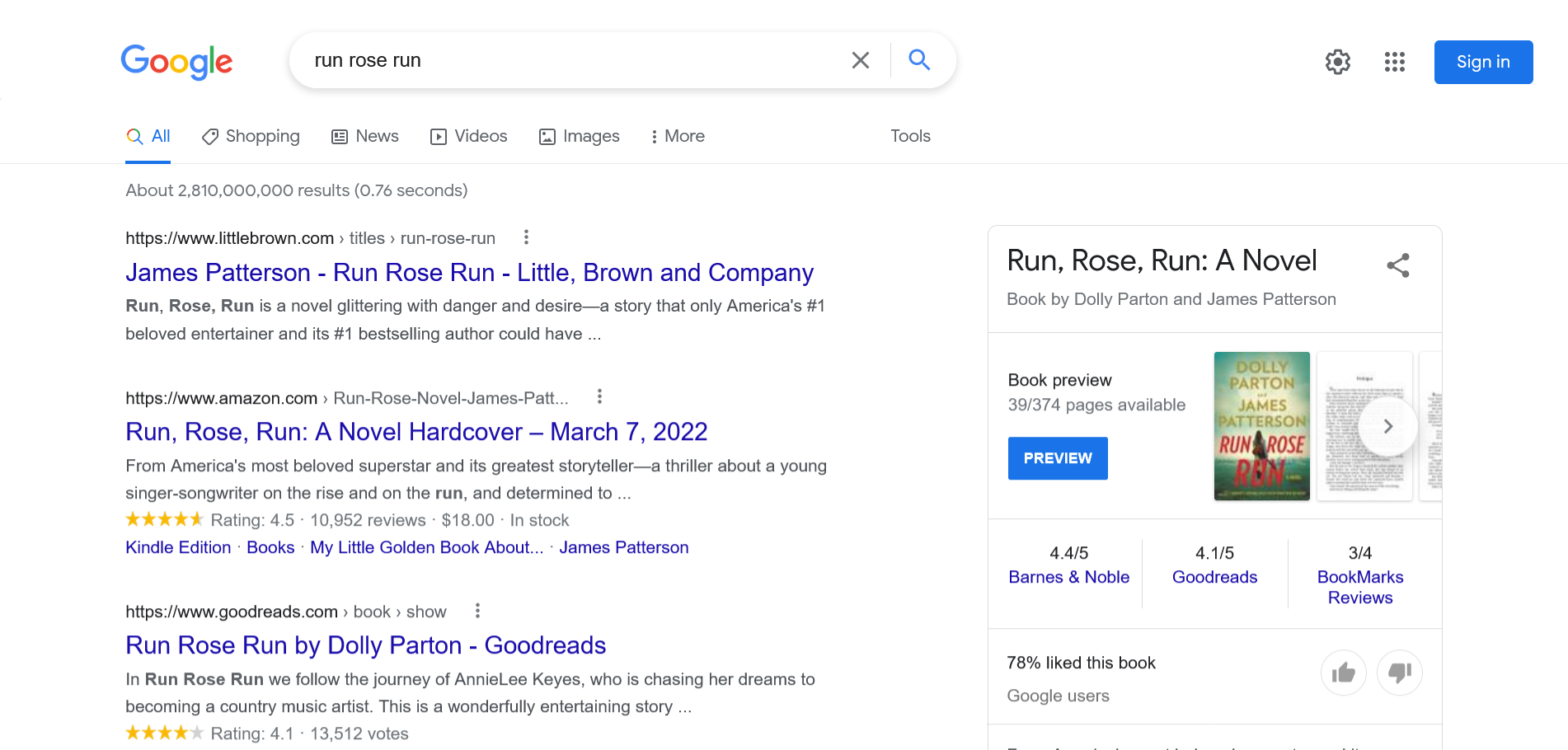
Learn more about how you can optimize relevant pages on your website for reviews with the review snippet.
Images
When Google anticipates that a search query would best be answered visually, they use the images feature. This feature can appear anywhere throughout the SERP.
In the following search for a [pumpkin plant], Google serves up a dozen photos of pumpkin plants.
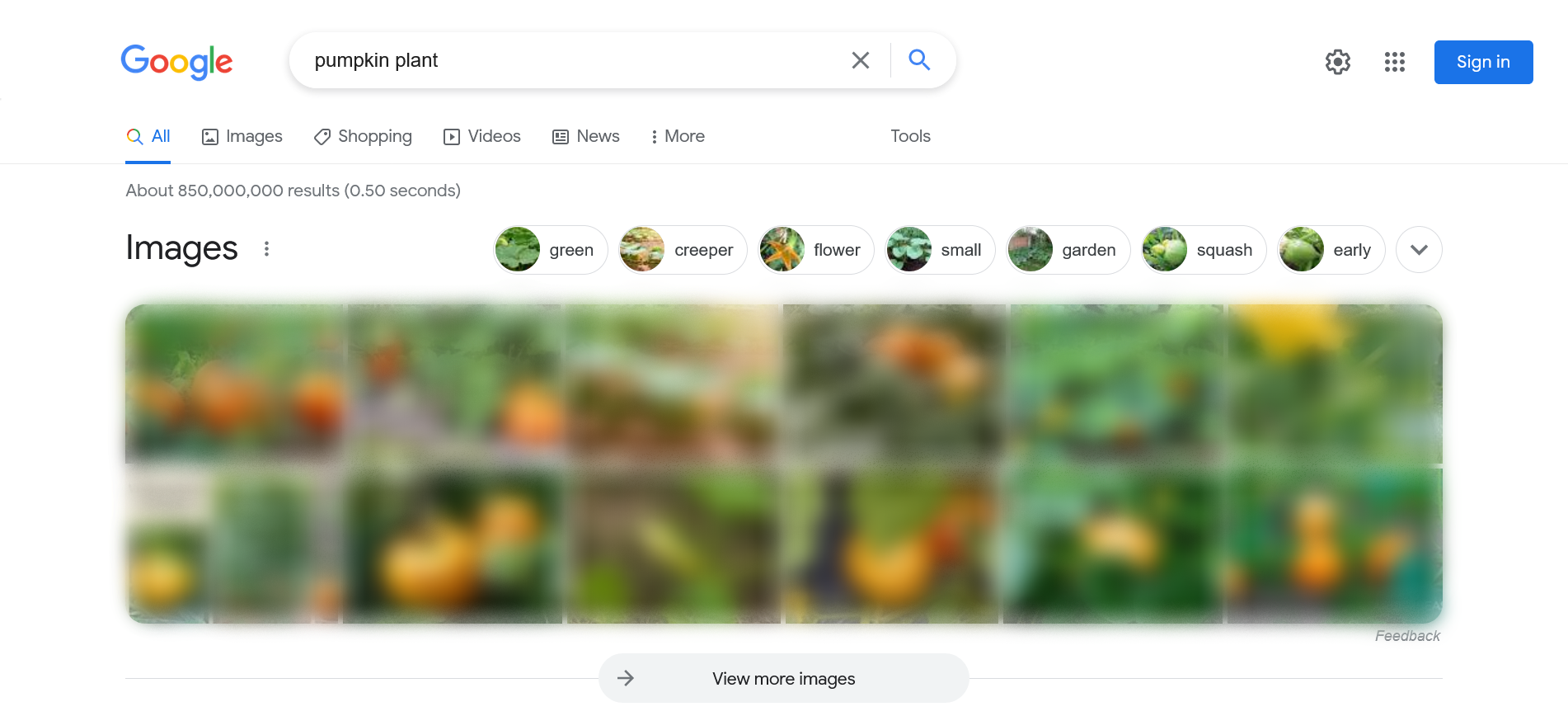
When clicked upon, the link goes to Google image search results for the query, plus additional details about the image clicked.
To optimize your images for Google image search and the potential to appear in the images section of related SERPs, check out these 12 essential image optimization tips.
Videos
Similar to the image feature, the video feature of SERPs can appear anywhere throughout the page.
In the following search for [1st party data activation], Google displays a section of videos from YouTube after four ads, a featured snippet, People Also Ask, and five organic search results.
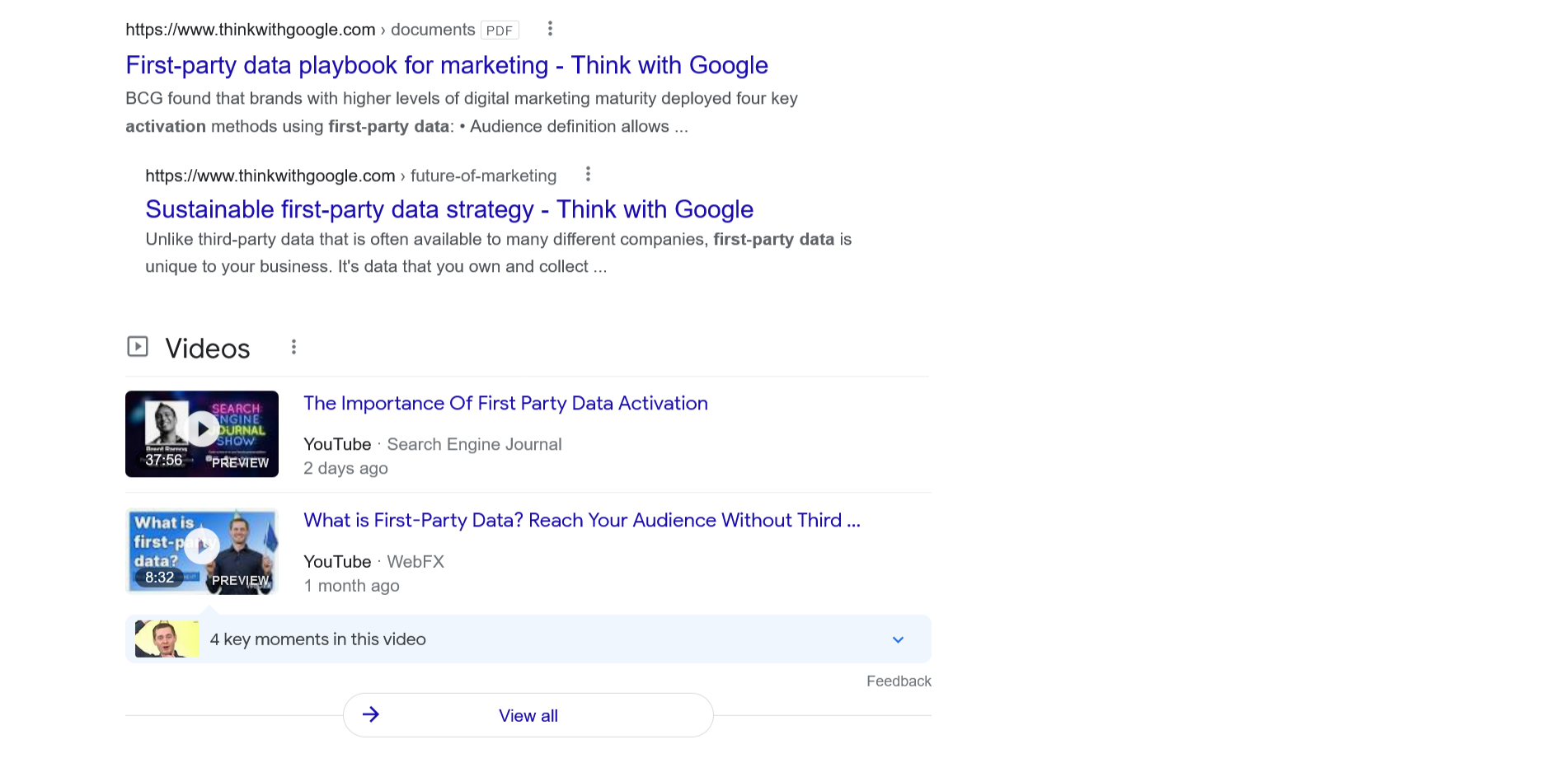
To appear in the videos section of SERPs, learn how to optimize your YouTube videos.
Knowledge Panels
Knowledge panels are automatically generated boxes of useful information, compiled from various sources around the internet by the Knowledge Graph. They generally appear on the right side of search results.
In the following SERP for [tennis], Google displays a knowledge panel with a summary of what tennis is and the most popular searches related to it.
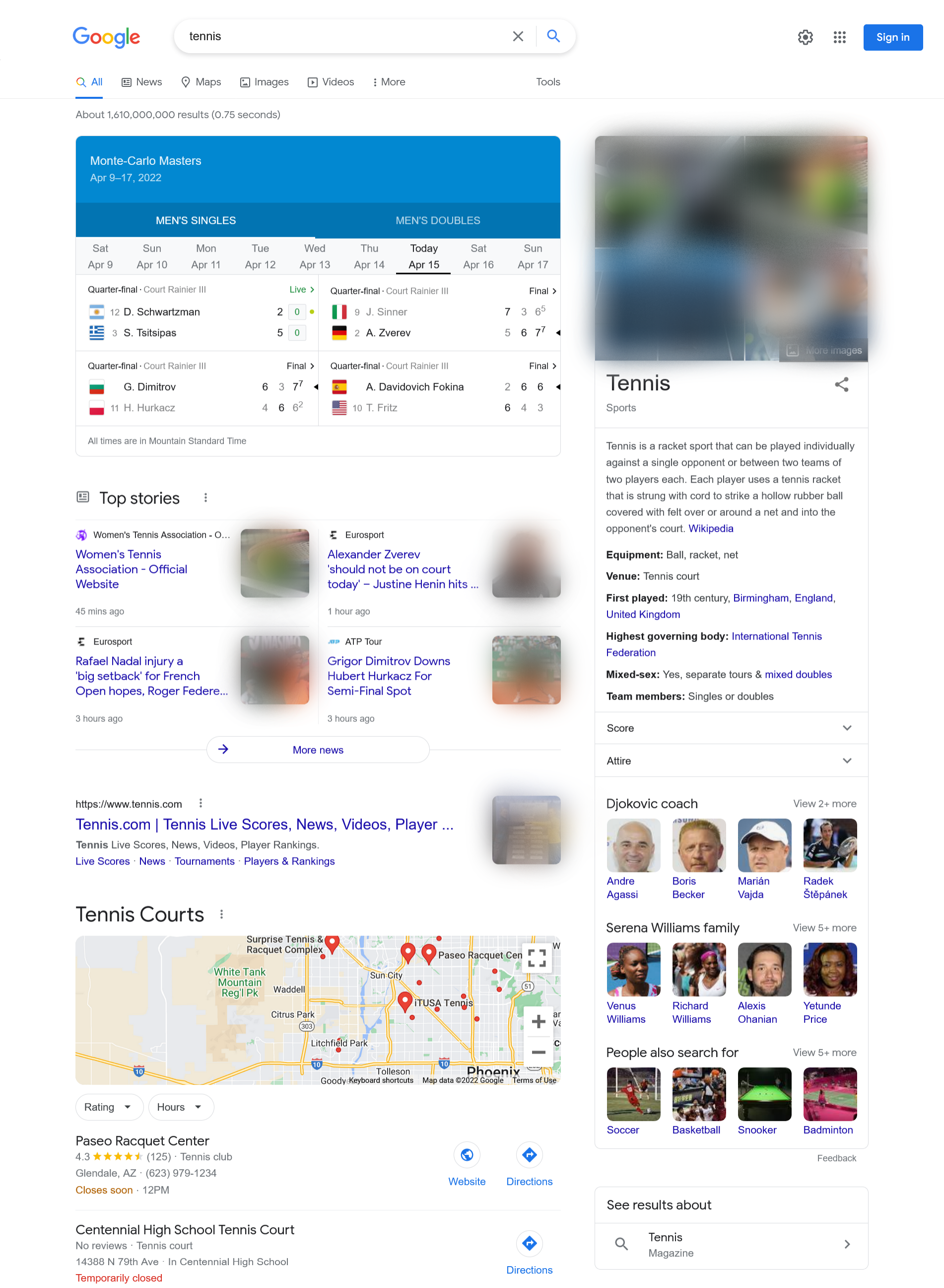
Google offers specific directions on how to update the information contained in the Knowledge Graph.
Local Packs
When there are local results that match your search query, you may see them appear in a local pack.
Listings in a local pack typically appear with reviews, an address, and hours of operation.
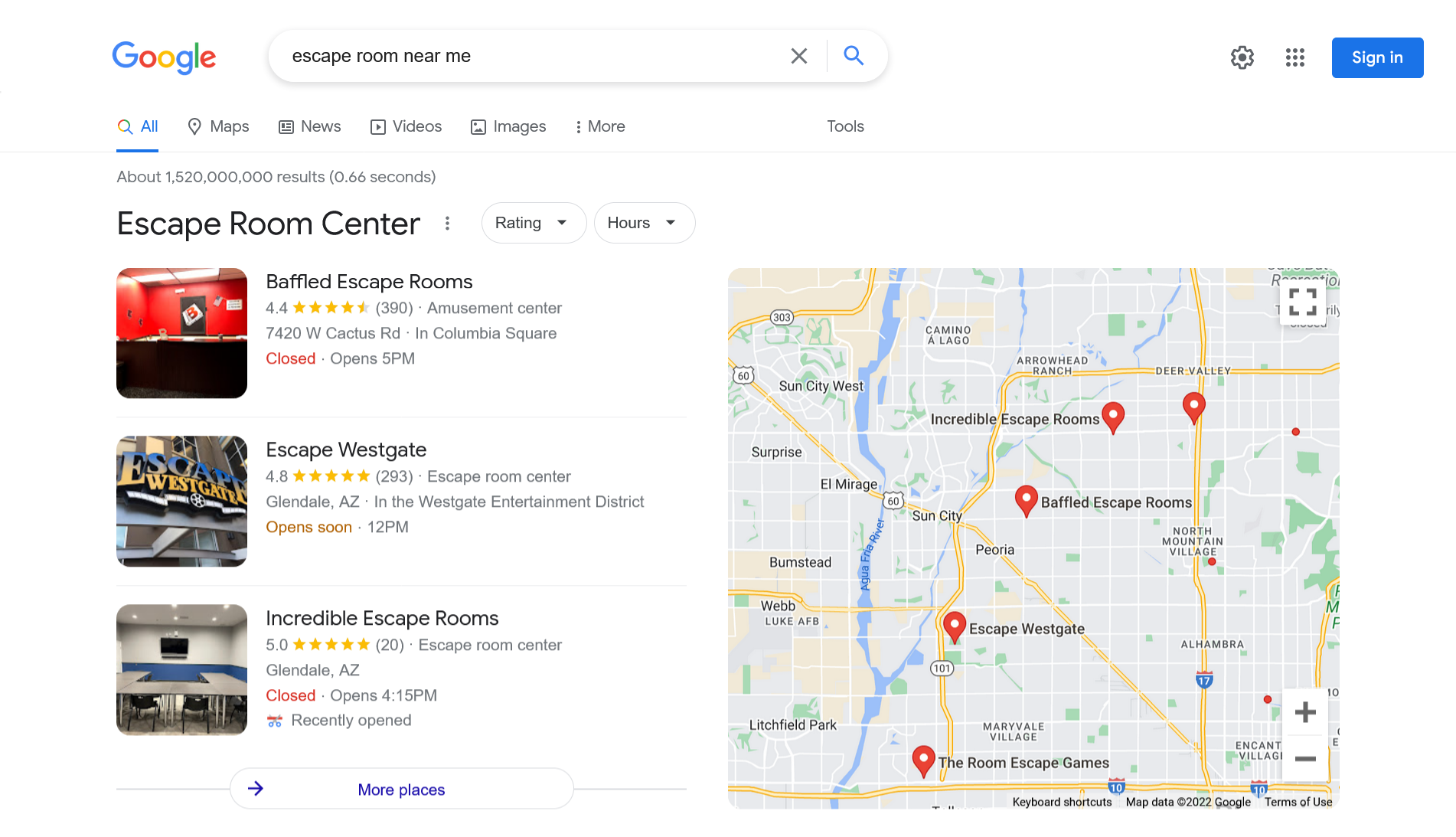
According to the Local Pack-O-Meter, 35.7% of approximately 60 million search queries in the U.S. contained a local pack in March of 2022.
Over the past year, it has fluctuated from 33% to 33.9%.
If you have a local business, learn more about local SEO and why it matters for your SMB.
Featured Snippets
Featured snippets generally appear at the top of SERPs, offering a portion of content from one of the top organic search results for a particular query.
For example, a search for [how to change app icons] may generate a featured snippet with a video from YouTube that answers the query.
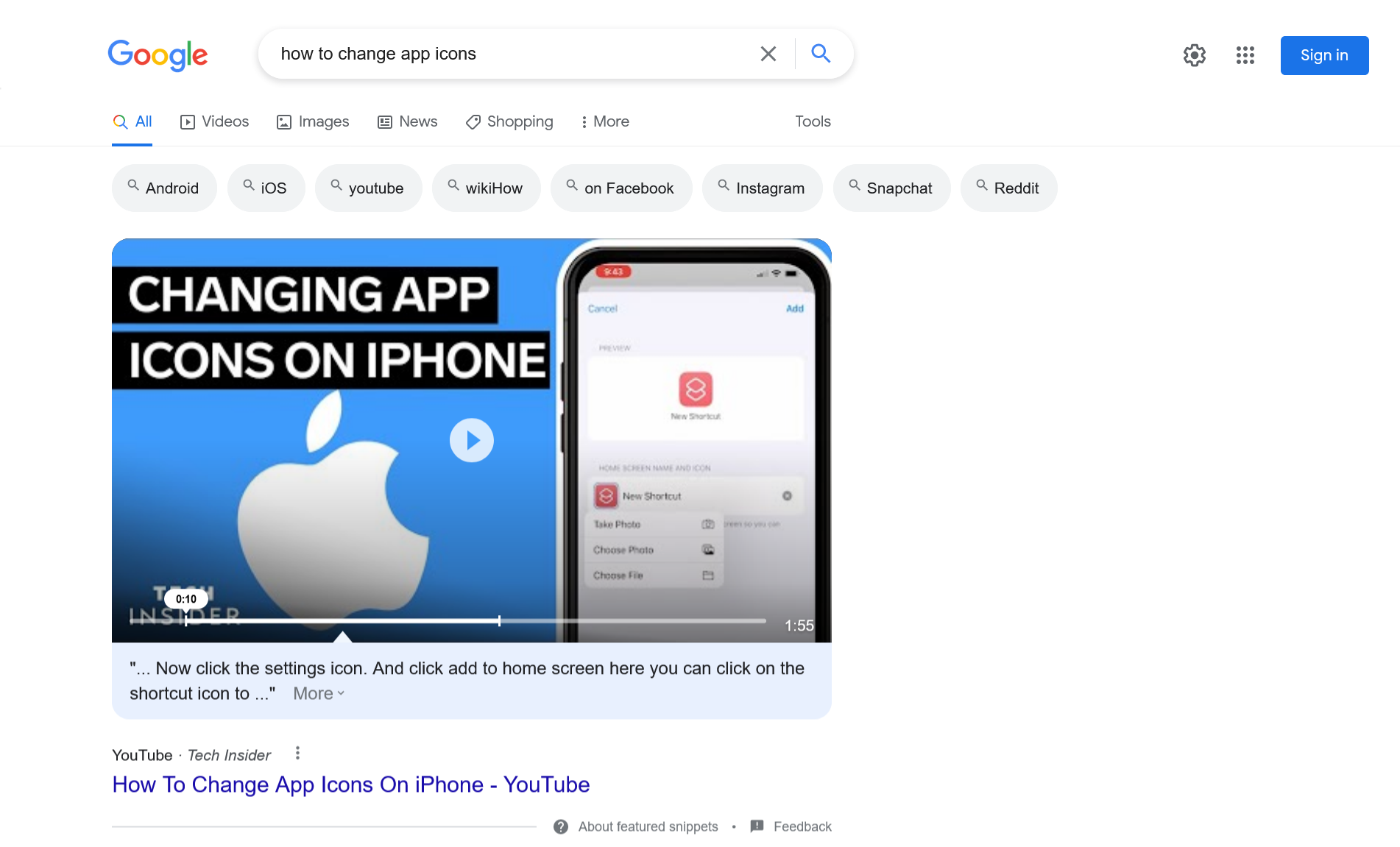
Featured snippets are typically labeled as such in the lower right corner beneath the snippet content.
Other formats of featured snippets include numbered or bulleted lists, like the results of [how to submit a book to a publisher].
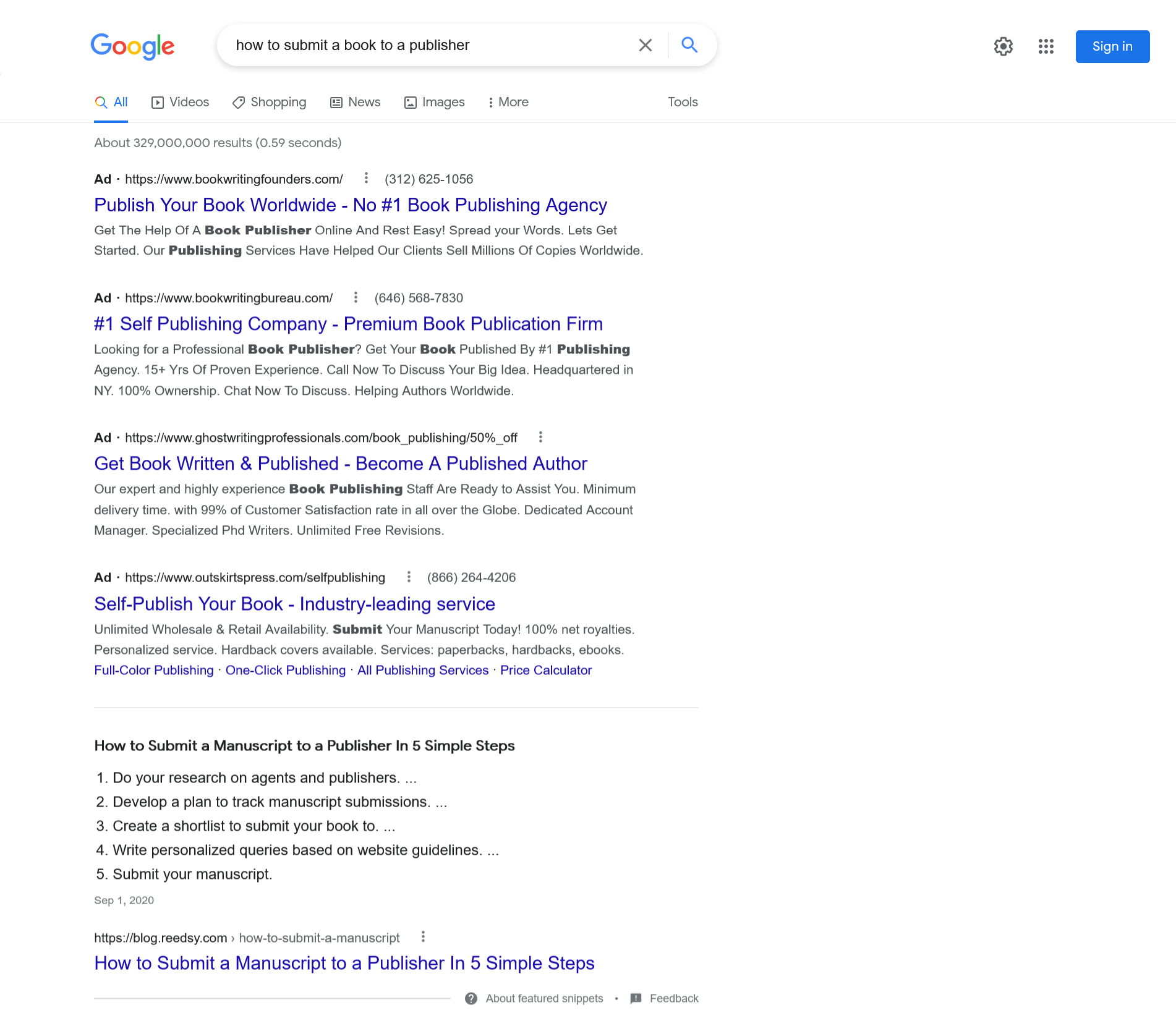
In the above example, you can see that featured snippets sometimes fall below Google Ads for certain search queries.
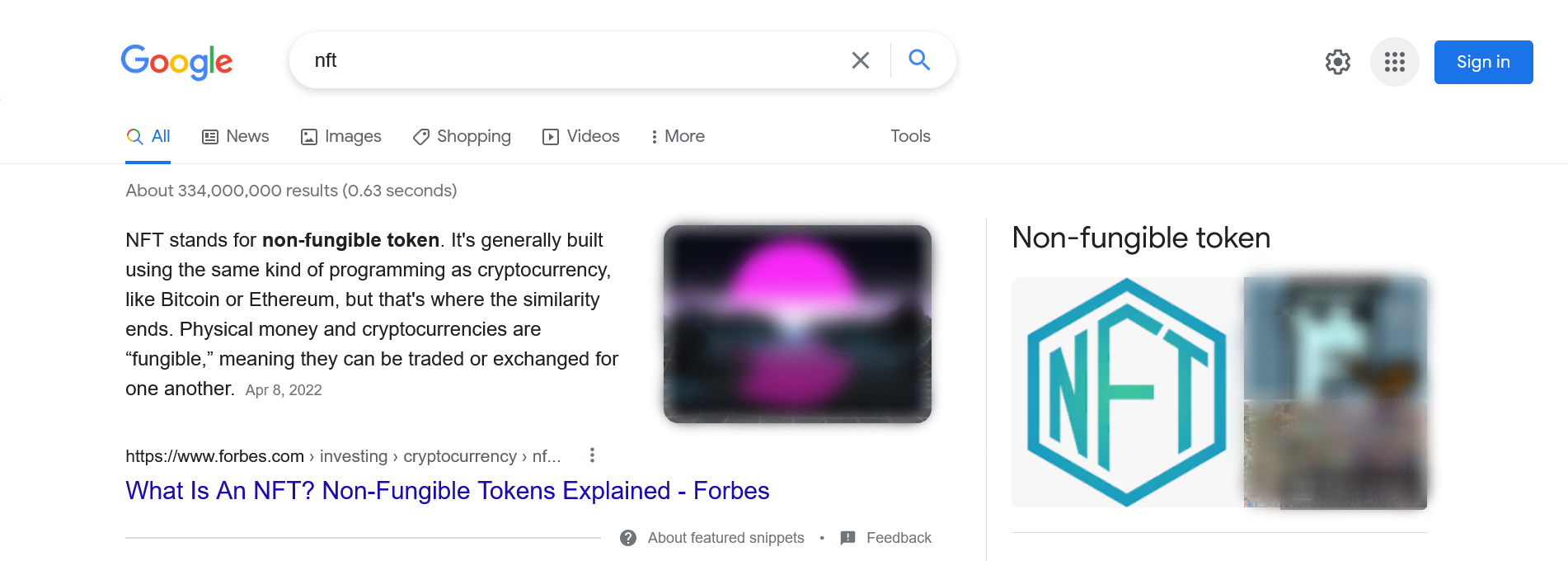
In a search for [nft], the top result is a featured snippet in paragraph form.
In this search for the best list of restaurants from a specific source, the result is a featured snippet in a table format.
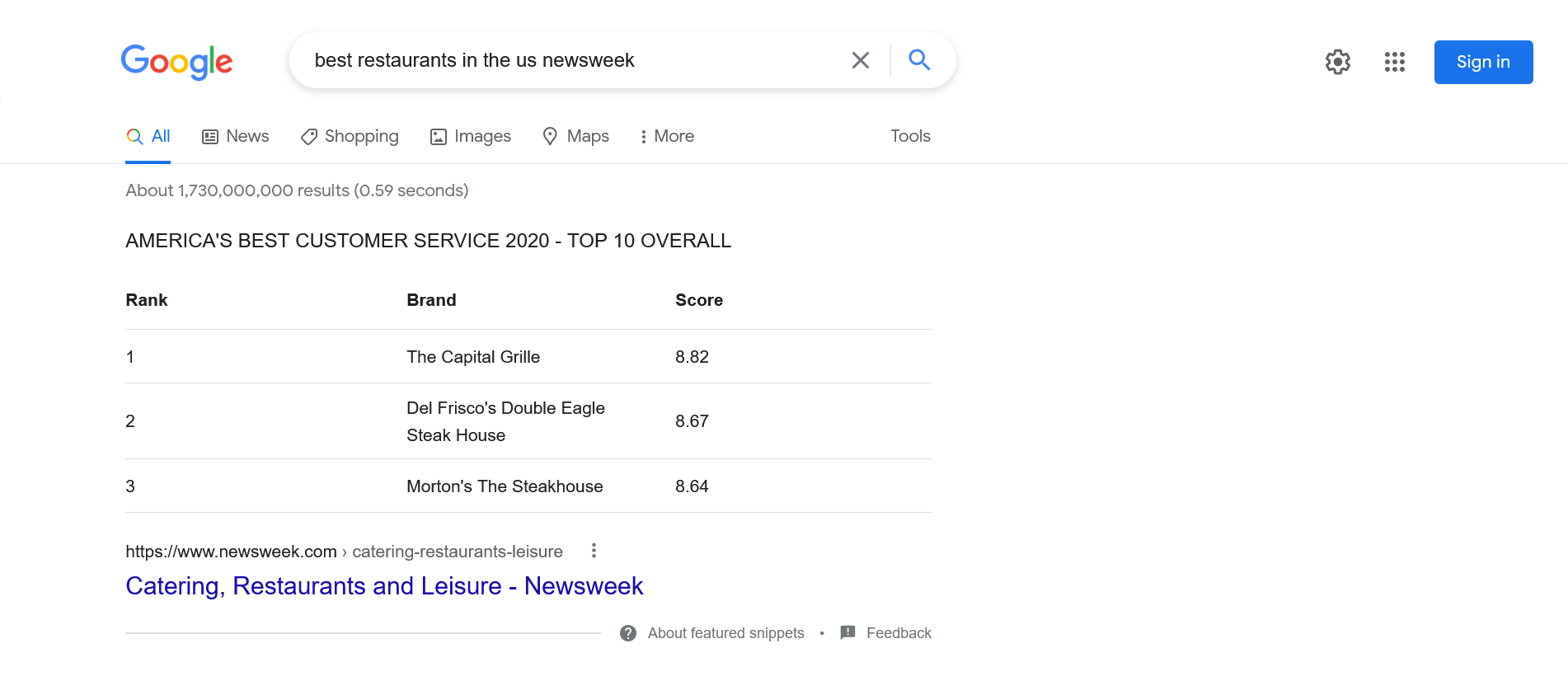
If you want your website to be the source of a featured snippet, follow this 12-step guide to optimizing your content for featured snippets.
Google Ads
Sponsored results from advertisers using Google Ads may appear at the top and bottom of SERPs.
In this search for auto insurance, the SERP begins with three ads.
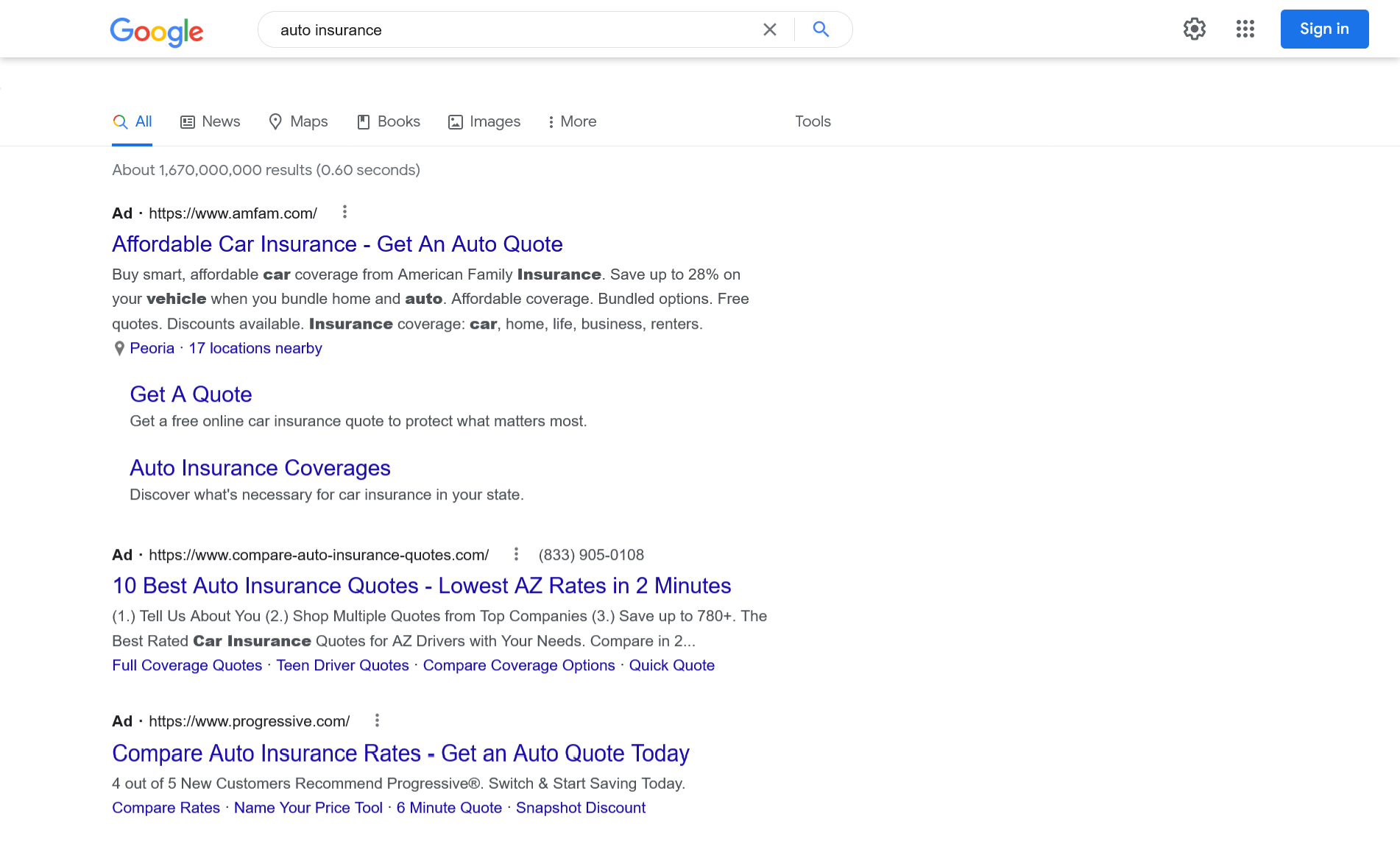
After organic listings, a People Also Ask section, and top stories, Google displays an additional three ads, followed by related searches.
Shopping Ads
In addition to standard text ads, Google also offers retailers the ability to create shopping ads for their products.
Shopping ads typically display the name of the product, price, retailer, and product rating.
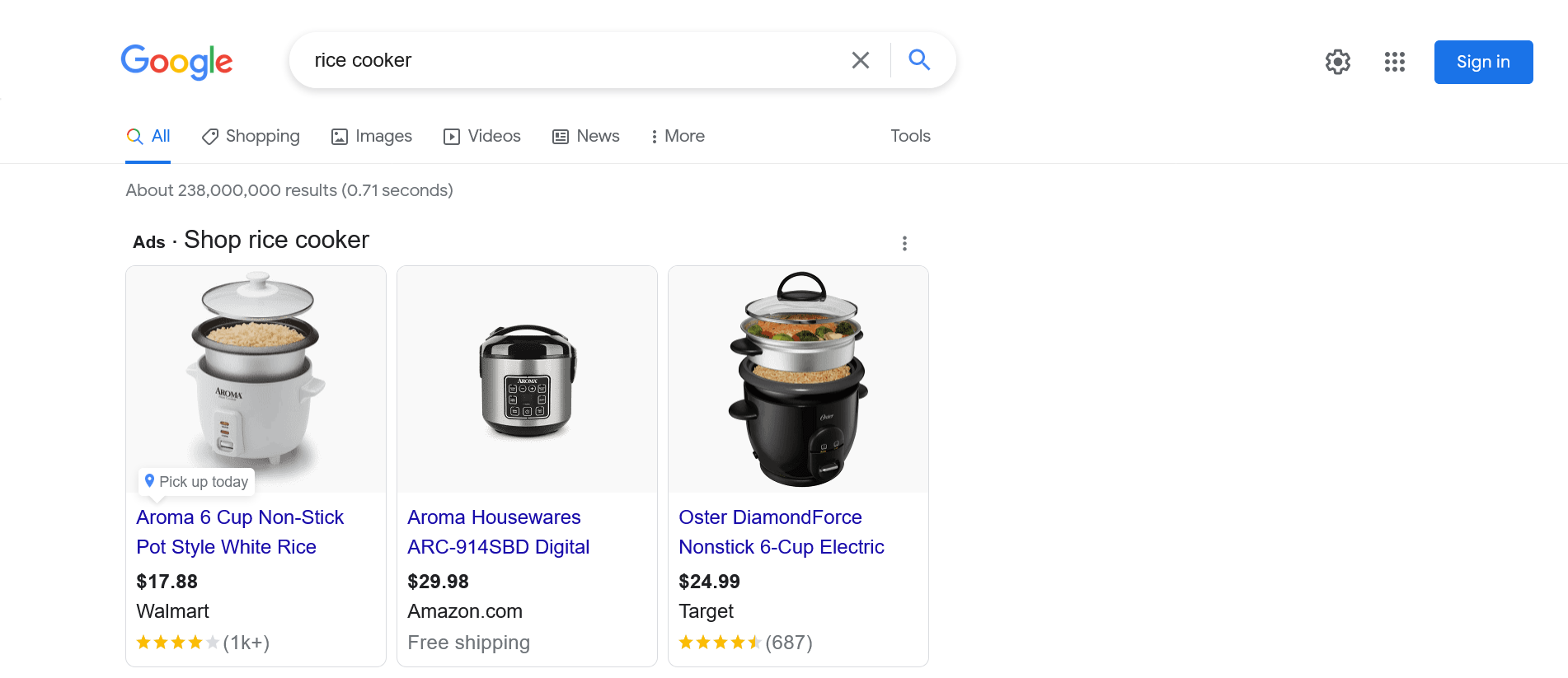
If you want to feature your products in shopping ads, be sure to read this beginner’s guide to shopping ads.
Carousels
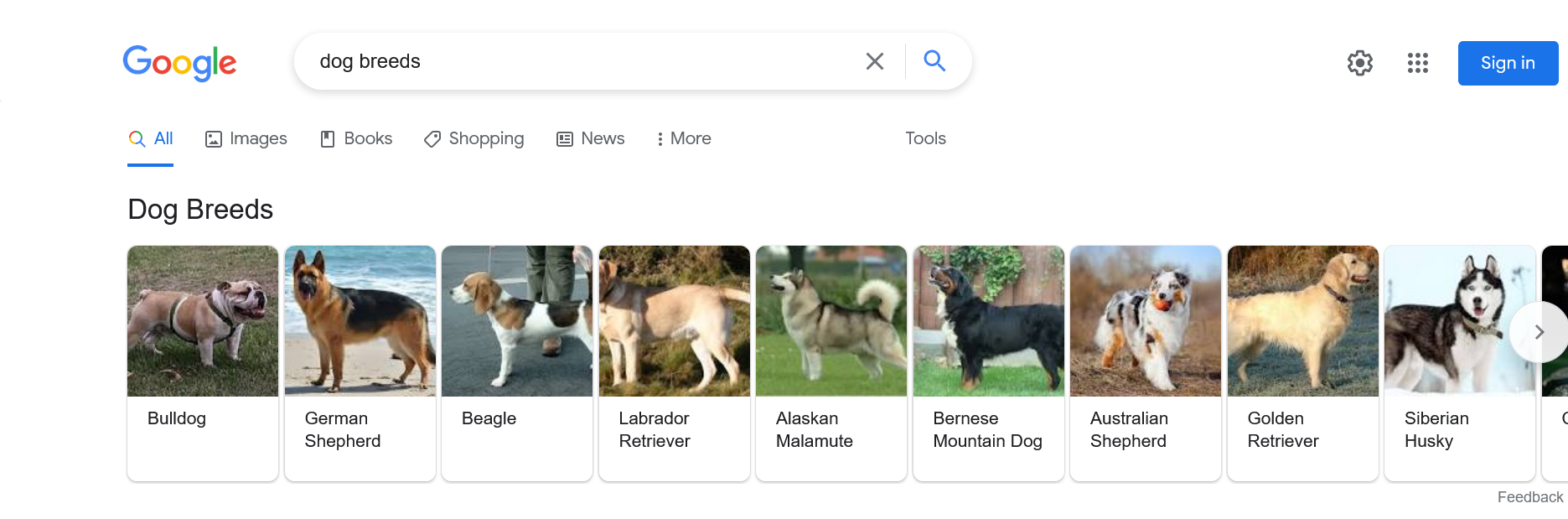
Carousels generally appear at the top of SERPs, offering fast answers to the search query.
For example, a search for [dog breeds] results in a carousel of images with the most popular dog breeds that other Google users search for.
Instant Answers
Want to get a quick answer to a question without having to click through to a website?
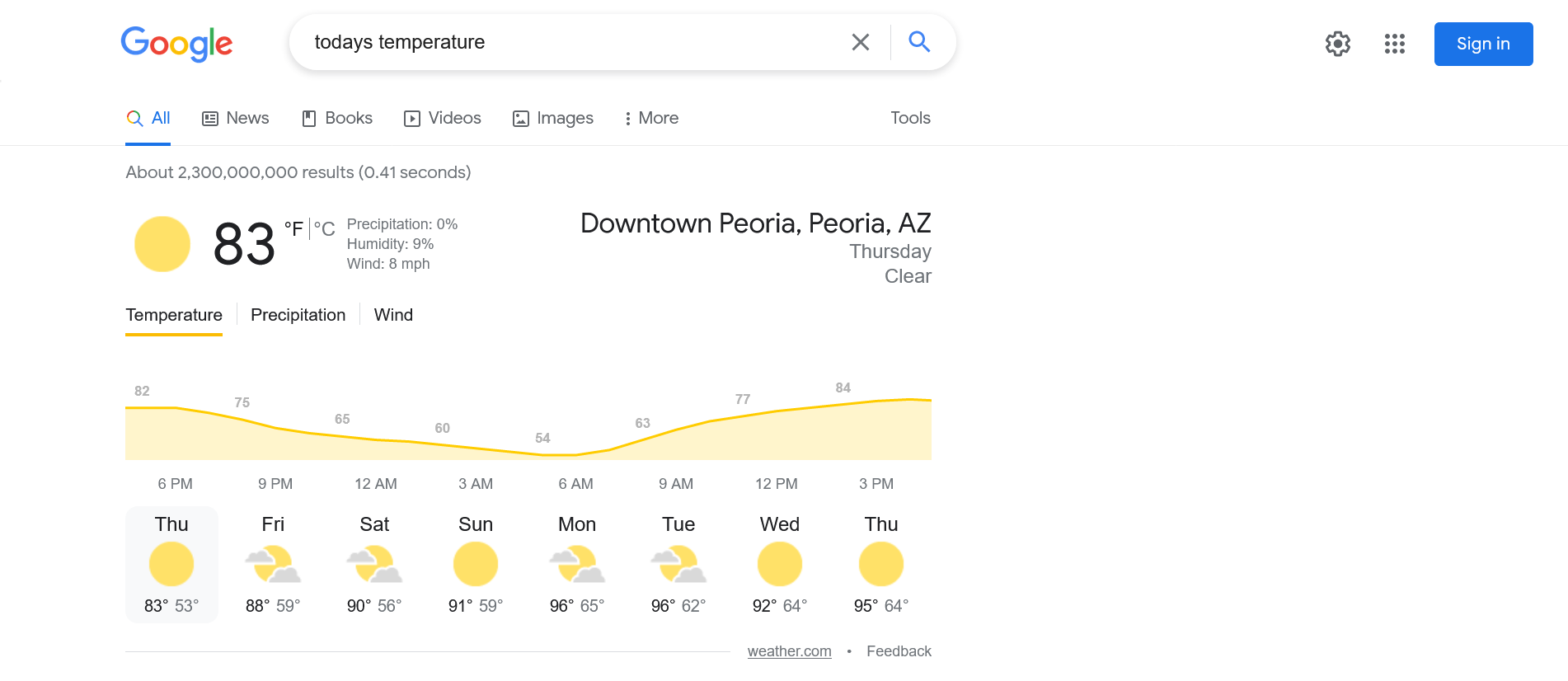
Instant Answers is a search feature Google uses to display answers to a search user’s query at the top of the SERP.
For example, if you search for today’s temperature, you may get the following for your location.
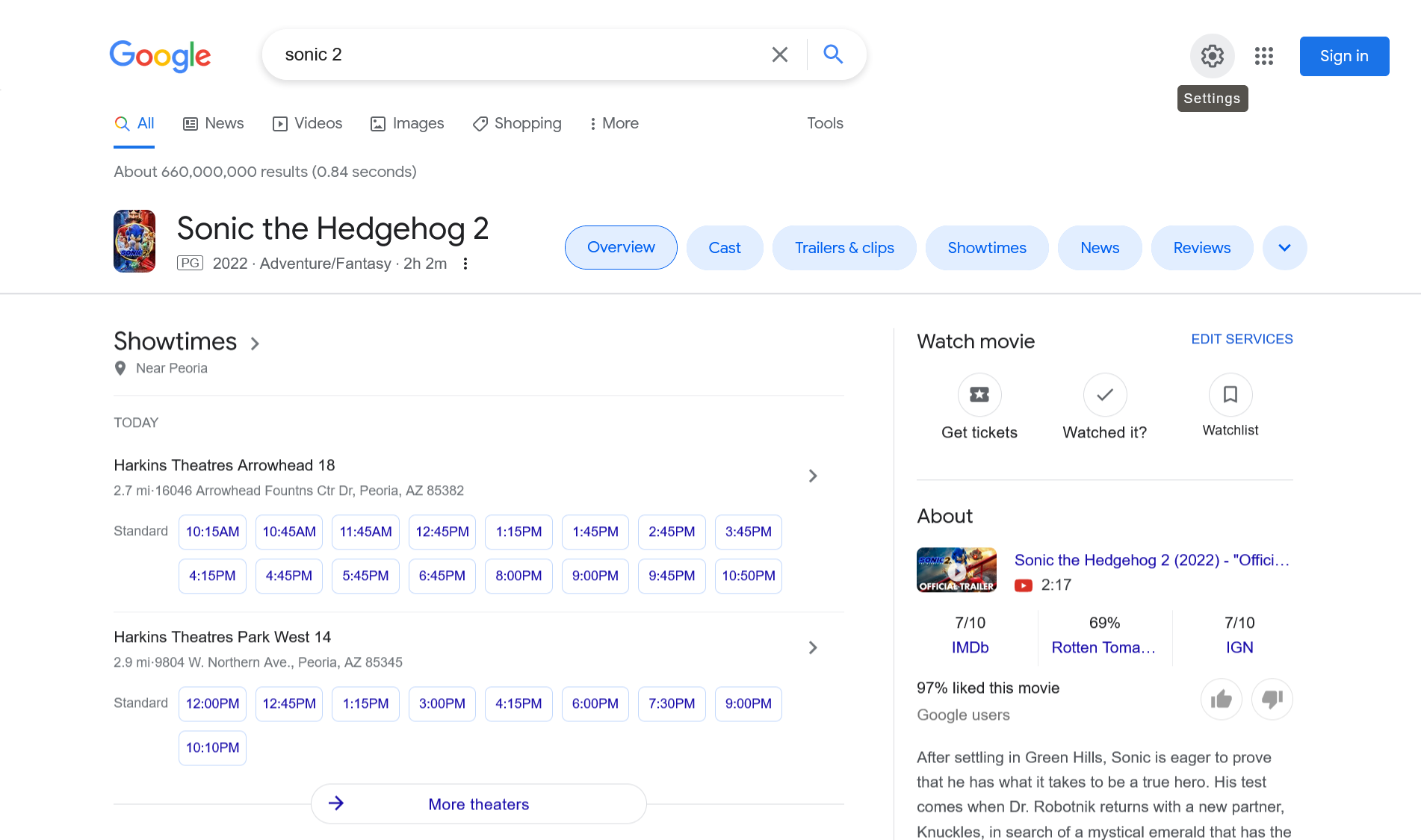
If you are searching for showtimes for a specific movie, Google may display showtimes from the theaters closest to you.
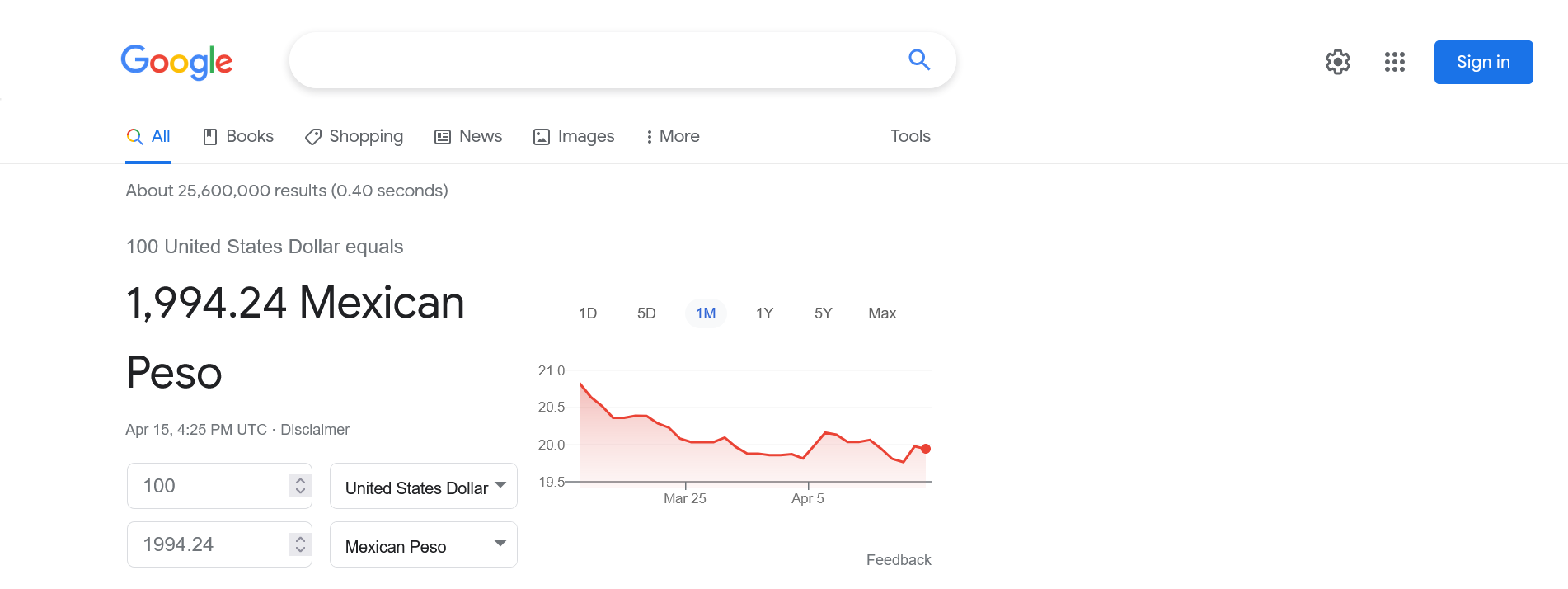
If you need to convert currency at the current exchange rate, Google may be able to provide the answer in the SERP.
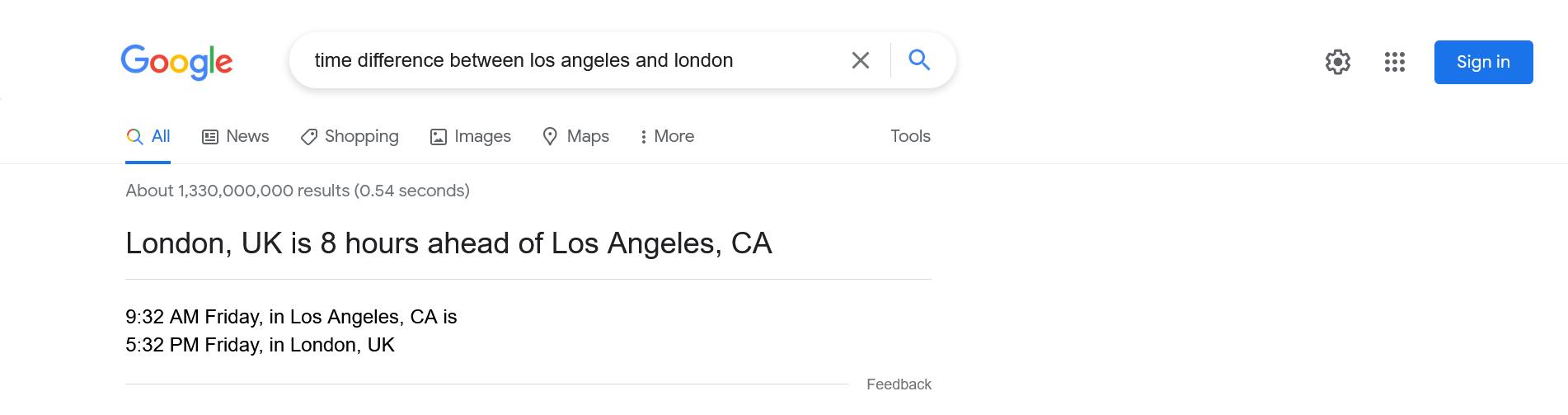
Scheduling a meeting across time zones? Google may calculate the difference between two locations as well as show the current times in both.
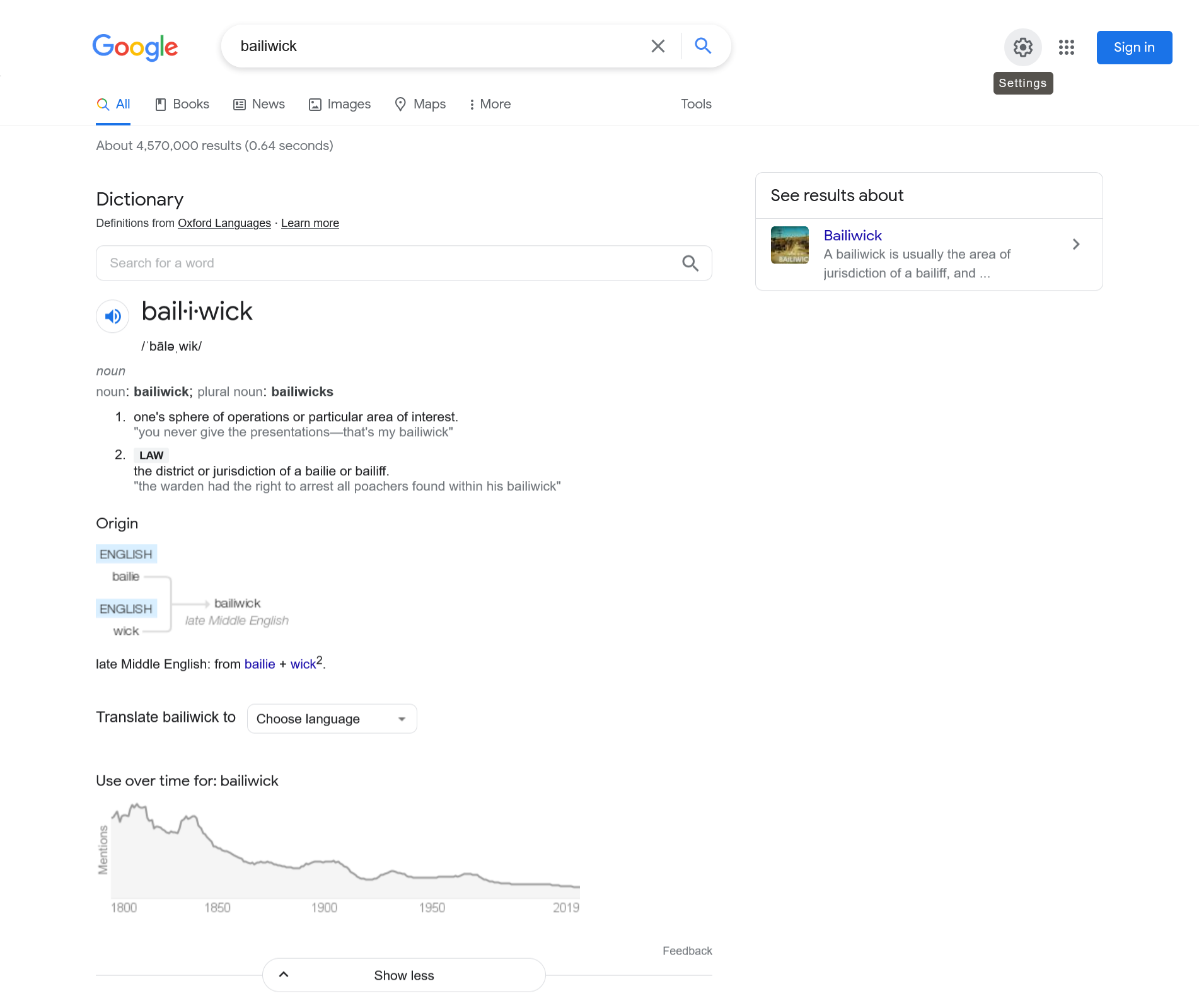
Not sure what a word means? Google may give you the definition, along with the origin and overall use over time.
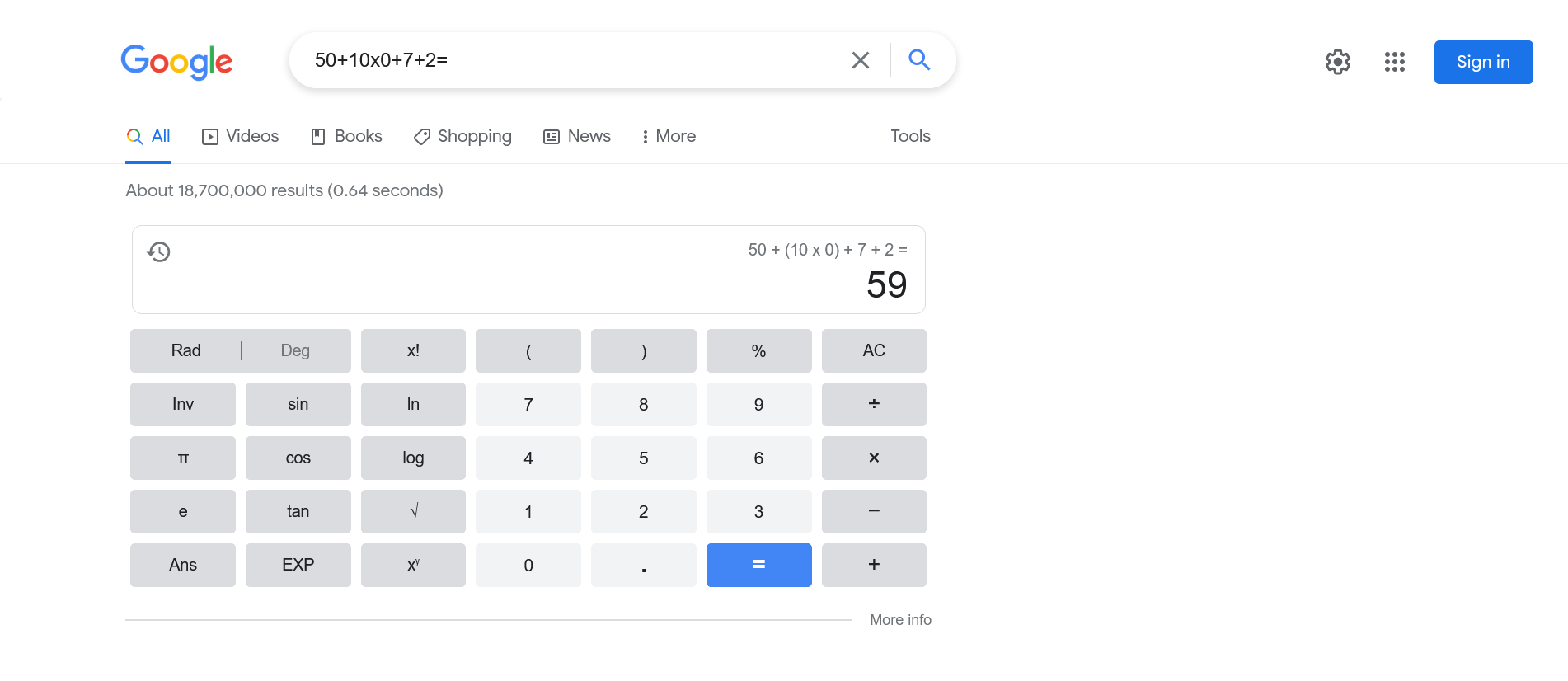
Need help solving a math problem? Google may display the answer along with a fully functional calculator.
Google may also provide instant answers at the top of SERPs for the following types of queries.
- Translating a word or phrase.
- Calculating the number of days until a specific date or upcoming holiday.
- Finding out the score of a recent sports game.
- Determining the age of someone based on their birthdate.
- Getting the dates to popular events, like conventions and festivals.
- Seeing the current share price and market summary for popular stocks.
Top Stories
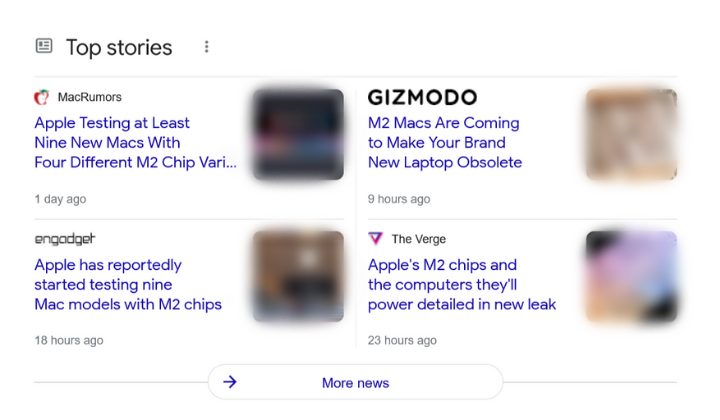
If a search query has related news stories, Google may display a section of top stories from media outlets.
In this SERP for MacBook, Google displays the top stories after shopping ads, organic results, People Also Ask, and more shopping results.
Learn how to optimize your content for Google News so that your articles can appear in the top stories for related search queries.
Tweets
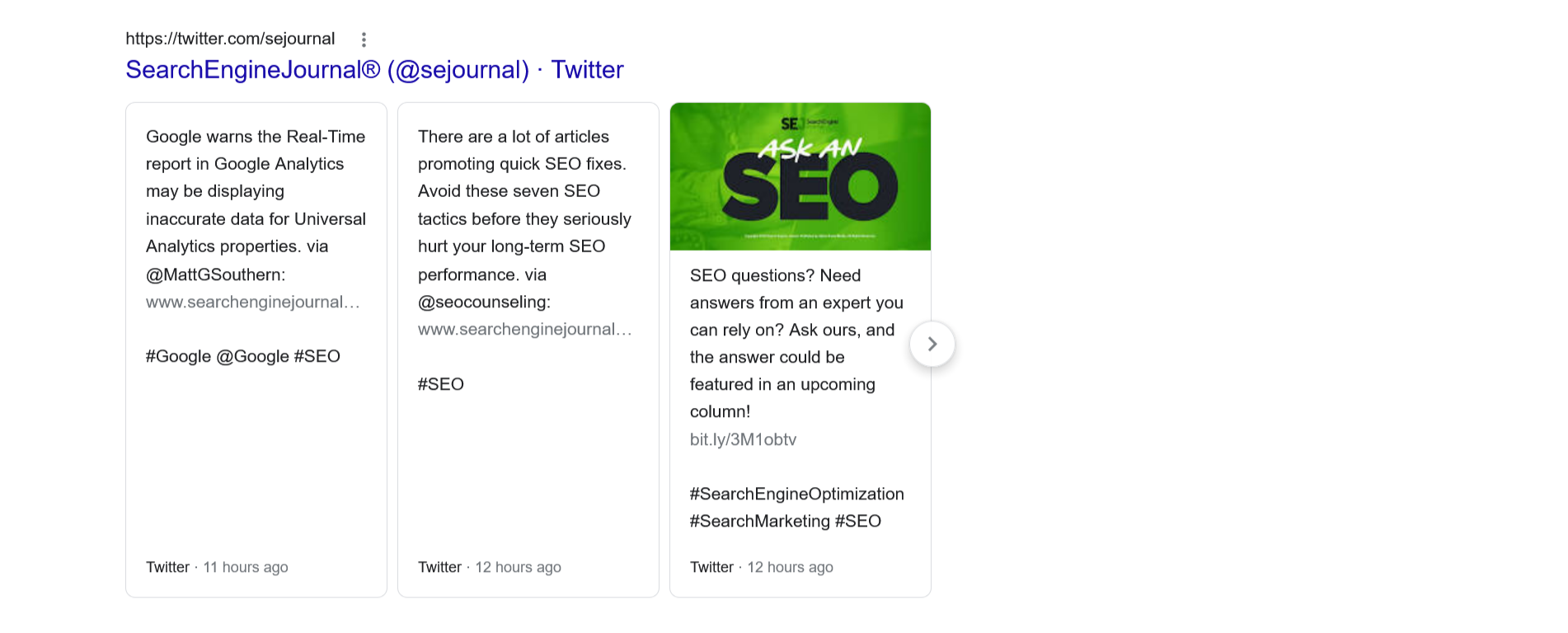
A small percentage of SERPs will feature tweets relevant to the search query.
In the following search for Search Engine Journal, after the first organic search result and a people also ask section, the latest tweets from our official Twitter account appear.
Find out how you can use Twitter to increase your visibility in search results.
Apps
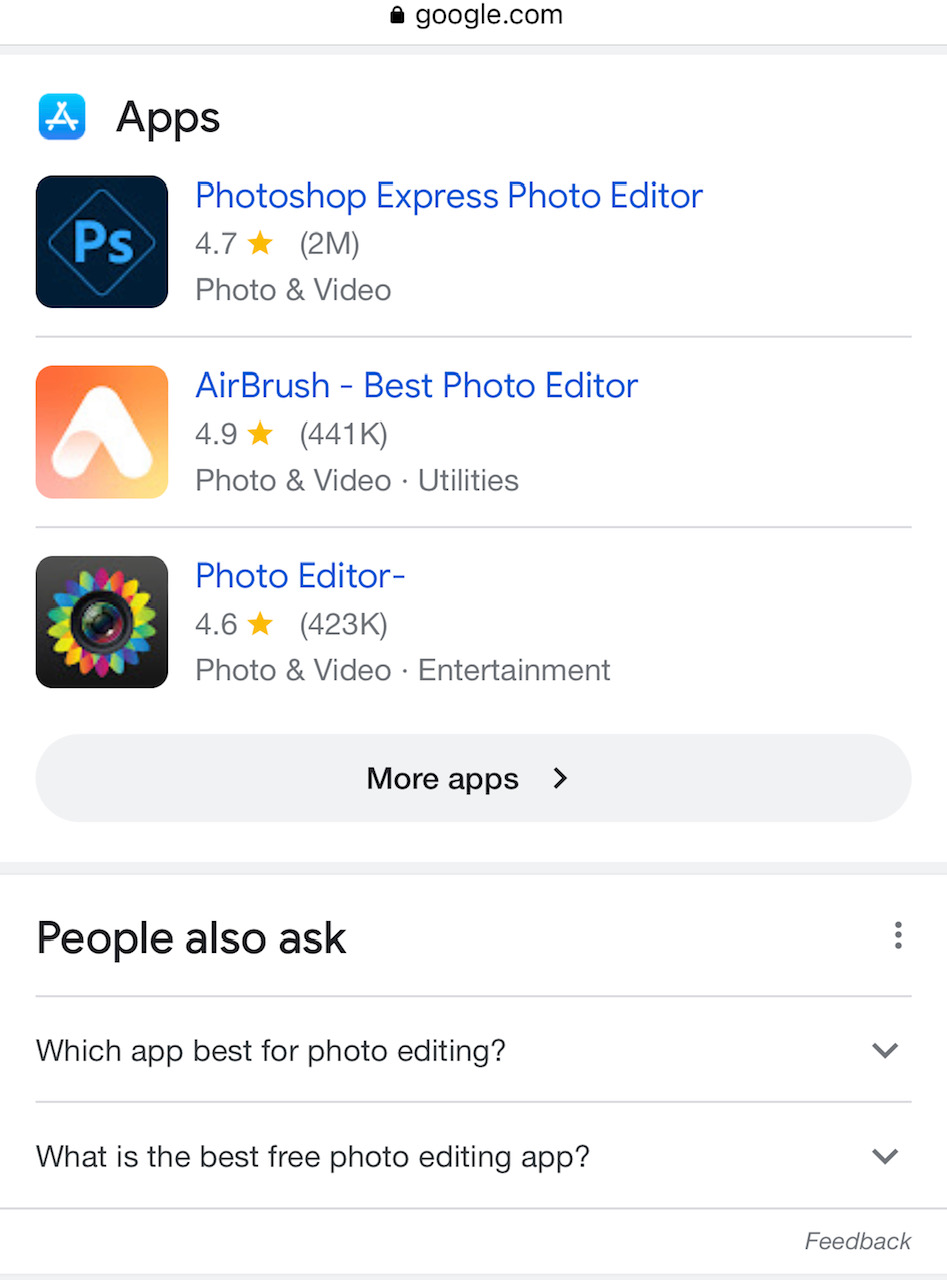
Google search users on mobile devices may see features that are only available on mobile.
In the following search for photo editing apps, Google displays apps from the Apple store after three ads and a list of apps from sources across the web.
Product Comparisons
Google has the ability to take product information and display it in search results for users looking to compare products.
In the following search for [iphone 12 vs iphone 12 pro], you can see a side-by-side list of the product images, reviews, price, and additional details.
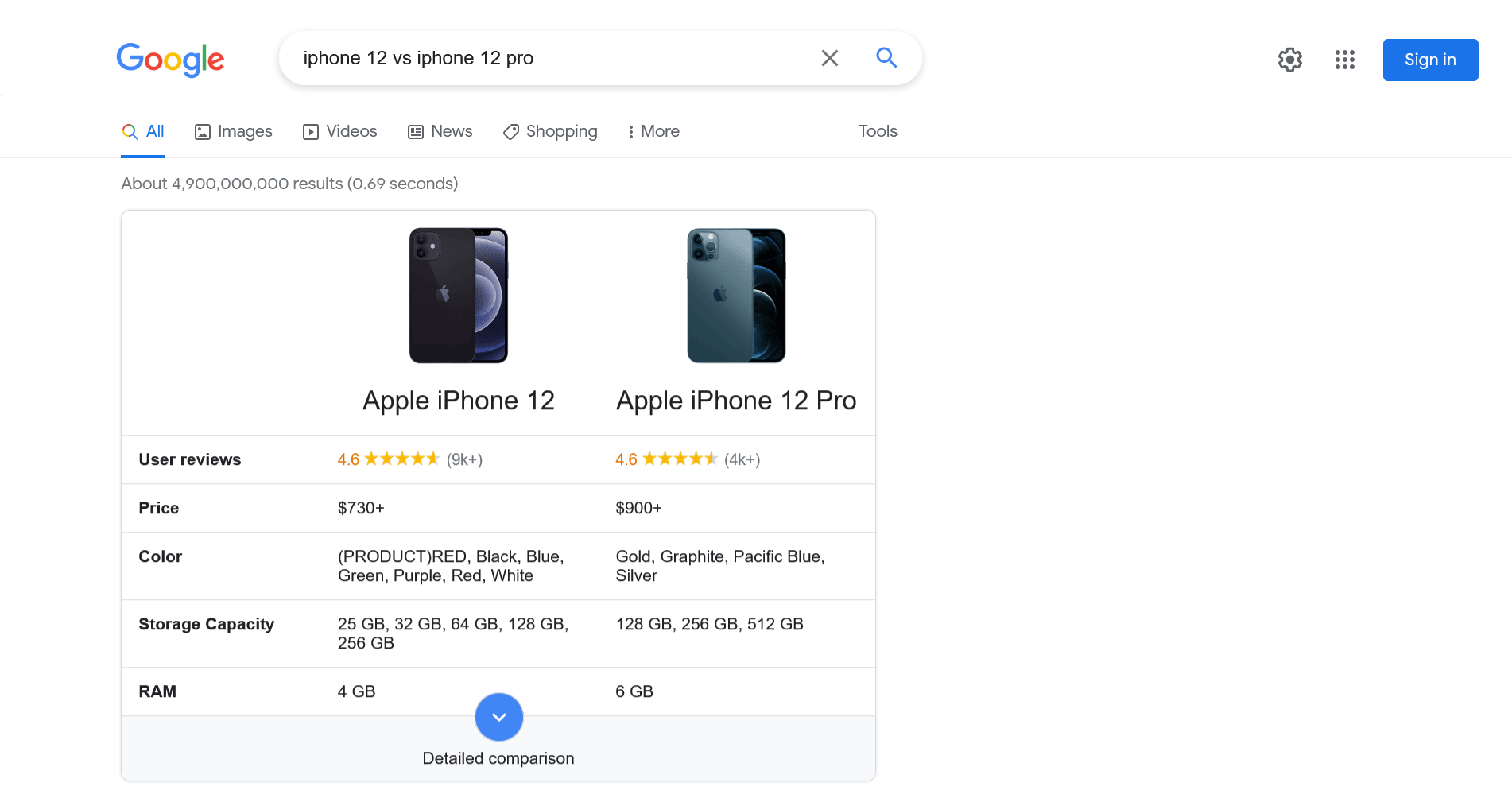
When search users click on the detailed comparison link, Google displays additional details about the products compared, along with the option to add additional products for comparison when relevant.
Top Products
Unlike shopping ads, the top products feature showcases unadvertised products related to a search query.
In the following search for mirrorless cameras, Google displays the top mirrorless cameras after organic search results and a People Also Ask section.
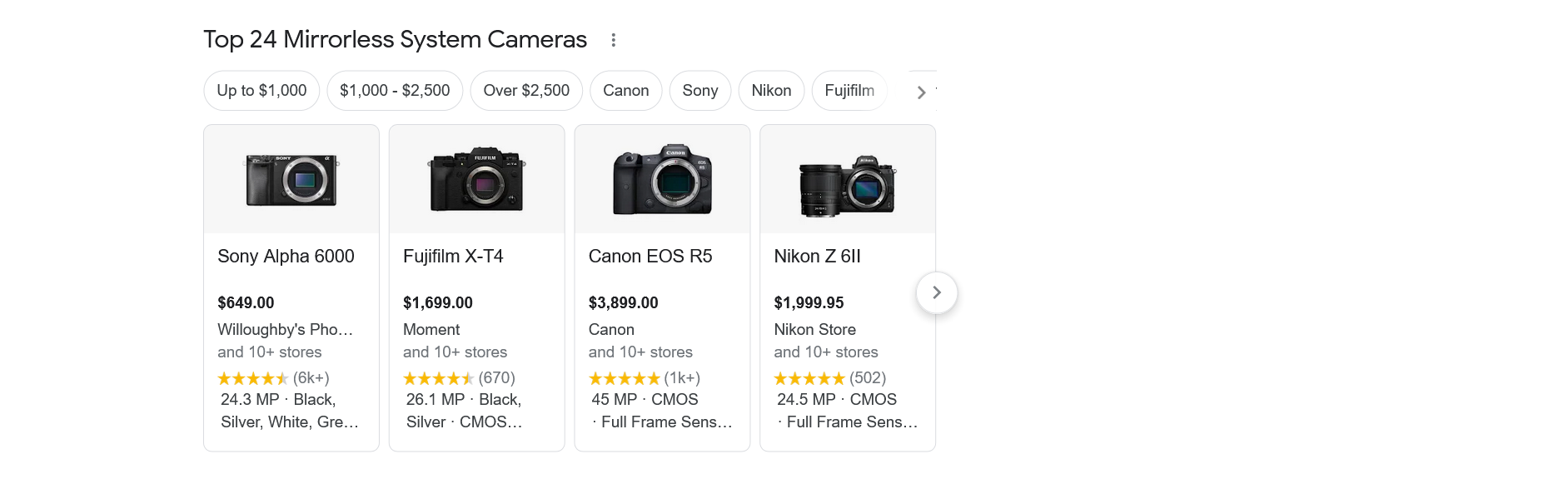
When you click on a product, additional details about the product appear.
Google displays reviews from third-party sites, prices from multiple retailers, top insights from media outlets, and reviews from multiple retailers.
Jobs
Google helps job seekers by aggregating jobs from various sources across the web and displaying them within SERPs for queries like [jobs near me].
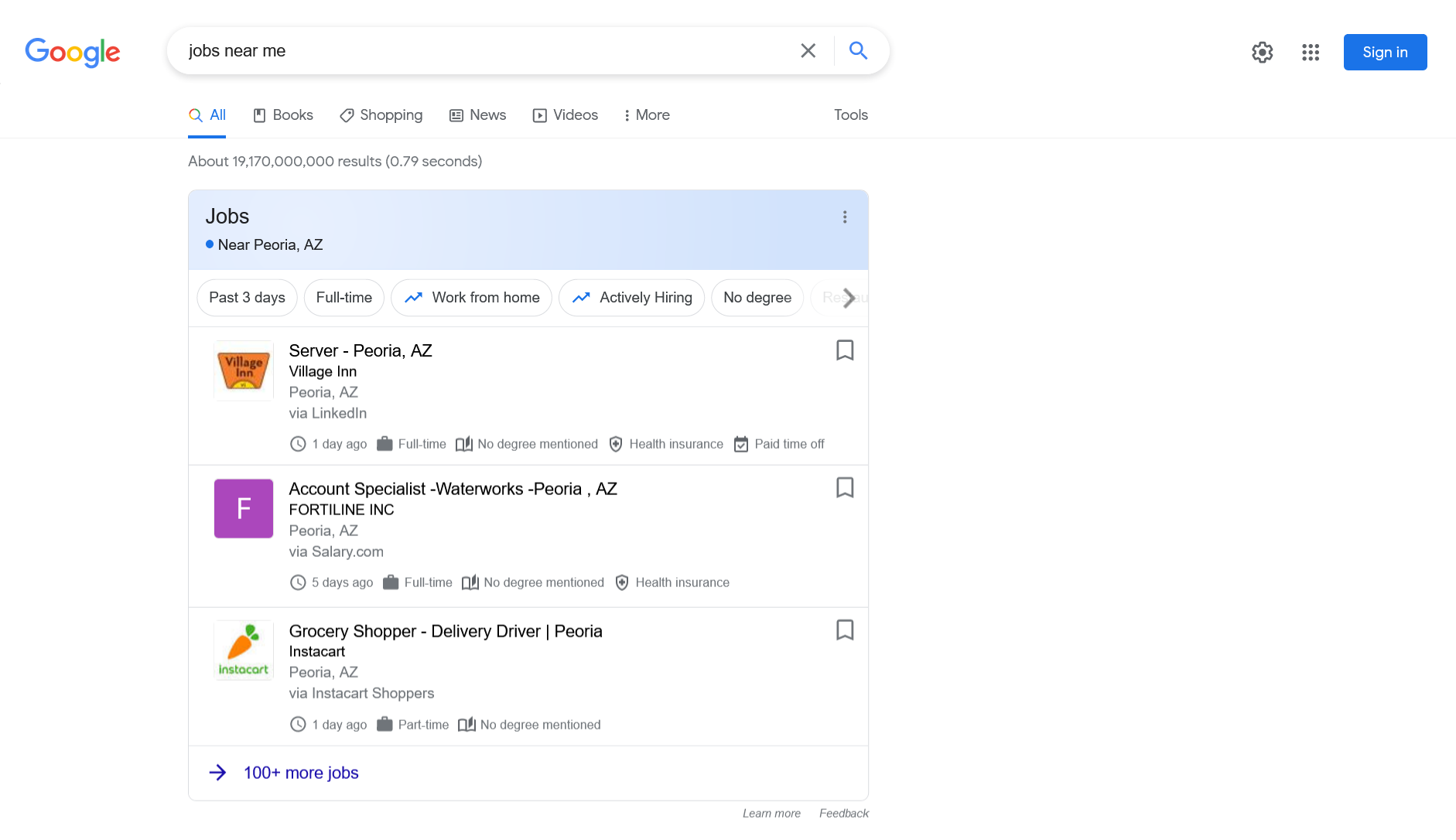
Learn how to optimize your job postings to ensure they get noticed by Google.
Conclusion
Google continues to update its algorithm and search features to create a better experience for search users.
Always be on the lookout for new features appearing in SERPs for your targeted search queries.
Then, discover ways to optimize your webpages to appear in search features that will draw more attention to your brand in SERPs.
More Resources:
- 2022 SERP Feature Trends & Tips For A Better SEO Strategy
- SERP Analysis Tools For SEO and Ranking?
- Mastering SEO Within Google’s SERPs [Podcast]
Featured Image: Rawpixel.com/Shutterstock
