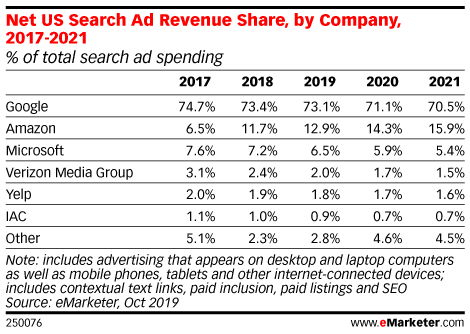
A lot of things happened in November related to web activities and which affected the volume of web searches. Election-related searches for must have taken the focus of web searches, but this was overshadowed by consumer related searches relating to Black Friday sales. These have all contributed in a way to the increase in Google’s search market share as the latest search volume data from Compete.com revealed.
Google manages to snag 70.8% search market share in November, up by 1.7% from October’s query volume.Yahoo on the other managed to get a .5% increase despite remaining below the 20% mark. Microsoft, Ask.com and AOL all managed to get percentage increases although not significant enough to elevate their search market share above 10%.
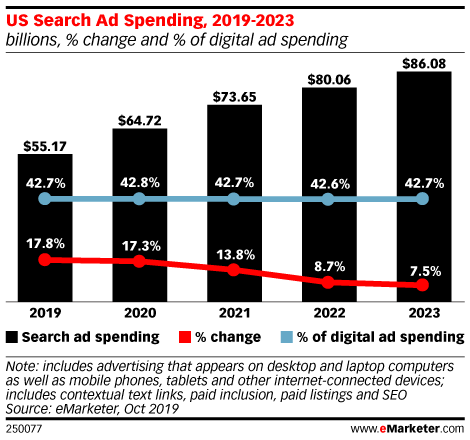
Also for the first time, Compete’s November search market report included sponsored search referrals. These are clicks made on sponsored links which results into revenues for the search engines. Sponsored search referrals are the bread and butter of search engines and plays an important role on a search engine’s life.
Interestingly, Google registered the biggest increase in sponsored search referrals for November as against sponsored search referrals for October of 2008 at 1.0% increase. Yahoo, MSN and Ask.com also managed to register a slight increase in their respective sponsored search referrals.


G remains king of search…no suprises there
Good
Do you think that compete is more accurate than comscore?
None of them are accurate and these query-based metrics are one of the most ridiculous numbers the SEO industry has paid attention to in years.
You would do better to measure Toolbar PageRank than to gauge market share on the basis of number of queries performed. There are many people searching for themselves and checking rankings at Google.
A large portion of that search activity flows through the ISP connections that Compete and other metrics companies sample for their market share estimates.
A much better gauge of search market share would be number of search referrals (broken down by organic vs. paid would be even better). Unfortunately, there is no way to get that kind of data if the search engines won’t divulge it.
Some large PPC providers publish their PPC referral data (in aggregate to protect client privacy) but they don’t fully disclose their methodologies and I suspect there are advertising budget biases in the data.
A better metric than queries-performed is number of visitors to search destination, although that data is not completely unambiguous. As long as you can get estimates for search subdomains, however, you at least have a much clearer idea of how many people use each search engine.
Nearly as many people use Microsoft’s search services as use Google’s. THAT is a number worth knowing.