
Microsoft Advertising is rolling out what it calls its biggest bidding model upgrade in a decade. The new models use more signals to predict whether an ad click will turn into a conversion and what it might be worth.
Microsoft will apply the upgrade automatically as it reaches more accounts. That means campaigns can start spending differently before you make any changes yourself. Microsoft announced the rollout on November 18 and plans more bidding updates in 2027.
What Could Change In Your Existing Campaigns?
Microsoft says the new models can change how quickly campaigns spend and how closely they stick to your targets. These are the areas to keep an eye on:
- Budget pacing. Campaigns can ramp up to their full budgets sooner and spend more evenly throughout the day.
- Target changes. When you raise or lower a CPA or ROAS target, bids can adjust nearly twice as fast.
- Performance against targets.Microsoft says campaigns can hit those targets more consistently without giving up conversion volume or value.
A $50 CPA target still leaves room for a campaign to bring in conversions at $40 each, even if it spends its full budget. A max CPC can limit that flexibility. Say you average $3 a click and cap bids at $5. The cap rules out a $6 bid even if Microsoft expects the click could bring in a conversion within your CPA target.
Say you raise your CPA target on Monday and customers usually take a week to buy. By Friday, you know what Monday’s clicks cost, but you may still be waiting on some of the sales. Faster bidding won’t shorten the time those customers take to buy.
Raising a CPA target or lowering a ROAS target can open up auctions your campaign previously passed up. To limit swings in performance, Microsoft suggests making those changes in 15% increments and reviewing each after one conversion cycle. For a bigger change, like switching bid strategies or adding a conversion goal, Microsoft recommends allowing one to two cycles.
How Much Conversion History Do You Need To Start?
Microsoft recommends conversion-based bidding for new campaigns once the account has at least five conversions. Those can come from campaigns you already run. If you’re still gathering your first five, Enhanced CPC is an option.
On LinkedIn, Sophie Westall asked if the same advice applies to low-volume accounts already using Enhanced CPC. Microsoft Advertising Liaison Navah Hopkins replied:
Every account is different so a blanket recommendation still needs to be put to the test. With that said, so long as the account has at least 5 conversions total, the system is smart enough to use that to begin with conversion-based bidding. While we still recommend the 30-day evaluation period and not making too many changes if you’re working with fewer conversions, the system is much more responsive now!
For judging performance, Microsoft recommends around 30 conversions in 30 days at the campaign or portfolio level. A low-volume campaign can reach the end of that first month and still have too few conversions to judge the switch.
What Microsoft’s Internal Data Shows
Microsoft reported 10% more conversion value per click at roughly the same ROAS after the model upgrade. That result came from August 2026 global Search and Audience Network data for advertisers using Maximize Conversion Value or Target ROAS.
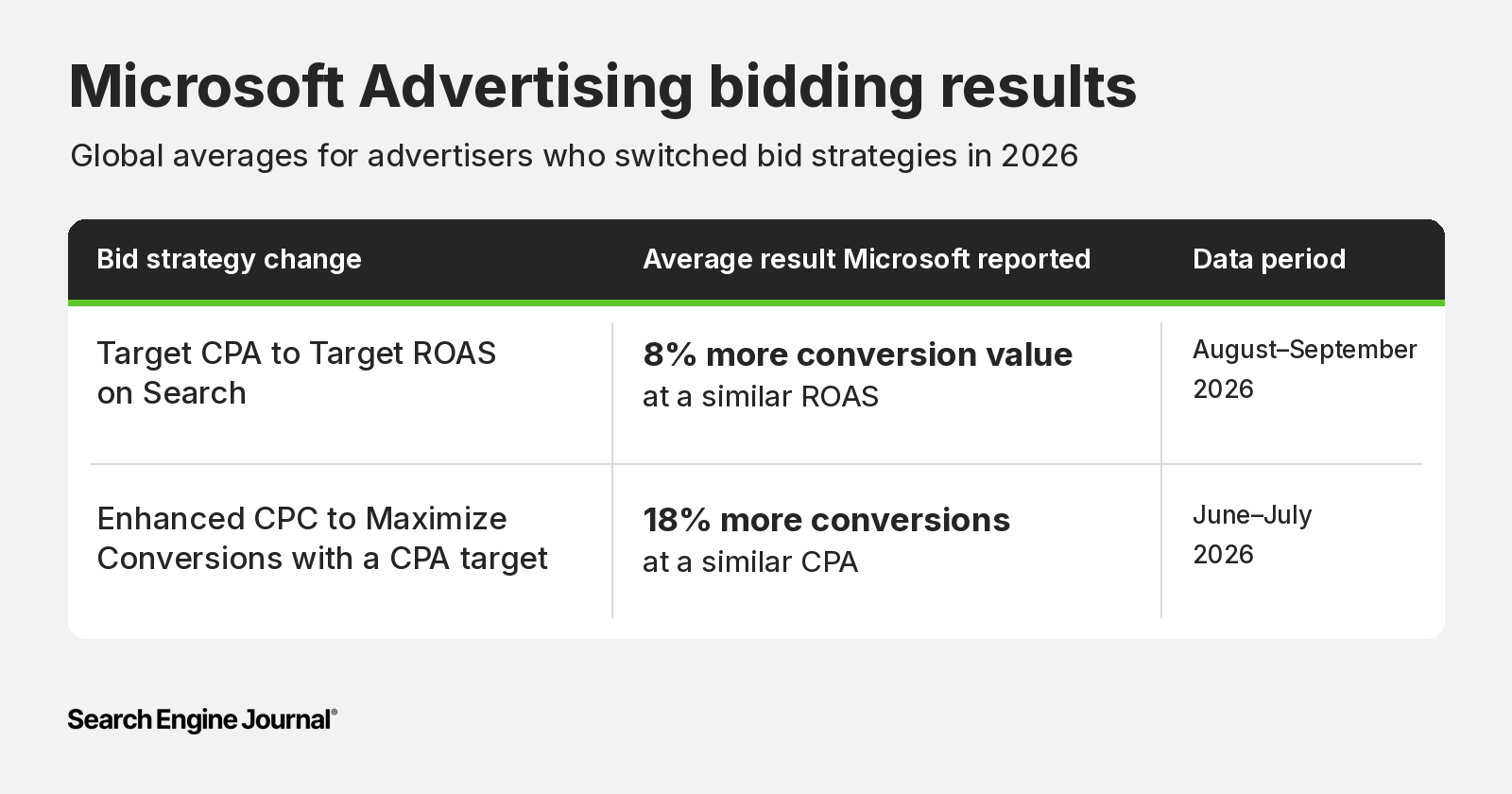
Microsoft also looked at advertisers who switched bid strategies. Search advertisers who moved from Target CPA to Target ROAS saw 8% more conversion value at a similar ROAS. Advertisers who moved from Enhanced CPC to Maximize Conversions with a CPA target saw 18% more conversions at a similar CPA.
What This Means For Advertisers
If you’re considering Target ROAS, pull up a few recent purchases in Microsoft Advertising and compare the reported values with the order totals. A $40 order and a $400 order can both show up as conversions even if your tracking assigns them the same value. That’s easy to miss if you’re used to checking that purchases are coming through and leaving it there.
Microsoft reported its largest gains from value-based bidding among advertisers who sent actual transaction values. If your purchase goal uses a fixed value, the reported ROAS reflects that estimate. It can move as you sell more or spend less, but it won’t capture a change in how much customers spend per order.
With lead gen, you may need time to get a better read on what a conversion is worth. Two people can submit the same form, and sales may find out a week later that only one is a fit.
Pedro Bailaderia asked Navah Hopkins about sending an estimate at submission and updating it once more information comes into the CRM. Hopkins supported using the Conversions API or offline imports. She also advised setting a ROAS target that reflects the values you send.
If your team is still working out how to value a qualified lead, that’s worth settling before you set a ROAS target. A campaign can hit the target you set while sales is still waiting for more leads it can work with.
Looking Ahead Of Microsoft’s Bidding Upgrades
If a campaign already brings in the sales or leads you need at a cost you’re happy with, you can give the upgrade some room before changing anything. Keeping your settings steady makes it easier to see how the new models work with the goals and budget you already have.
The rollout may be more useful if you’ve been adjusting targets to get a campaign to spend more evenly. If delivery settles down on its own, you may have fewer reasons to touch those targets during the week. That would leave you freer to change them when the business needs more volume or can afford to pay more for a conversion.
Featured image: Bangla Press / Shutterstock
