
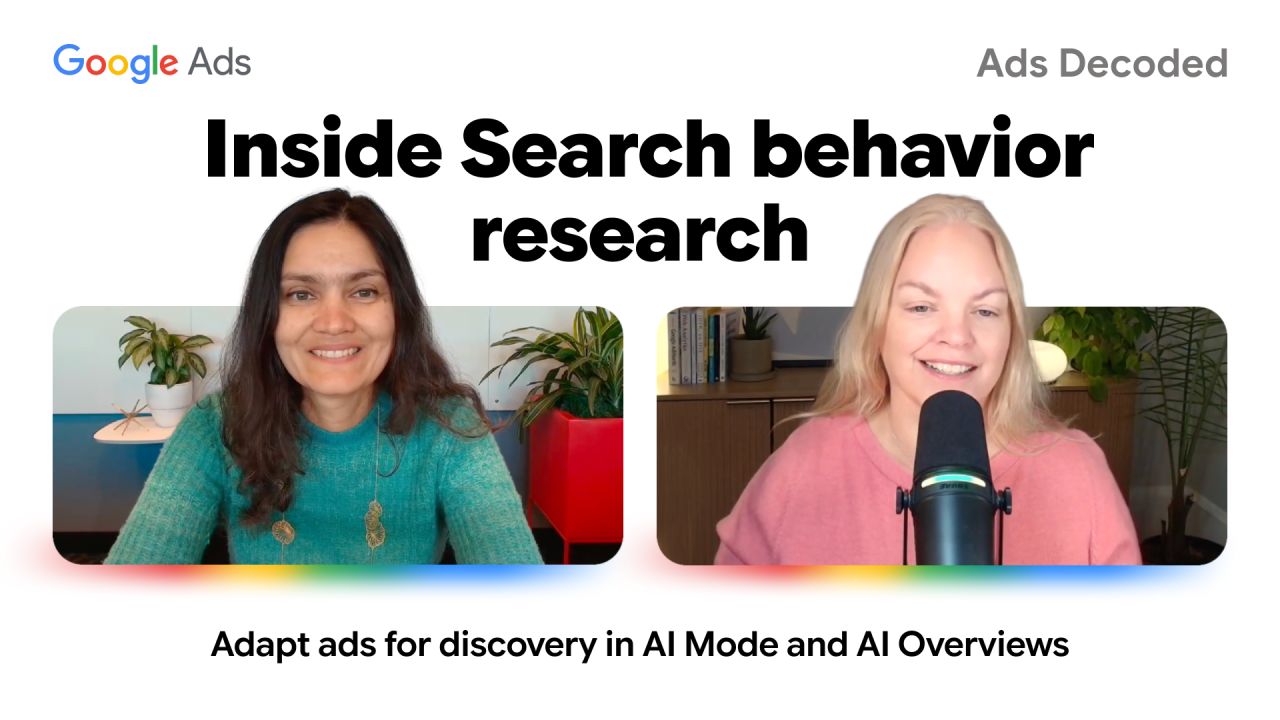
People are asking longer questions in Google’s AI Mode and using Search to explore decisions earlier, according to the latest Ads Decoded episode.
The October 28 episode features Ginny Marvin, Google Ads Product Liaison, and Shivani Mohan, Search Vice President of Data Science and User Experience Research.
Their discussion covered how people use AI-powered Search and why human perspectives remain part of their research. Marvin also shared takeaways for advertisers developing their 2027 strategies.
Google Says Search Is Becoming More Conversational And Exploratory
In her LinkedIn post, Marvin outlined three takeaways on the modern search experience for advertisers looking at their 2027 strategies:
- Discovery is moving up the funnel: People use conversational search for brainstorming and discovery well before they reach a purchase decision.
- Curiosity is expanding: Queries in AI Mode are three times longer than traditional searches, and one in six searches is now multimodal, though Marvin’s post does not specify the baseline definitions or measurement window for those figures.
- Users want human perspectives: Podcasts, video reviews, and firsthand experience remain part of how people research and make decisions.
The official episode notes add that people are asking 3x longer questions, going back and forth on follow-ups, and searching with voice and images, giving them room to include personal nuance and work through complex decisions right as they search.
That gives advertisers more to consider than the initial search phrase. The questions people ask as they narrow their options can reveal concerns that a product description or general service page doesn’t answer.
The discussion also suggests that discovery and evaluation can happen within the same conversation. A person can begin by exploring a problem, then ask about options and tradeoffs as they learn more.
What Google’s Search Figures Tell Advertisers
Google’s October 28 advertising announcement also cites the 3x longer figure, linking to a U.S. AI Mode report published in May 2026. The statistic compares average query length, but doesn’t show how differences in users or search tasks affect that comparison.
Longer questions can give advertisers more information about someone’s needs. The figure by itself doesn’t show stronger buying intent or better conversion rates.
The report also says more than one in six AI Mode searches in the U.S. are multimodal. That’s narrower than the “one in six searches” wording in Marvin’s post and shouldn’t be applied to all Google searches.
Advertisers can use these findings to examine the questions customers ask and the information they include. Mohan’s comments about human perspectives address another part of that research: what people want from the content they find.
Users Still Seek Human Perspectives Alongside AI Summaries
In her LinkedIn post about the episode, Mohan wrote that users:
…appreciate the streamlined clarity of AI summaries, yet they actively crave the rich detail, lived experience, and earned authority of the open web.
She pointed to forums, podcasts, and videos as places people seek those perspectives.
For advertisers, her comments suggest customers want more than a description of what a product does. They may also want to hear how it performs in practice, what its limitations are, and why someone chose it.
A review or demonstration can answer those questions when it includes experience the brand’s product copy doesn’t provide. Repeating that copy on camera gives the buyer little additional information.
Mohan also referred to billions of clicks to the open web, without providing a timeframe or comparison. The figure doesn’t show whether traffic is growing or how those clicks are distributed across websites.
Her comments describe demand for firsthand experience, but don’t establish that publishing more videos or reviews will bring more Google traffic.
For 2027 planning, advertisers can start with the concerns customers raise before buying, then assess whether their content answers them.
What Paid Search Teams Should Consider For 2027
In the replies to Marvin’s post on October 29, two commenters asked how the behaviors discussed on Ads Decoded translate to campaign management.
Md Jihad asked how small businesses should adapt their ad copy and landing pages for earlier, exploratory intent.
Ana Trujillo Martin asked whether Mohan identified signals retail teams should watch as search behavior changes, including how to interpret impressions and click-through rate.
The posts and episode notes don’t provide specific campaign settings for those scenarios. Advertisers can still use the discussion to guide a few checks as they plan for 2027:
- Look for needs customers describe before they know the product name. Review customer questions, sales conversations, and search terms for recurring problems. Test ad messaging that addresses those needs while making clear what the business offers.
- Give people enough information to compare their options. Review landing pages for questions about price, compatibility, setup, and limitations. If visitors need those answers before requesting a quote or buying, make the information easy to find.
- Connect supporting content to the decision. Link relevant reviews, demonstrations, and customer stories from landing pages. Choose content that addresses a known concern, and give visitors a clear next step once they’ve answered it.
- Check whether research leads to a later purchase. Where measurement allows, review whether visitors to comparison or educational pages return and become customers. Assess results over the normal purchase timeline. Changes in impressions, click-through rate, or engagement alone won’t show whether those visits generated business.
Looking Ahead
The podcast and accompanying posts leave several advertiser questions unanswered, including how these behaviors vary by industry and buying stage.
Google has described longer questions and earlier discovery, but hasn’t supplied conversion benchmarks for the behavior discussed. Advertisers will need to test which customer questions their existing content leaves unanswered and whether addressing them helps people move toward a purchase.
Featured image: Courtesy of Google via LinkedIn
