

For many people, searching the web means opening Google. It’s a familiar place to research a purchase, check a fact, or catch up on the news and that reach shows in the numbers with Google accounting for 91.04% of worldwide search engine referrals according to Statcounter in October 2026.
But the search engine you use out of habit is not always the best tool for the job. Think about the last time you needed an image you could reuse, a webpage that had disappeared, or a more private way to search. Those are different problems, and a single search box is not always the easiest way to solve them.
That is where alternatives earn their place. Some give you more control over privacy and rankings, whilst others bring together sources in a conversation, search a specialist collection, or help you explore the content people use in another country. For marketers, those differences also explain why visibility beyond Google involves more than submitting a website to another engine.
You don’t have to give up Google to find out what you might be missing. We collated 21 alternative search engines and tools worth trying, whether you’re looking for a better answer or a new way for customers to find your business.
About the Usage Figures: Entries are ordered within each section by estimated monthly visits to the named website or subdomain. The October 2026 figures are not unique users, search queries, or app activity. Statcounter percentages shown separately measure search referral share, not visits.
AI Search And Answer Engines
1. ChatGPT
Estimated Monthly Web Visits: 6 billion to chatgpt.com, October 2026. This covers the ChatGPT website, not Search alone.
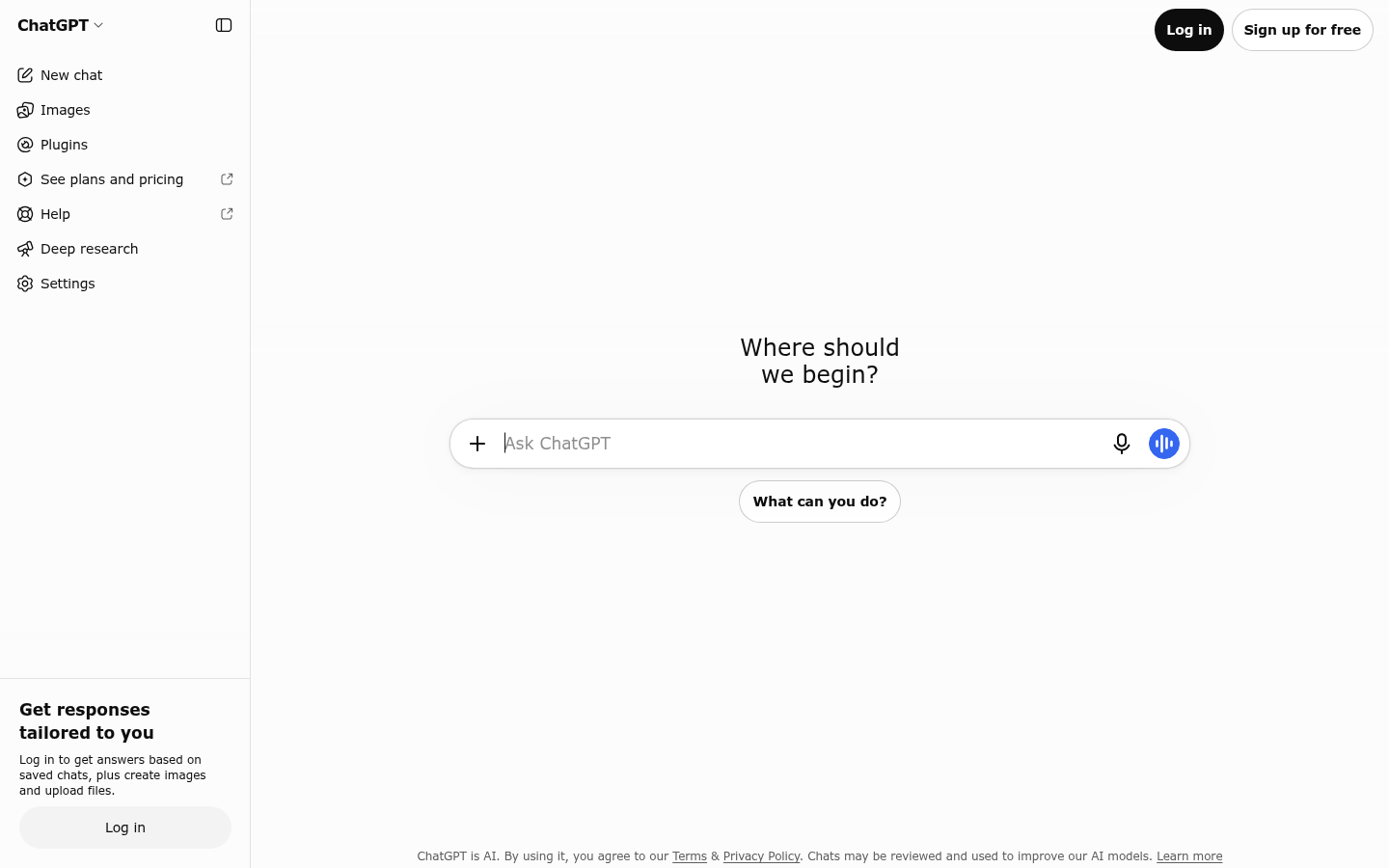
ChatGPT is useful when your question needs a conversation rather than a fresh set of keywords each time. You can ask it to compare two approaches, explain an unfamiliar term, and then look for recent evidence without starting over. Its advantage is keeping the context of that investigation together.
OpenAI’s search documentation says it can retrieve current web information and link to sources. Search is available on free and paid plans, including for people who are not signed in, although usage limits apply. ChatGPT may search automatically, or you can select Search from its tools.
Use it to work through a question, then open the citations to check the answer. It can misread a source or miss a qualification, and its use of other search providers means it is not simply a separate, independent web index.
2. Perplexity
Estimated Monthly Web Visits: 88.3 million to perplexity.ai, October 2026.
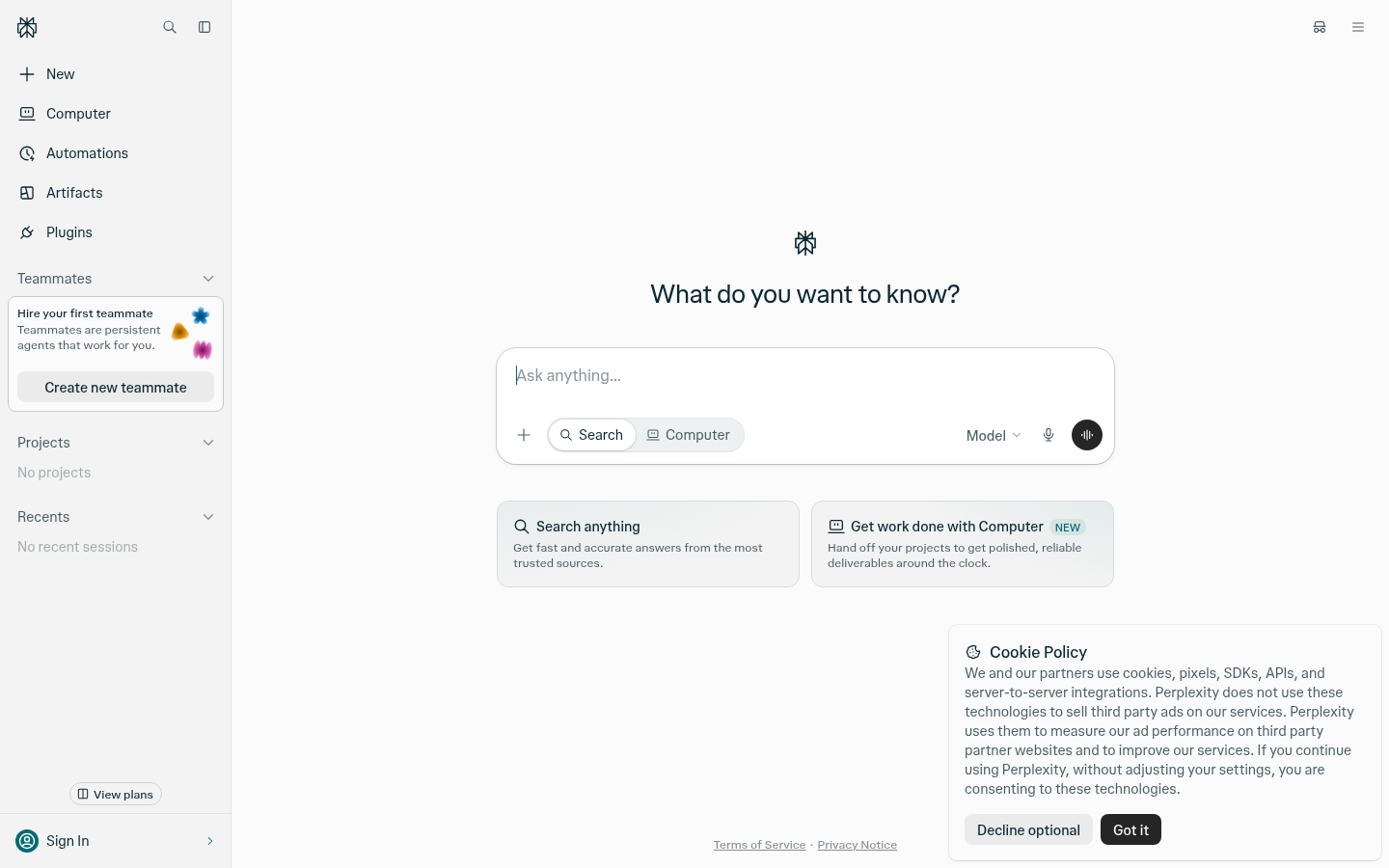
Perplexity puts source-backed answers at the center of the search experience. Its research-oriented approach is useful when you want an overview of a subject and a trail of sources to investigate, rather than opening a long list of results before finding the main points.
Its Pro Search process can conduct multiple searches and bring findings together, with follow-up questions keeping the research in context. Depending on your plan, you can narrow the work to areas such as academic or financial sources. Access and limits vary by tier.
The benefit is a faster route into a topic, not a substitute for reading the evidence. Check that each citation supports the statement beside it because AI answers can still contain hallucinations even when links are present.
Why SEO Experts Should Care: Perplexity can be useful even if it sends less traffic than Google. In his post on why marketers should care about Perplexity, Dennis Goedegebuure argues that it is a low-cost test bench for AI search. Try the research questions your customers ask, inspect which pages get cited, and check how your brand and recently updated facts appear. For B2B marketers, that means testing visibility during product research, rather than judging the opportunity solely by overall visit totals.
General Web Search
3. Microsoft Bing
Estimated Monthly Web Visits: 3.7 billion to bing.com, October 2026.

Bing is a full-service alternative for everyday web, image, video, and news searches. One concrete reason to try it is Visual Search: when you have a picture of a product, plant, or object but do not know its name, you can start with the image instead of guessing keywords.
Microsoft’s visual search tools can find related images and shopping options, identify objects, and extract or translate text from a picture. Conventional results remain available alongside AI-assisted tools, so an answer does not have to be the end of your search.
Search Engine Journal covered Bing’s search updates in December 2024, including work on faster, more precise results. Try the same image or video query on Bing and Google to see which makes the next step easier for you; that is more useful than assuming one wins every search.
Where available, Bing’s Copilot Search adds AI-generated summaries with source citations and suggested follow-up topics, so you can explore a question without starting from scratch.
4. Yahoo Search
Estimated Monthly Web Visits: 751 million to search.yahoo.com, October 2026.
Search Engine Referral Share: 2.54% in the U.S., October 2026. This measures referrals in its sample, not people or total queries.
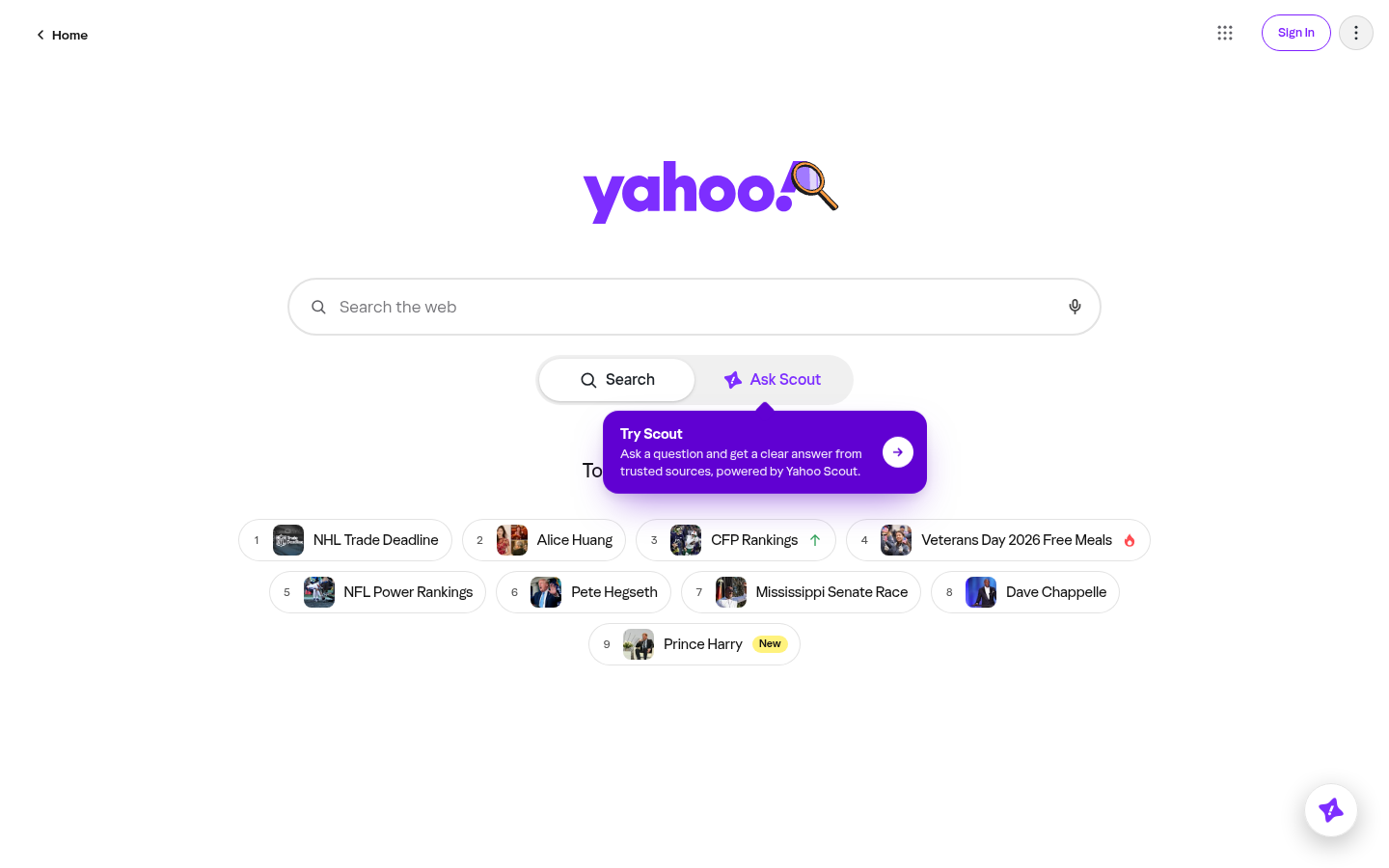
Yahoo Search makes the most sense if you already use Yahoo for news, finance, or other daily information. Its value is the connection between search and that wider content ecosystem, rather than a completely different index of the web.
Yahoo introduced Scout in January 2026 as an AI answer engine combining open-web information with Yahoo content and data. The U.S. beta launch named Anthropic’s Claude and Microsoft’s Bing grounding API as parts of the system.
That gives Yahoo users a way to move from a headline or financial topic into a sourced explanation. You can still browse traditional search results, and you should follow Scout’s source links when an answer matters. The launch’s audience figures cover Yahoo’s broader services, not people using Scout alone.
At Search Engine Journal, Yahoo accounts for about 0.2% of our traffic. It’s a small share, but it still brings a few thousand visits in a month and for a different business, even that smaller stream of visitors could include a potential customer or lead to a sale.
Regional Search Engines
5. Baidu
Estimated Monthly Web Visits: 1.7 billion to baidu.com, October 2026. This includes non-search activity on the named website.
Search Engine Referral Share: 49% in China, October 2026. This measures referrals in its sample, not people or total queries.
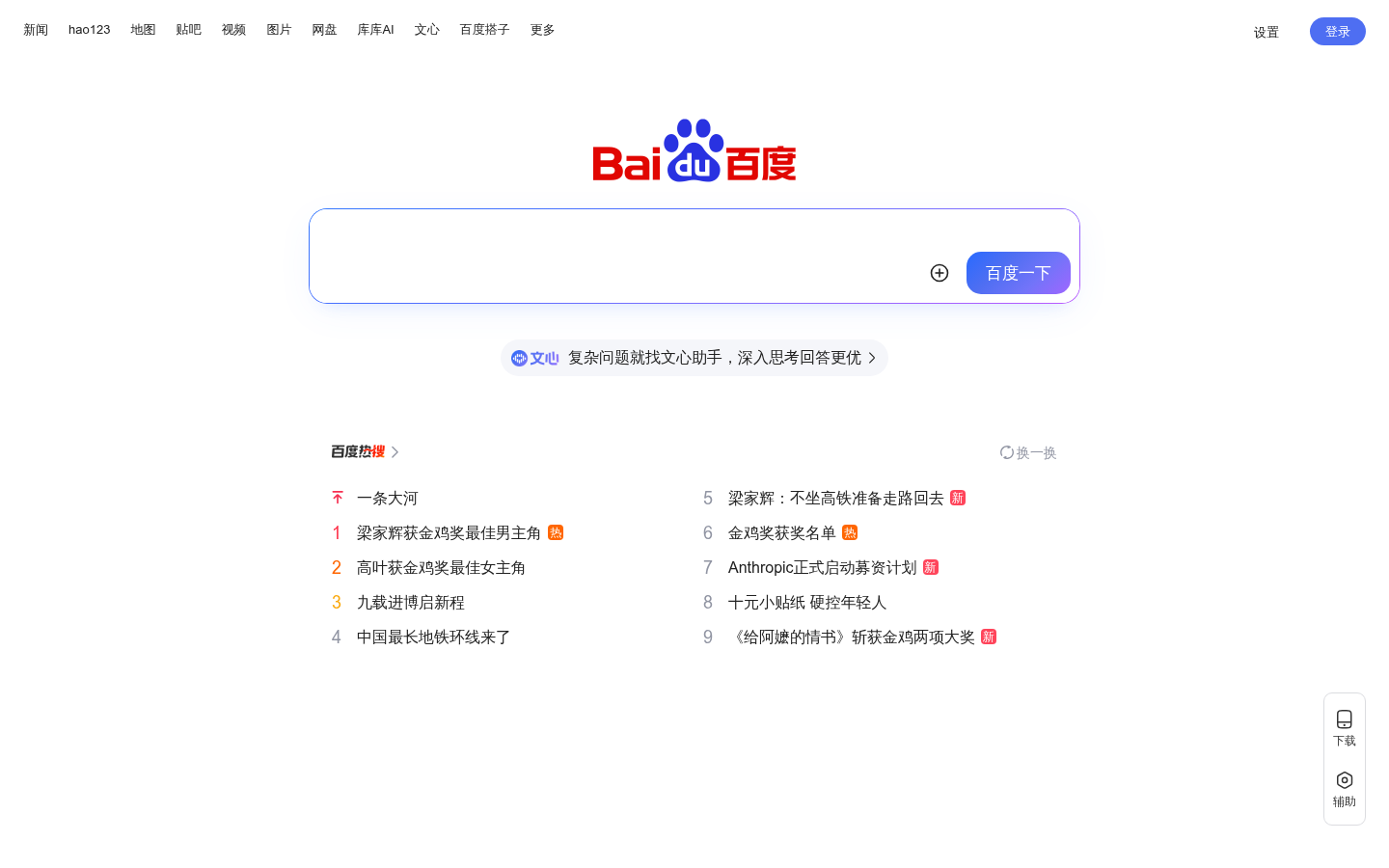
Baidu matters when your research or marketing is aimed at Chinese-language audiences. Its value is not simply in translating an English query, but it offers a view of Chinese-language search and a connected set of local content services.
Alongside web results, its homepage links to maps, images, video, the Baike encyclopedia, Zhidao questions and answers, and Wenku documents. Those services give you distinct places to investigate how a topic, product, or brand is described. Use the terminology that local sources use rather than assuming an English search will surface the same material.
For marketers, the search referral share is a reason to investigate Baidu separately, not proof that it will send a particular site traffic. Distinguish content hosted inside Baidu’s services from results linking to external publishers, and assess the original source.
6. Naver
Estimated Monthly Web Visits: 1.5 billion to naver.com, October 2026. This includes non-search activity on the named website.
Search Engine Referral Share: 42.25% in South Korea, October 2026. This measures referrals in its sample, not people or total queries.
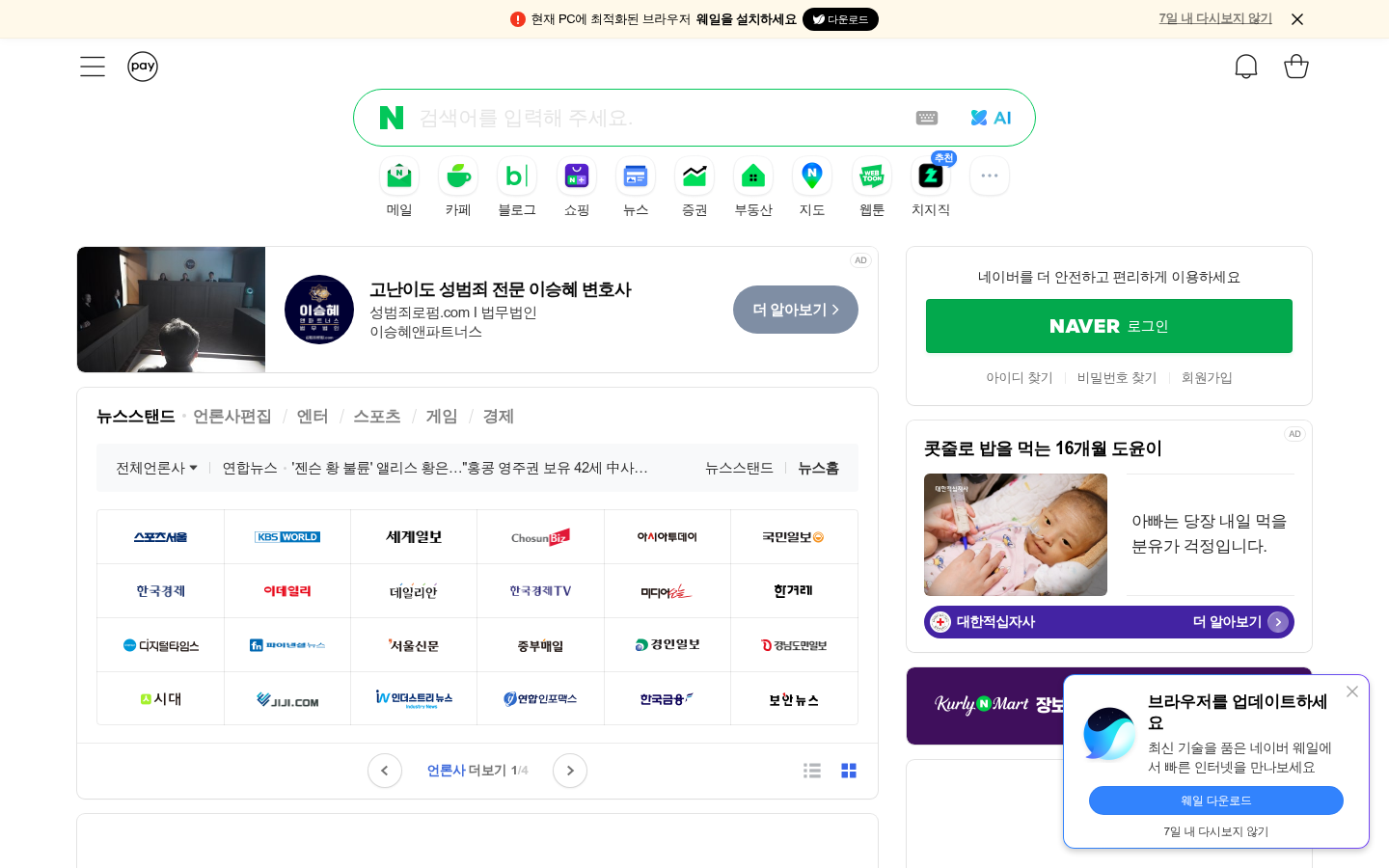
Naver is useful for Korean-language research because its search experience brings together more than external webpages. Naver’s search overview describes results across news, maps, cafés, blogs, images, video, and other categories.
That mix gives you a route into local experiences and community content as well as conventional reporting. Its community services include Naver Blog, interest-based Café communities, and Knowledge iN questions and answers. If you are researching a Korean product or audience, those are different sources to explore from an English-language web-results page.
For website owners, Naver Search Advisor is the official starting point for webmaster tools. Keep visits to an external website separate from engagement with a blog or other content hosted inside Naver.
7. Yandex
Estimated Monthly Web Visits: 162.2 million to yandex.com, October 2026. This covers the international website, not total use across all Yandex domains.
Search Engine Referral Share: 70.22% in Russia, October 2026. This measures referrals in its sample, not people or total queries.
Yandex is worth checking when you need Russian-language sources or are researching visibility in Russia. Its large share of measured referrals there gives it a different role from a small global alternative – it is an important regional search environment in its own right.
Use it to compare which local publishers and pages appear for the terminology your audience actually uses. Its international homepage also presents an AI search option, but the practical reason to investigate it is the regional results and audience context, not simply another chatbot interface.
SEJ’s Yandex guide provides background for marketers. The 2023 data leak is a separate historical event, not a verified description of today’s ranking system. The search referral share above describes referrals, not the percentage of Russian people using Yandex.
8. Sogou
Estimated Monthly Web Visits: 16.5 million to sogou.com, October 2026.

Sogou offers another route into Chinese-language information, with a more specific reason to try it rather than simply comparing general web results – its WeChat search is a destination for discovering public accounts and articles from that ecosystem.
That is useful when the material you need was published as a WeChat article rather than an ordinary standalone webpage. Search in the relevant Chinese terminology and distinguish those public articles from results in Sogou’s general web search.
This is not access to private messages or every piece of content in WeChat. As with other platform-specific searches, check the account, publication date, and original article before using a result as evidence.
Search With Privacy And Control Options
9. Brave Search
Estimated Monthly Web Visits: 698.8 million to search.brave.com, October 2026.
Brave Search combines an independent web index with tools for changing how results are ranked. It is worth trying if you want both an alternative to Google or Bing’s underlying results and more say over which sources rise to the top.
Its search help describes Goggles, which apply alternative ranking or filtering rules. Brave also describes domain-level ranking controls and an AI answer experience on its about page. Those controls give you something more specific to experiment with than a different-looking results page.
SEJ reported Brave’s Bing separation in 2023. You can use Brave Search in another browser, so testing its index does not require adopting Brave’s browser, wallet, VPN, or other products.
10. DuckDuckGo
Estimated Monthly Web Visits: 681.9 million to duckduckgo.com, October 2026.
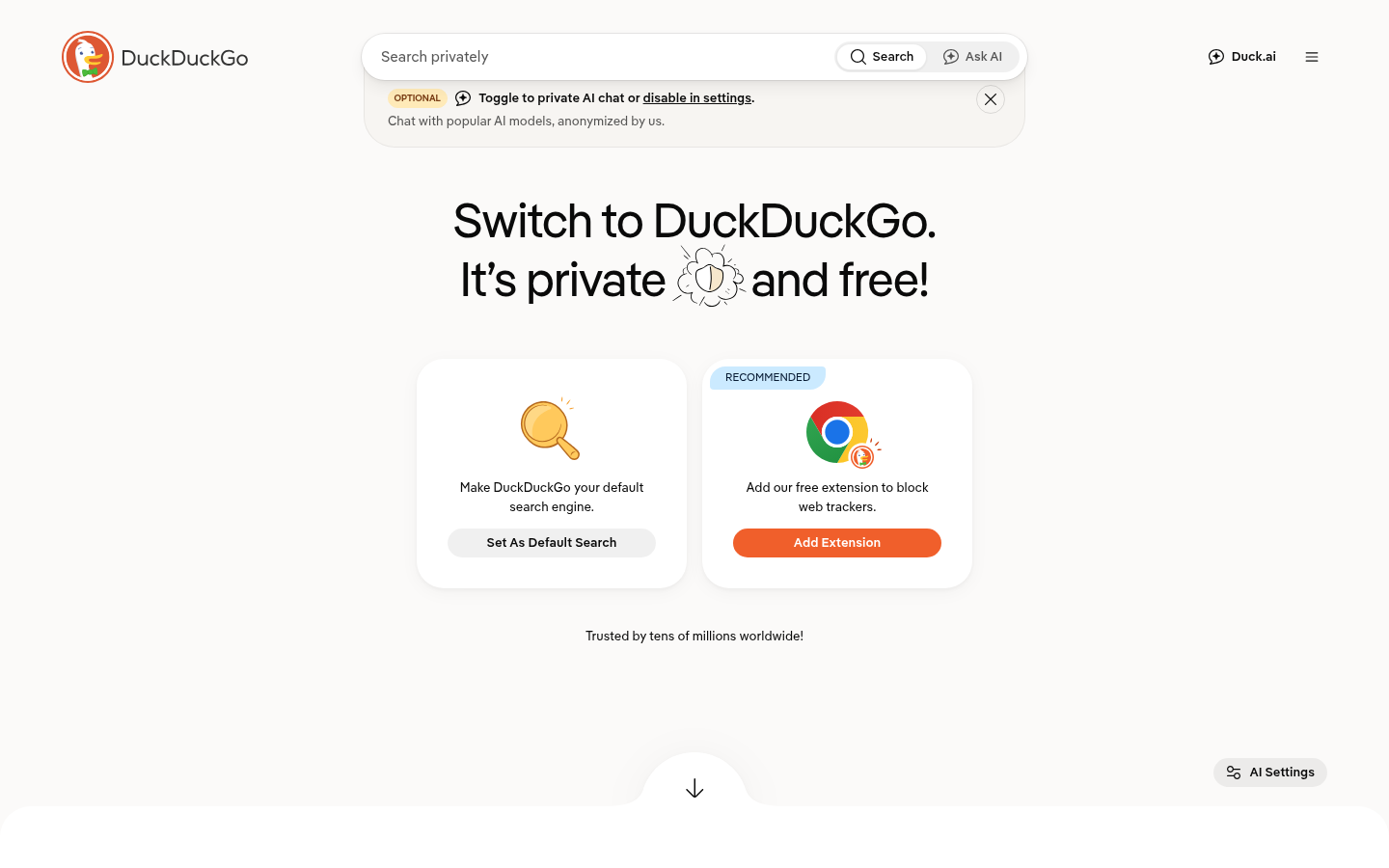
DuckDuckGo is a straightforward choice if you want everyday search without a personal search-history profile. You can use its search website in your existing browser, so the switch does not require changing your whole browsing setup.
Its privacy policy says it does not save your IP address or other unique identifiers alongside searches in a way that builds an individual history. The practical draw is familiar search without tying those queries together to follow you around with advertising.
Privacy and index independence are different benefits, however. DuckDuckGo’s source documentation says traditional links and images largely come from Bing, supplemented by specialist sources, its own crawler, and its own indexes. Choose it for that privacy model, not on the assumption that every result comes from a separate web index.
11. Startpage
Estimated Monthly Web Visits: 57.6 million to startpage.com, October 2026.
Startpage is for people who want results from major search providers without dealing with those providers directly. It acts as a privacy intermediary, submitting your query on your behalf and returning the results to you.
Its partner explanation identifies both Google and Microsoft Bing. Startpage says it does not share personal information with them, and that those providers see Startpage rather than the person making the request.
That is the distinction from an independent-index engine: Startpage changes the relationship between you and the search provider, not necessarily the underlying collection of pages. It is worth trying if you like familiar results but want a different privacy arrangement; it is not a way to avoid Google’s infrastructure altogether.
12. Kagi
Estimated Monthly Web Visits: 4.6 million to kagi.com, October 2026.
Kagi takes a different approach to the search business where subscribers pay for an ad-free service, and its appeal is control. You can raise, lower, or block particular websites, so a publisher you repeatedly find unhelpful does not have to keep taking up space in your results.
Its Lenses let you narrow searches to selected websites or categories such as forums, academic sources, or PDFs. Kagi’s source documentation describes its own indexes alongside major and specialist providers, with an emphasis on surfacing independent and noncommercial content. It is not powered solely by its Teclis index.
As of November 2026, its monthly individual plans include Starter at $5 plus tax for 300 searches and Professional at $10 plus tax for unlimited searches. Annual billing has different terms. If you search heavily and want persistent control over sources, those features are the reason to consider paying.
Search With Different Funding Models
13. Ecosia
Estimated Monthly Web Visits: 219 million to ecosia.org, October 2026.

Ecosia lets you put the revenue from an everyday habit toward climate work. It says all of its profits go to climate action, with the majority funding tree-planting projects. That is its central reason to exist: changing who benefits financially from search.
The company publishes monthly financial reports, so you can look beyond the tree counter to see how money is spent. Its provider documentation lists Bing, Google, and European Search Perspective, or EUSP; the mix depends on factors including region, device, and permissions.
This makes Ecosia a funding-model choice, not a promise that every query uses a wholly separate index. If you want to support its mission while keeping familiar web search, it is a low-friction option to try. You can check the provider through the information control beside a result.
14. KARMA Search
Estimated Monthly Web Visits: 451,800 to karmasearch.org, October 2026.
KARMA applies the search-funded nonprofit model to animal welfare and biodiversity. Its distinction from a broader climate-focused service is the cause: helping fund organizations working on wildlife, habitats, and animal protection.
The company’s explanation says sponsored search links generate revenue for its nonprofit partners. Its site lists partners including Re:wild, Humane World for Animals, and iNaturalist. You can inspect those partnerships to decide whether they match the work you want to support.
Availability varies by country. During this review, a U.S. capture showed the search homepage, while a visit from another region displayed a notice that KARMA was unavailable there and would redirect searches to Bing. Check local availability before making it your default; a regional restriction does not mean the service has closed.
15. Yep
Estimated Monthly Web Visits: 155,800 to yep.com, October 2026.
Yep is an Ahrefs-built alternative with a distinctive audience beyond people typing into a search box: developers who want web results for an AI agent or research application. Ahrefs’ current Yep product page describes a first-party crawler, index, and ranking system, with result excerpts and filters for the information an application retrieves.
The public search interface captured for this review also returned conventional web results. For an everyday user, that makes it another index to compare; for a developer, the API is the clearer reason to investigate it. The current homepage emphasizes that developer-facing use rather than presenting a Google-like consumer pitch.
SEJ’s 2022 Yep interview explains the original proposal to share advertising revenue with creators. Although, the current homepage does not establish that those proposed payouts are operating, so they should not be the reason you choose it today.
Specialist Search Tools
16. x.com
Estimated Monthly Web Visits: 4.4 billion to x.com, October 2026. This covers platform website activity, not searches or app usage.
x.com is useful when the thing you need is a public statement or conversation: what an organization announced, what a named person said, or how a developing event is being discussed. You are searching posts on the platform, not a general index of webpages.
That direct access to posted statements is its advantage for news monitoring and research. Its advanced search is a further option for signed-in users; the public Explore route redirected to a sign-in screen during this review.
Use posts to locate leads and original statements, not as automatic confirmation of a claim. Check the account, timestamp, and supporting evidence, especially when an old post is circulating as if it describes a new event.
17. LinkedIn
Estimated Monthly Web Visits: 2.1 billion to linkedin.com, October 2026. This covers platform website activity, not searches or app usage.
LinkedIn is useful when your search starts with a professional identity, such as a person, employer, role, or job. It can also help you find practitioners discussing a work-related subject, rather than only the publishers ranking for that subject on the open web.
The advantage is the professional context. A name alongside an employer and career history gives you a way to distinguish people who share a name and identify a relevant source. Its public people search is one starting point, although fuller profiles and other features can require signing in.
Treat profiles as self-reported information, not a verified company directory. Check current roles and dates against the person’s or organization’s own website when those details matter to your research.
18. Wayback Machine
Estimated Monthly Web Visits: 46.4 million to web.archive.org, October 2026.
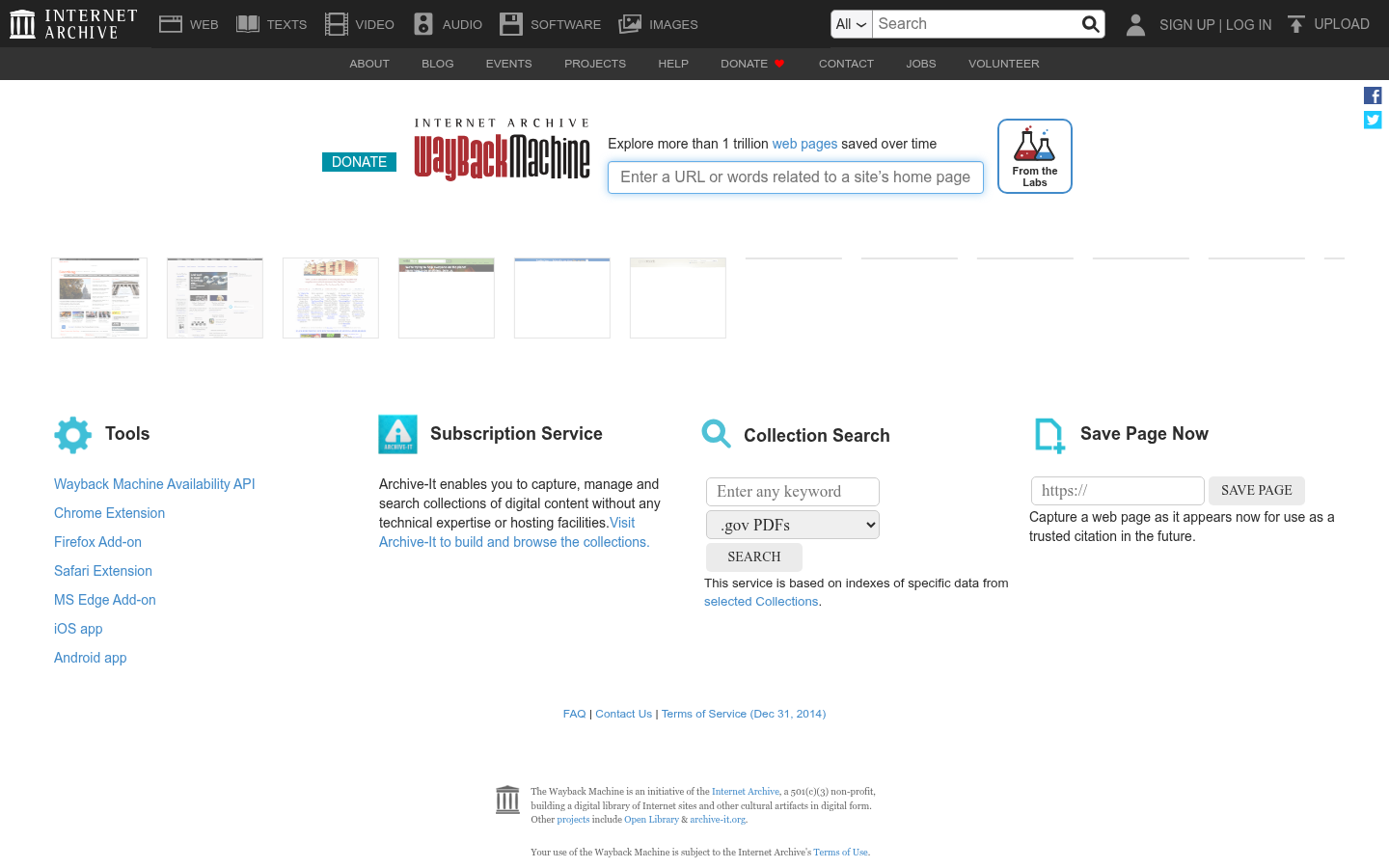
The Internet Archive’s Wayback Machine answers a question a current search result often cannot: What did this webpage say before it changed or disappeared? It is useful for checking an old product claim, recovering a removed reference, or following the history of a website.
Enter the URL and inspect the available captures. The advantage is the dated record where you can compare versions rather than relying on a current page to explain its own past. Check the capture date and whether images and other resources were preserved.
The Wayback Machine is part of the wider Internet Archive, whose books, recordings, software, and other collections are separate resources. It is not a complete archive of every page, and a captured claim is evidence of what a page said then, not proof that the claim was true.
19. SlideShare
Estimated Monthly Web Visits: 39.3 million to slideshare.net, October 2026.
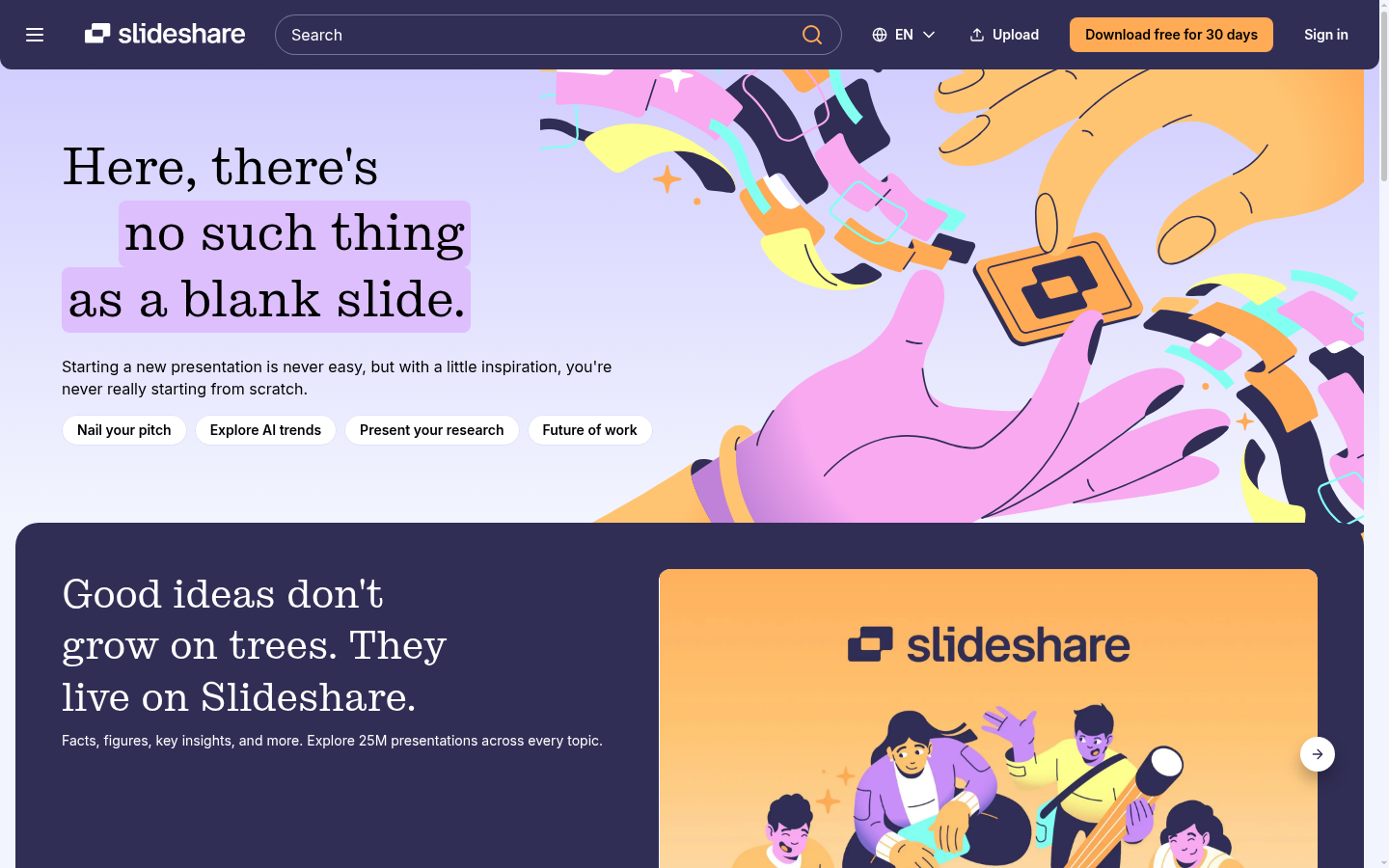
SlideShare is worth trying when you want the presentation itself, not another article summarizing the subject. A conference talk, research deck, or business pitch can reveal how someone structures an argument and illustrates the details.
The current homepage describes a collection of more than 25 million presentations. Browsing, reading, and uploading do not require a subscription, while features such as downloading presentations are paid benefits. The value is a format-specific collection you can explore for research or presentation inspiration.
Check the uploader and publication date before relying on a deck’s statistics or recommendations. Being able to view a presentation also does not automatically give you permission to reuse its artwork.
20. WolframAlpha
Estimated Monthly Web Visits: 3.1 million to wolframalpha.com, October 2026.
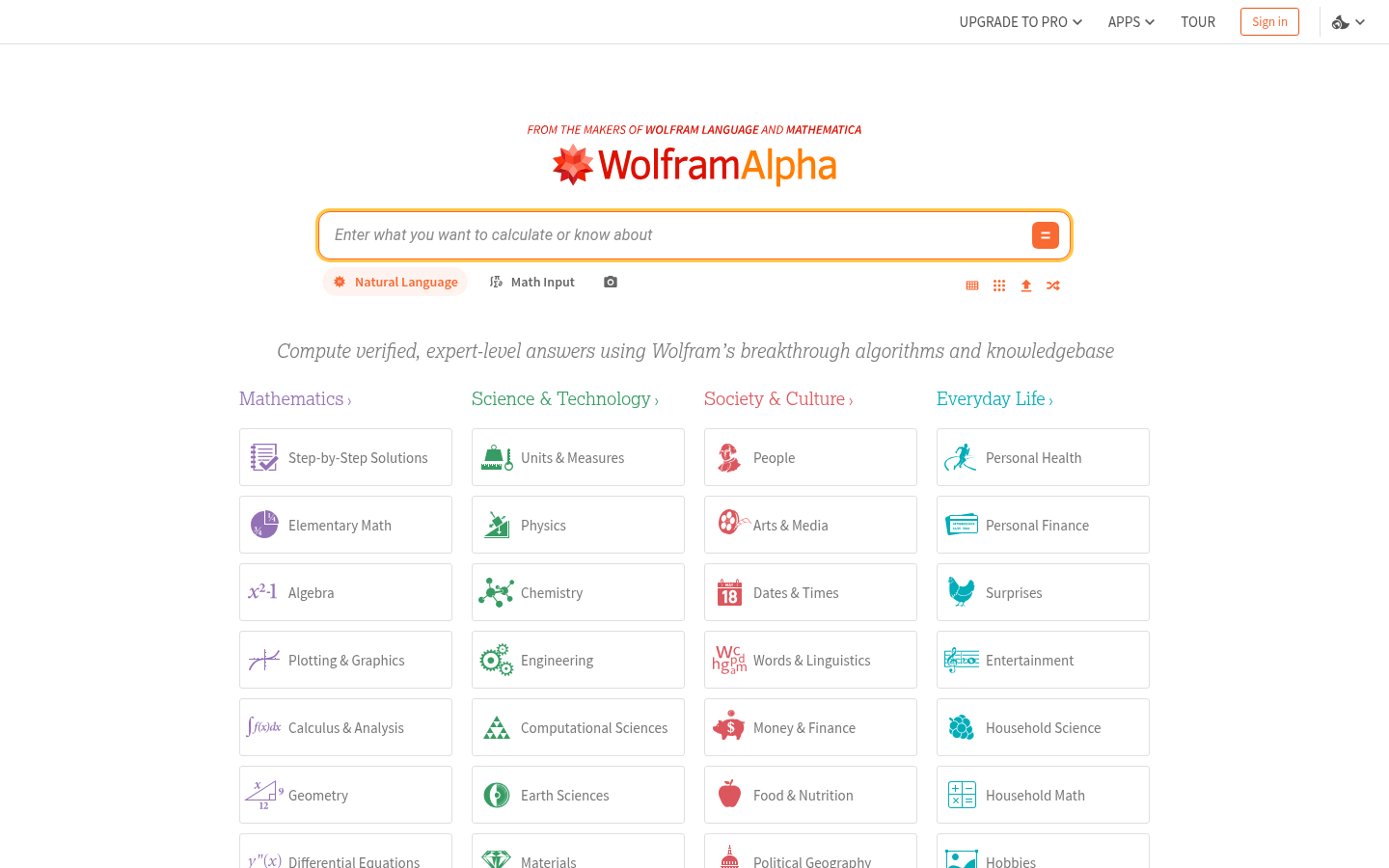
WolframAlpha is for questions that need computation rather than a list of pages. If you want to solve an equation, convert units, or work with structured facts, it can calculate an answer from its data and algorithms instead of leaving you to find a suitable calculator elsewhere.
Its explanation of the service describes dynamic computation over curated knowledge. The mathematics examples show the inputs it understands; other areas include science, dates, and measures.
That is a different job from comparing recent reporting or finding an opinion. Use it when the result should be computed, and check how it interpreted your units, assumptions, and wording before relying on the output.
21. Openverse
Estimated Monthly Web Visits: 296,200 to openverse.org, October 2026.
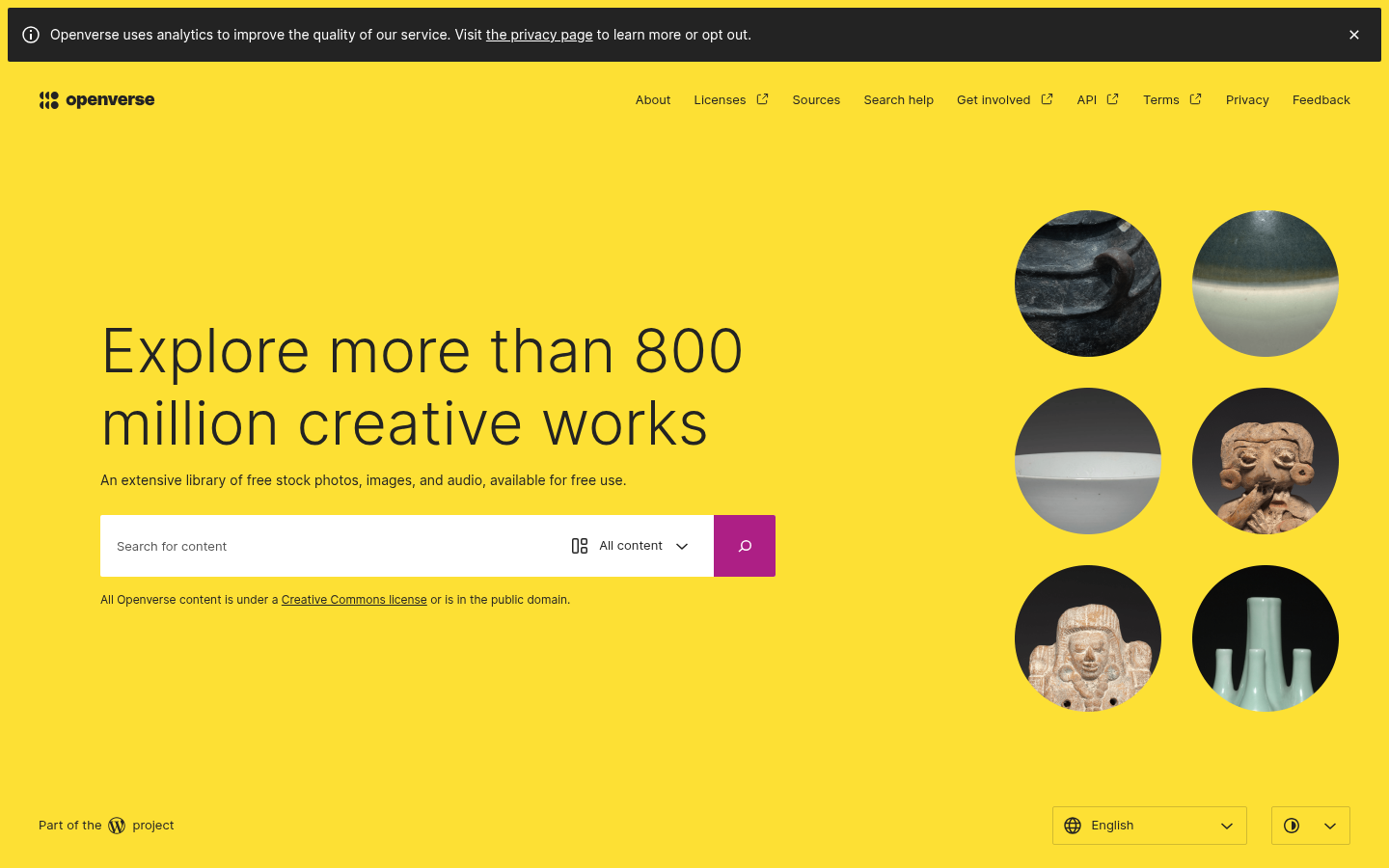
Openverse is the tool to try when finding a usable image or audio track matters more than finding a webpage about one. It focuses on openly licensed and public-domain media, making it useful for an article, presentation, or other creative project.
Its About page describes a collection of more than 800 million images and audio tracks gathered from multiple repositories, with features such as one-click attribution. That collection size is separate from its website traffic. Its advantage is bringing reuse-oriented discovery into one place, rather than treating every image on the web as equally available to use.
Openly licensed does not mean free of conditions. Licenses can require attribution or restrict commercial use, and Openverse does not verify every work’s licensing information. Follow through to the original source and confirm the license before using a file.
Compare The 21 Search Engine Options
| Option | Best Use | What It Searches |
|---|---|---|
| ChatGPT | Working through a question with follow-ups | Web retrieval, including search partners |
| Perplexity | Researching a topic through cited summaries | Web sources; research features vary by plan |
| Microsoft Bing | Finding an object or product from an image | Microsoft web, image, and video search |
| Yahoo Search | Searching alongside Yahoo news and finance | Web results; Scout adds Yahoo and web sources |
| Baidu | Researching Chinese-language search and local services | Web results and Baidu content services |
| Naver | Exploring Korean sources and community content | Web results, blogs, cafés, and other categories |
| Yandex | Investigating Russian-language and regional results | Yandex search technology |
| Sogou | Discovering public WeChat accounts and articles | Chinese web and specialist WeChat search |
| Brave Search | An independent index with ranking controls | Brave’s own web index |
| DuckDuckGo | Everyday search without a personal history profile | Largely Bing links, plus other sources |
| Startpage | Using major providers through a privacy intermediary | Google and Bing through Startpage |
| Kagi | Paid, ad-free search with persistent source controls | Own indexes plus outside providers |
| Ecosia | Directing search-business profits to climate work | Bing, Google, or EUSP; varies by market |
| KARMA Search | Supporting animal welfare and biodiversity | Ad-supported web search; regional access varies |
| Yep | Comparing another index or building search into an app | Ahrefs-operated search technology and API |
| x.com | Finding public statements and developing conversations | Public platform posts; sign-in can be required |
| Finding a person, employer, role, or job | Professional profiles and platform content | |
| Wayback Machine | Checking what a changed or missing page once said | Dated webpage captures |
| SlideShare | Finding the presentation behind a subject | Presentations and documents |
| WolframAlpha | Computing an answer, equation, or conversion | Curated data and computational algorithms |
| Openverse | Finding reusable images and audio | Openly licensed and public-domain collections |
How AI Changed The Search Choices
The introduction of ChatGPT helped bring conversational interfaces into everyday use. In January 2023, SEJ reported that Google’s founders had responded by returning to discussions about its AI response and then opened access to Bard in March 2023.
Google rolled out AI Overviews to U.S. users in May 2024 and announced AI Mode in 2025. Those developments explain why many services in this list now combine web results with AI generated answers. The two formats can help with different parts of the same research task.
How To Measure Traffic From Alternative Search Engines
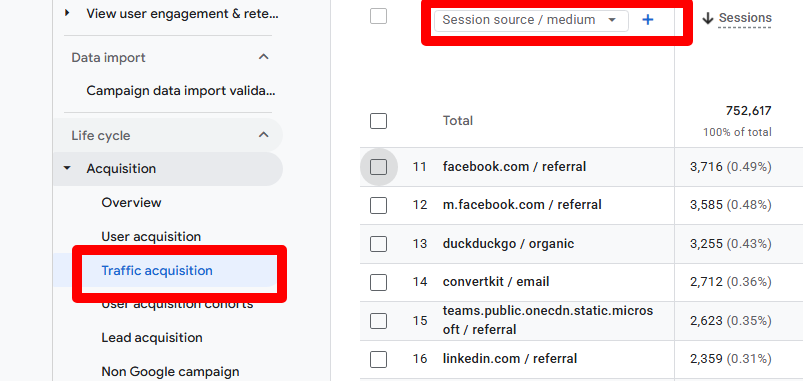
- GA4 referral traffic: In Reports > Acquisition > Traffic acquisition, use Session source / medium to check sessions from referring domains. Review the referral medium, and check organic separately for recognized search engines.
- Bing Webmaster Tools: Use its Search Performance report to check impressions, clicks, and search queries for your site on Bing.
Choose The Alternative That Fits Your Searches
Google may be the most familiar option, but the best choice for a particular task can be different. Try a few real queries on two or three services, compare the sources, the ease of finding the original information, and the controls you will actually use.
You can keep one engine for everyday searches and use another for a specific job. A calculation, an archived webpage, and a professional profile do not need to start in the same search box.
More Resources:
- Popular Search Engines
- The 7 Best AI Search Engines For 2025
- The Top 10 Social Media Sites & Platforms
Featured Image: Igor Link/Shutterstock
FAQ
How Can I Switch To An Alternative Search Engine?
Open your browser’s search settings and choose a supported default engine. If the service is not listed, use its official browser setup instructions. You can also visit its website directly without changing your default.
Which Google Alternative Should I Try First?
Start with the task you want to improve. Try Bing for general web search, DuckDuckGo for a search service centered on privacy, Brave Search for another independent index, and ChatGPT or Perplexity for conversational answers. Compare their results on queries you already know well.
Do Alternative Search Engines Use Google Or Bing?
Some do. Startpage identifies Google and Bing as partners. DuckDuckGo largely sources traditional links and images from Bing. Kagi combines its own indexes with several providers. Brave Search builds an independent web index.
Is DuckDuckGo Owned By Google?
No. DuckDuckGo says it is an independent company. A search provider relationship is different from ownership, and its traditional links and images largely come from Bing.
Is Any Search Engine Completely Unbiased?
No search tool can guarantee a neutral view of everything online. Index coverage, ranking rules, filters, location, and the query itself affect what appears. Compare independent sources and more than one search engine when the differences matter.
How Do Private Search Engines Make Money?
Business models vary. Some display search advertising, some charge subscriptions, and some combine free and paid services. Read the specific service’s policy because a privacy claim does not mean every product, advertisement, and linked website handles data in the same way.
