
A product can have the right material, price, and features and still give an AI shopping tool too little context to recommend it. The challenge is not simply getting a feed accepted. It is making product information retrievable, relevant to shopper needs, and consistent wherever it appears.
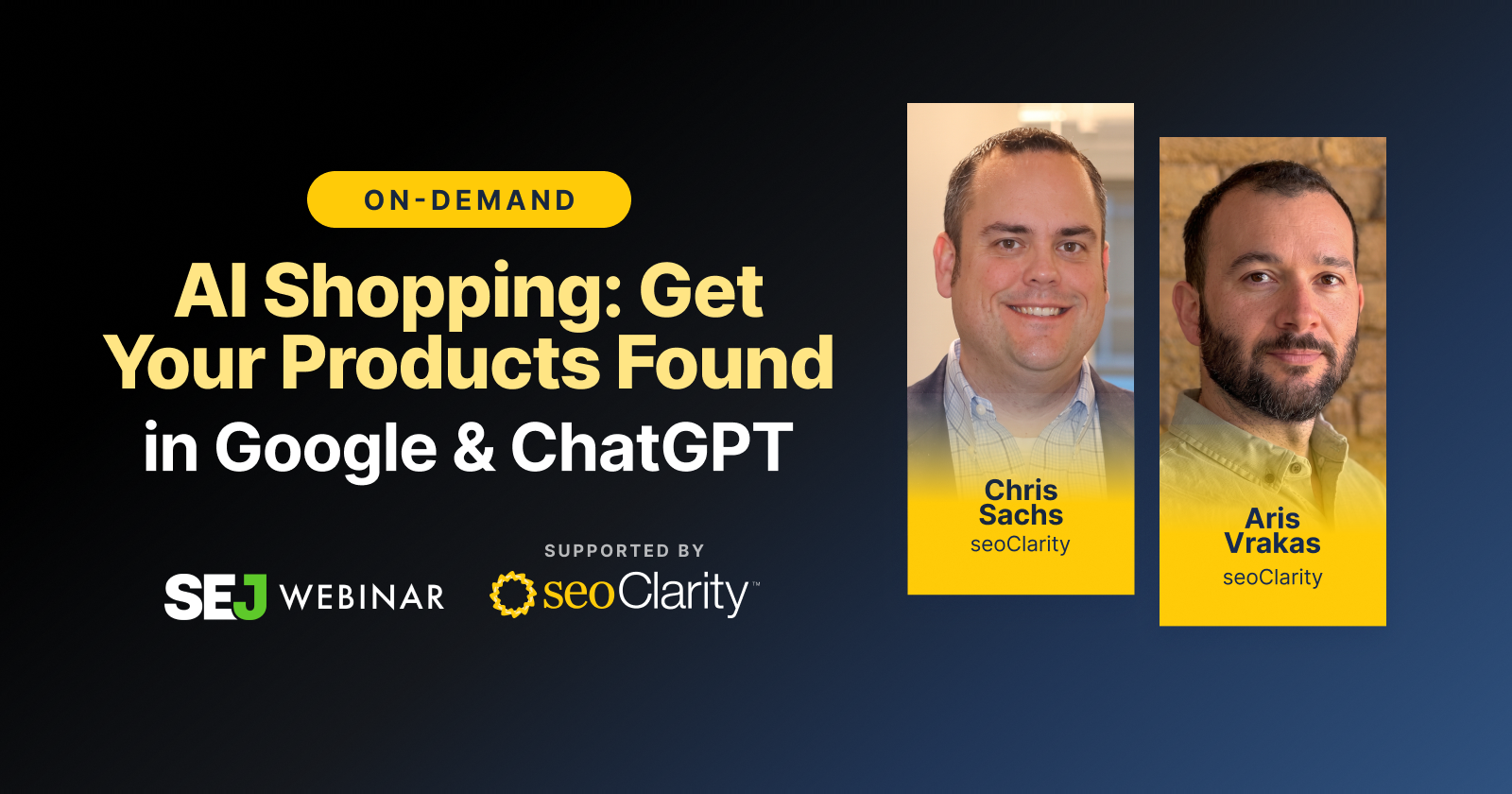
In this webinar, AI Shopping: Get Your Products Found In Google & ChatGPT, Chris Sachs, VP of Value Enablement, and Aris Vrakas, Product Lead at seoClarity, walked through four connected moves: make product pages readable, enrich content in shopper language, synchronize feeds and pages, and measure what changed.
The session focused on work ecommerce teams could do now, rather than waiting for checkout inside AI services to mature.
Make Product Information Easy To Retrieve
Vrakas began with a technical prerequisite: product content needed to be available to bots, not only visible to someone using a browser. He described JavaScript-heavy pages where shoppers could see details that an automated fetch did not expose.
For teams reviewing their stores, that distinction calls for checking what a crawler actually receives. Are core product details present in the HTML? Does important information depend on client-side execution? Where rendering was a bottleneck, Vrakas discussed prerendering and cached HTML as options.
His point was to address access before investing heavily in enrichment. Better descriptions cannot help a system that never receives them.
Describe Products In The Language Shoppers Use
The presenters used socks as a recurring example. Color and fiber composition are useful attributes, but they do not answer every question about warmth, thickness, durability, or intended use. Vrakas explained that conversational prompts could combine several of those needs in one request.
He recommended connecting product characteristics with the decisions shoppers were trying to make. Rather than leaving an AI model to infer a use case from a short specification, retailers could provide relevant details directly. He also discussed using attributable review evidence to support claims about how a product performed.
See the full on-demand clip at 28:18.
The opportunity was not limited to unusually long prompts. Vrakas explained that even a broad request for a good product could lead an AI system to consider more specific attributes. The webinar’s product-enrichment discussion explored how retailers could anticipate those questions without relying on generic descriptions.
Keep Feeds, Pages, And Structured Data Consistent
Sachs warned against treating the product feed as a separate project owned somewhere else in the organization. Information added to a feed should also inform the product page and its structured data, rather than stopping at the feed.
Vrakas described why that consistency mattered when a platform revisited a product page: product identity, price, and supporting details needed to be clear and coherent. An enriched feed did not remove the need to make the corresponding page understandable.
The presenters called this closing the loop. For an ecommerce team, it meant connecting SEO, merchandising, paid media, and development so that one channel’s improvements could benefit another, instead of maintaining disconnected versions of the same product information.
Measure Visibility And Test What Changed
The presenters separated three areas of measurement:
- Product-grid visibility: How often priority products appeared in shopping carousels for relevant queries.
- AI mentions and citations: Whether an answer named a product or cited its supporting content, alongside how the brand was described.
- Paid-feed performance: Impressions, clicks, and conversions associated with feed-driven campaigns.
These were different signals, not interchangeable definitions of success. An AI mention alone did not establish a sale, and the presenters encouraged teams to examine the effects across the channels they were changing.
See the full on-demand clip at 11:38.
Chris Sachs tied that measurement work to ongoing experimentation:
“The best SEO teams are the ones that obsess about testing. The more testing you do, the better decision making you can have.”
See the full on-demand clip at 45:16.
During the Q&A, a viewer asked whether a before-and-after comparison was enough to evaluate generative engine optimization. Vrakas distinguished large catalogs, where product groups could support comparisons, from smaller sites or broader brand questions. For the latter, he described improving content around a defined topic and comparing its movement with other topics left untouched.
The useful distinction was having a comparison set, rather than assuming that every visibility change proved an optimization had worked.
Start With A Focused Catalog Review
The full on-demand session connected technical retrieval, feed enrichment, and measurement examples. To turn the discussion into a first review with your team:
- Check what bots can retrieve from a small set of priority product pages.
- Identify shopper questions those pages do not yet answer, and add details supported by the product’s actual attributes or review evidence.
- Confirm who owns the feed and how approved changes flow back to product pages and structured data.
- Record separate baselines for product-grid visibility, AI mentions and citations, and paid-feed results.
- Choose a defined change and an unchanged comparison group before rolling the work out more widely.
Join Us For Our Next Webinar!
Live Website Audit: SEO Fixes for AI Search Visibility in 2027
Watch Loren Baker, founder of Search Engine Journal, audit a real website live. He'll show how he finds what's holding a site back in Google and AI search, and how he decides what to fix first.
