Ann Smarty

Link Building Reports That Make Your Client Happy

November 10th, 2008 by Ann Smarty | 20 Comments

To properly organize yourself and your work and to make your clients happy, you should definitely have your own backlink reporting system. Of course, the reporting method can vary from client to client based on two major facts:

  • your client: well, really there are clients who just don’t need abundant data (it will only scare them away) - all they need to see is that you are doing your work as agreed;
  • the task itself: I used to deal with a client who only needed minor “crappy” blog comment links and that’s it - so why to waste time on too detailed reporting?

The most important things are (first) to arrange the reporting method with your client and (secondly) not to offer to much information (this will both take much of your and your client’s time).

There are really essential link report elements that should always be there:

  • the direct link to the linking page;
  • the date when the link was added;
  • the anchor text;
  • any link essential flags (nofollow attribute or image link, for example) - I usually name this column “notes”.

There are more or less optional but still important elements:

  • linking page SEO evaluation: Google PR; backlinks, etc.
  • linking domain SEO evaluation: domain age, domain backlinks, etc
  • link type, e.g. in-content, sidebar, sitewide, comment, etc.

Using some creative approach: some link builders create their own scoring system reflecting the link value.

Gab of SEO ROI blog recently shared his link building report that uses “Base Value” metrics to measure the link effectiveness. What I especially like about the report is that Gab was also using “co-citation” metric that involved constant competitors’ evaluation.

It’s not all about numbers!

Really I’ve been successfully using some tricks that seemed to make my clients quite happy:

  • let your client watch your working process real time: I use Google Spreadsheets, publish the document online and give my client the direct link. He can thus access the report any time and see what have been done and when.
  • make sure your report is easy to read and clearly organized - take the full advantage of Excel sorting tools: I break reports into sheets either based on the link type (article links, directory links, blogroll, etc) or on the link niche (for multi-niche link building: for sports for example, you can have “soccer links”, “swimming”… well, you got the idea). A good report is simple, clutter-free and contains only essential information.
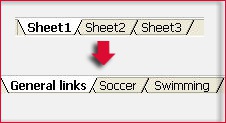
Excel sheets


Comments

20 responses so far ↓

  • David Leonhardt on Nov 10, 2008 at 8:33 am

    I’m not sure I see a point to reporting specific links, when reporting on overall rankings (the main “deliverable” of SEO) is what the client really wants.

    Clients don’t really understand the value of a link. If you present them with this kind of data, I find they will come back with a number of questions, such as “I’m paying you how much to create a dozen links?” If they are more knowledgeable, they will judge the value of each link and ask us not to build those that appear less valuable, which are just as important a part of the mix.

    Not only does reporting on specific links take a lot of time away from building links, but it adds a huge burden of constant education. Plus, the best links you can build are those that yu don’t control and are not always aware of.

  • Chris on Nov 10, 2008 at 9:05 am

    I agree with David… my clients are usually pretty novice when it comes to SEO and search engines (although there are a few that surprise me with their knowledge). With that said, I’m almost never asked about back links. In fact, clients seem more concerned over more trivial things such as h1 and alt tags, but not so much links.

    In the long haul, my clients just want to see where they stand in specific results for search engines. I literally hear, “I want to be on page one for this keyword.” And that’s all they want me to keep them apprised of.

    However, I can see value in a link report if your client is larger and demands transparency. Or, from an internal standpoint, it can be a great accounting method to see if your efforts are working so that you can continually refine.

  • Mike Belasco on Nov 10, 2008 at 9:20 am

    I think it totally depends on your client. Our reports I thought were fairly transparent, but not quite as much as Gab’s. We still had a client who insisted we weren’t doing enough, even though top rankings were obtained. Perhaps a report like Gab’s would have been beneficial. However, I agree with David, that those particular clients probably would told us not to build any ‘low value’ links and not understood the process.

  • Loren Baker, Editor on Nov 10, 2008 at 9:59 am

    It really all depends on the client, their search education and their expectations. If you are signed as a link builder for an experienced and knowledgeable SEO team, chances are they are looking for specific links, caching info, archived site history and other useful information. If your client is less experienced in SEO or has less need for specific info, then lists of links and basic info seems to fit the bill. Great rundown!

  • Dev Basu on Nov 10, 2008 at 10:04 am

    We’re all selling an intangible product here, so it does help for a client to see samples of actual links they can visit after a monthly call or meeting. However, I don’t sell rankings, I sell results instead, which are quantifiable through analytics.

    Bottom line, I get my team to record every single link built, and end up reporting them based on how involved the client really is. With our enterprise SEO clients, its absolutely necessary, as well as clients that wish to be very cognizant of their reputation by association (through links) online.

    Great write up Ann!

  • Pam Abbazia on Nov 10, 2008 at 10:07 am

    Link building is hard to quantify. Ideally, it’s only the rankings that should matter, but clients need to see that you’re doing the link building work that they’re paying for. I think it’s a slippery slope to provide full access to the list of links you’ve created — many hours of work can go into securing just a handful of links, so the hard numbers don’t always reveal the actual value. From my experience, the best way to go is providing a monthly breakdown of the activity that’s taking place and then provide a quarterly analysis of the results (rankings that have improved, links that have been gained, anchor text that’s been created). This way, the client understands the work that’s goes into the link building process but stays focused on the “big picture” of your SEO program.

  • David Leonhardt on Nov 10, 2008 at 10:15 am

    Dev makes a really good point about reputation. We have one client that is very sensitive about whom they link out to (all clients are, but most trust our judgment), and so we run by them any link that might involve a trade before we approach the site owners. But we don’t go back and report which ones were successful.

  • Scott Fish on Nov 10, 2008 at 12:30 pm

    This is a great post Ann! I find that one of the biggest challenges is helping people make the connection that powerful links with good anchor text = better rankings. Actually showing them which links are affecting which rankings is very helpful for clients.

  • Raghavan on Nov 10, 2008 at 12:51 pm

    Good post but it depends on clients. Some doesn’t take it seriously while the others do care about the sites that they are linked to. May be for some clients a monthly backlinks report would do.

    Again do you think that this report is important for all project irrespective of their budget etc.

  • Ann Smarty on Nov 10, 2008 at 3:00 pm

    @Raghavan, actually I did point out that this definitely depends on a client… and of course, on the project. However I do believe some type of reporting should be in place no matter what…

  • Gab Goldenberg on Nov 10, 2008 at 7:43 pm

    @ David Leonhardt - You make an excellent point about clients getting upset at paying high fees for a relatively low number of quality links. If you look at my report template post, you’ll see however that one use I advocate is internal: get an idea where on the spectrum your link building lies:

    lots of low quality, easy to attain links
    few high quality, difficult to attain

    Then you can adjust, depending on the niche and goals. Also, we whitehats tend to forget that lots of low quality links can often suffice to rank a site, and thus overrely on high quality links. Spending time on forum sigs and comment links can help.

    As an aside, my excel template is only one part of the puzzle. I also include a word document with a summary of where the link building efforts were focused.

    On another point, the concerns about spending lots of time on this are justified. I’ve submitted a post at Youmoz on the very topic of a tool to simplify reporting, as it happens. In the meantime, student interns can do the tedious work for $10/hour.

    @Ann - I like the idea of updating the same document to show progress over time. I think that can help clients who skim reports.

    Excel sorting and using different sheets is also an interesting idea. I know you’re an excel guru and would love to see more of your tips on this… I recall you making some comment about pivot tables a while back? I tried to figure those out this summer to no avail. It’d be great to get some lessons from the pro :D.

  • David Leonhardt on Nov 10, 2008 at 9:04 pm

    @Gab - You said “Also, we whitehats tend to forget that lots of low quality links can often suffice to rank a site”. To a large extent, I agree with this. In fact, earlier today I blogged on this very topic: http://www.seo-writer.com/blog/2008/11/10/you-need-sucky-links

  • Ann Smarty on Nov 11, 2008 at 5:35 am

    @Gab, nah, not a guru at all, I am rather an Excel amateur but love playing with it… Will do my best to come up with some advanced Excel post in the future…

  • attlas on Nov 11, 2008 at 6:11 am

    thanks…

  • Foot In Mouth on Nov 11, 2008 at 11:05 am

    Is there a 2.0 site, or tool out there that would help you graph your links? There’s this tool, http://www.touchgraph.com/TGGoogleBrowser.html that visualizes what it pics up, but is there one that you could add your link, and anchor text, and it would calculate the SEO value 4 u?

  • Ben McKay on Nov 11, 2008 at 11:38 am

    @foot in mouth disease, it wouldn’t really be too accurate. Gab’s is the best bet. You do need to consider items like the location of the link, latent semantic anlysis of this text, surrounding text to the link, domain relationship to external link’s subject, neighbourhood of that page to others (onsite and offsite)…etc…all offereng very little in categoric/definitive algorithmic answers for a tool to be created from.

    Would be perfect though!

    Ben McKay

  • Foot In Mouth on Nov 11, 2008 at 12:19 pm

    I do think that you’re right “accuracy” would be difficult- Unless you could control what “SEO factors” are displayed on your link graph.

    But, this way you could compare your link building efforts, vs what’s being recognized in Google/Yahoo.

    The real focus of the tool would be more for internal analysis of your efforts. Imagine if you had a site/program that recorded your site’s rankings over time, and you could compare it with the link data you’d been inputting into the system.

  • Loan Modification on Nov 25, 2008 at 6:43 pm

    foot and mouth, thanks for the link, quite a pretty (not sure if its the right word here but its late and I am tired) and interesting link.

  • sitefling on Dec 4, 2008 at 12:46 am

    Everybody wants to increase their website’s traffic and doing backlinks is a proven way to do it though not the only way. As to reports, this is a good input though.

  • Nicholas DeLuca on Apr 16, 2009 at 11:03 am

    I agree giving reports is very important but sometimes just the time to explain these detailed reports is very time consuming. I like to keep it simple, as long as your campaign is working :)

Leave a Comment