

They say an individual’s digital footprint can never be erased. Companies can harness user data to learn more about an individual than their therapist.
User behavior, demographics, and what we’re likely to order on our next purchase are all available to advertisers at the click of a button.
If we can uncover this amount of data on users, imagine what we can do if we applied these techniques to spy on our competitors.
By understanding how and where competitors acquire links from, you can find opportunities to build relationships with people relevant to business.
Even if you are not invested in link building, tools like SEMrush, Ahrefs, and Majestic arguably provide the greatest insight into competitor performance available (outside of their own Google Analytics data).
Link building is tough.
Fortunately, competitive link analysis can provide a roadmap available for you.
Anything you can do, I can do better!
What Is Competitive Link Analysis?
Competitive link analysis involves the use of highly sophisticated software to uncover competitor backlink data.
Link builders sort this data by opportunity to find websites that are likely to link to their website.
There are really two ways to approach competitive link building:
- Create a better webpage than your competitor’s and reach out to the referring domain asking to link to your page instead. (Similar to the Skyscraper method).
- Find links to dead or redirected pages on your competitor’s website and let the referring domain know that they are linking to a dead or redirected page. Offer a relevant page on your website as an alternative.
Competitive link analysis involves a lot of manual outreach and typically have different success rates depending on the nature of the link.
Link builders can also uncover other link building strategies to replicate in their own campaigns, including:
- Resource link building
- Guest posting
- Guestographics
- Roundups
- PR link building
The Benefits of Competitor Link Analysis
There’s a reason that competitor link analysis is often the first strategy conducted by many link builders.
Depending on the industry vertical, some business will have to rely more heavily on resource content or their products for link building.
Discovering how competitors have compiled links in a given industry provides a roadmap moving forward to increase one’s organic visibility online.
Chances are, if a website has linked to a similar piece of content in the past, it will do so again. Not only are these links easier to acquire, but the links themselves should be highly relevant.
Furthermore, these websites can provide business opportunities moving forward. Discover partnerships and other relationships that your competition has formed and reach out to begin planting your own seed.
Finally, competitive link analysis can be a valuable strategy for filling the keyword gaps between you and the competition.
By understanding what pages have a high correlation between keyword rank and backlinks, SEO strategists can assess whether building links to a certain page or not justifies its budget.
How to Acquire Links Using Competitive Link Analysis
1. Extract Competitor Backlink Profiles (SEMrush or Ahrefs)
Using your preferred software program, you can extract competitor backlink data and download it as a CSV.
For this example, we used a local based client with a specialized trade. To get started we needed to look at their competitors to even know where to look.
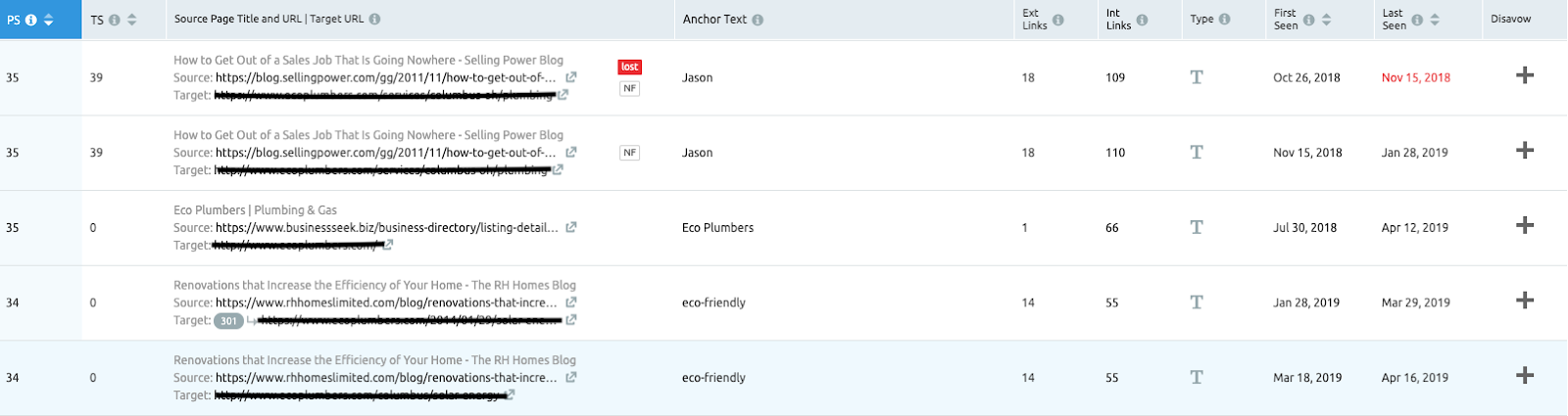
SEMrush provides important information, such as anchor text, the date it was first indexed, and the status of the URL code.
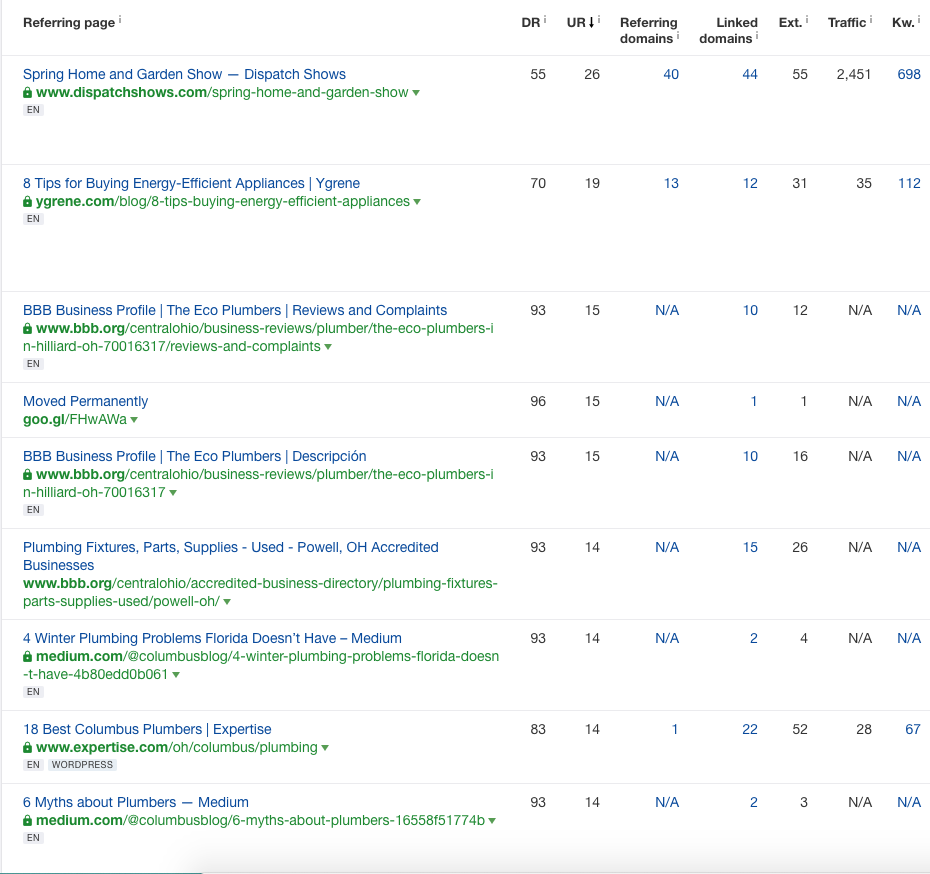
Ahrefs provides the most comprehensive link analysis tool, allowing webmasters to organize data by the total volume of backlinks and unique referring domains separately.
2. Organize Your Spreadsheet by Opportunity
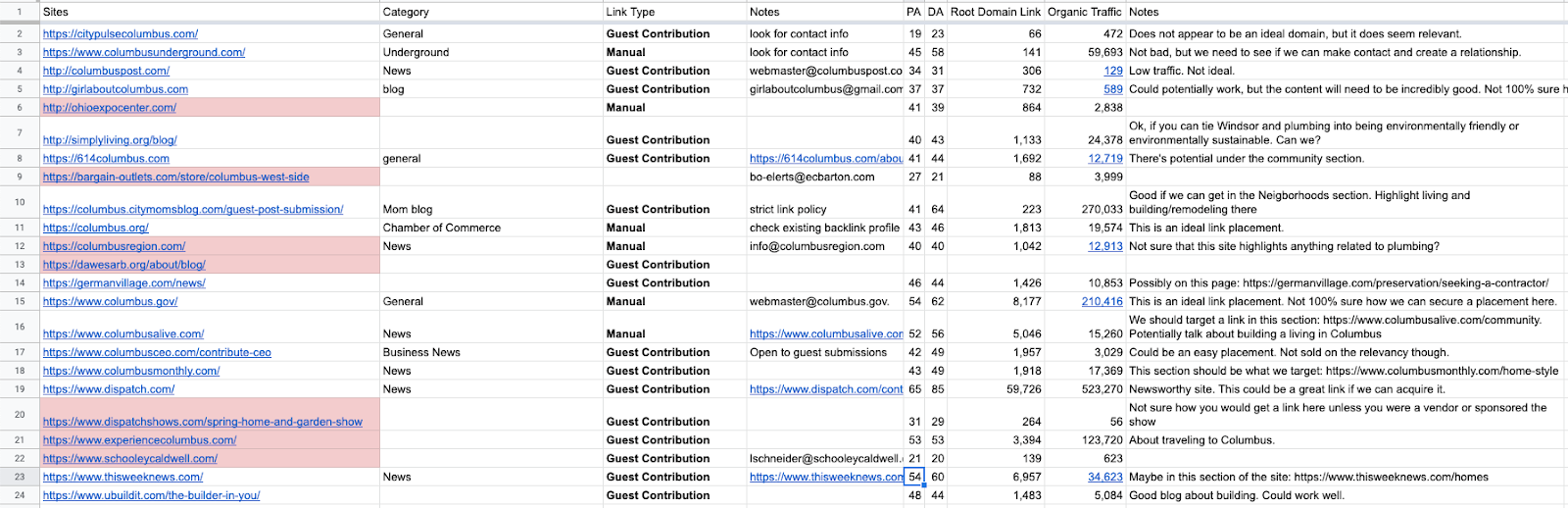
Export the CSV from either of these programs and upload it to Google Sheets. Depending on the client, you may have thousands of backlinks to pour through.
To help make organization easier, you can filter your spreadsheet by link type, domain rating, or traffic, for initial opportunities.
Once you find links that are relevant to your business, you need to gather the contact information for outreach.
3. Build Out Similar Content That Is Driving Competitor Backlinks
When organizing your spreadsheet and using your tools, you’ll notice that certain URLs will tend to attract more links than others.
Analyze these landing pages and the referring links to see what value they provide for the referring landing pages.
These pages will also tend to have higher keyword rankings and be featured prominently on other channels, such as social media.
Work with your content and design team to create new and compelling content that serves as a better resource. Ideas include:
- Creating similar content with greater detail.
- Repurposing content into an infographic.
- Creating similar content with quotes or authorship from an authoritative source.
4. Reach Out to Third Party Websites to Ask for Link Opportunities
Once content is created, it’s time for the tedious process of manual outreach.
When composing an email it pays to be courteous and straight to the point.
For example, an email template could explain how that domain is linking to a dead link and that this impedes upon user experience and could even affect their own site’s rankings.
On the other hand, if you’re trying to replace a link to live content, your email pitch will need to be more persuasive.
Most webmasters are skeptical of link building so offering a product at a cheaper price or a better resource often won’t be enough.
Some additional ideas for persuasion include:
- Debunking a fact or claim listed in the competitor article.
- Explaining how your article is updated with more recent information.
- Appealing to your own brand’s authority over a competitor’s.
- Citing any recognizable thought leaders listed in your article.
Once you send out the initial email, it’s time to sit back and wait. It’s always good practice to follow up in a week or two if you don’t receive a response.
Depending on your email template and your underlying strategy, results may vary.
Summary
Timeframe: Quarterly
Results Detected: 1 month – 4 months
Tools Needed:
- SEMrush
- Ahrefs
- Majestic
- SpyFu
Benefits of Competitive Link Analysis
- Enlighten your campaign about other link building strategies that are working for competitors.
- Bridge the gap between competitors by acquiring many of the same links.
- Build relationships with websites that specialize in or link to similar content.
